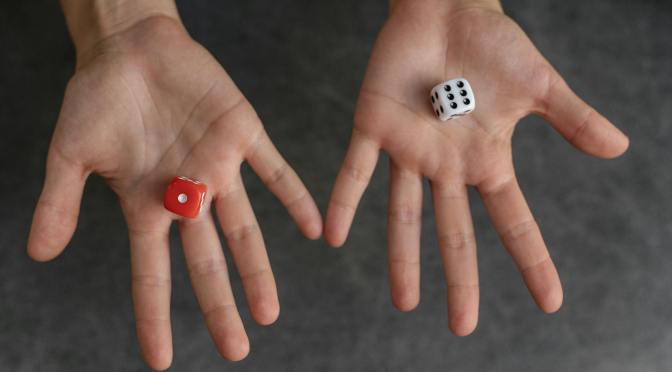
Random character generation is an artifact of older editions of D&D, with the OSR and other throwback movements embracing it wholeheartedly. In the present day both old-school D&D derivatives as well as the range of games derived from WFRP’s take on d100 mechanics are still locked in with random generation, with the classic ‘roll 3d6 six times in order’ being both common mechanic and a meme. The problem with random generation in this way is that putting characters arbitrarily at different places on a probability distribution, in effect making characters better or worse based on nothing but luck, is a pretty poor way to accomplish the ultimate goal of random character generation, which is to introduce variability to the type of characters that players ultimately play.
In reviewing how a number of different games handle random character generation, specifically random attribute generation, I can’t help but think that these designers know that players don’t like random generation and don’t actually like rolling bad characters. It’s widely known what the most common response to early D&D’s attribute requirements for certain character classes was: Cheat! It therefore stands to reason that games which still commit to random generation either create a system that employs randomness more deliberately, or create a system which softens the blow of the dice.
Continue reading Breaking Down Random Generation Cannibal Halfling Gaming