
A roleplaying game is an event where players take on agreed-upon roles within an agreed-upon premise to accomplish an agreed-upon objective. Those roles make it roleplaying (somewhat tautological, I know), and both the objective and the premise make it a game. That objective and that premise are defined in combination by the players of the game and the ruleset they have chosen, and that objective and that premise are more foundational to assessing a roleplaying game than either the players or the ruleset.
Continue reading Premise MattersCategory Archives: Articles

Weekend Update: 10/17/2026
Welcome to the Cannibal Halfling Weekend Update! Start your weekend with a chunk of RPG news from the past week. We have the week’s top sellers, industry news stories, something from the archives, and discussions from elsewhere online.
Continue reading Weekend Update: 10/17/2026
System Hack: Dreadship playtest report
We’ve gone and done it! Just like I threatened, last weekend I had a chance to test run Dreadship at our group’s gaming weekend. The game was certainly fun; I ran Gradient Descent in one-shot mode, with the players as artifact hunters trying to get a big score and retire. As far as Dreadship is concerned, though, the playtest revealed a few things about the game’s workings. Thanks to both my own evaluation and feedback from my players, I know what I’d do differently in the future.
This is one of the first playtests that I’ve run, so I also learned a lot about the process. Most importantly, seeing the process in action is likely to make it easier for me to test new rules and games in the future. So with that all said, how did mashing up Mothership with a Jenga tower actually work?
Continue reading System Hack: Dreadship playtest reportWeekend Update: 10/10/2026
Welcome to the Cannibal Halfling Weekend Update! Start your weekend with a chunk of RPG news from the past week. We have the week’s top sellers, industry news stories, something from the archives, and discussions from elsewhere online.
RPG Top Sellers for 10/10/2026
Top News Stories
The D&D team at WotC is unionizing: Both the D&D and Studio X teams at Wizards of the Coast have announced that they’re joining United Wizards of the Coast via the Communications Workers of America. They have called for Wizards of the Coast to voluntarily recognize the union by next Tuesday, October 13th. If you want to support the teams and United Wizards of the Coast, sign the petition to WotC by following the link above.
From the Archives
Around this time two years ago, we were partway through our Cowboy Bebop Actual Play, featuring Seamus, Aki, and Geni as a very mismatched groups of bounty hunters. From the archives this week is Cannibal Halfling Now Playing: Trifecta Tango!
Discussion of the Week
We gotta start using “homebrew” right: An interesting discussion about linguistic drift, another word besides ‘railroading’ that seems to be used more broadly than intended. Here, though, I agree that there’s a right answer: Homebrew is homemade, just like in beer.
Have any RPG news leads or scoops? Get in touch! You can reach us at cannibalhalflinggaming@gmail.com, through Mastodon via @CannibalHalflingGaming@dice.camp, and through BlueSky via @cannibalhalfling.bsky.social.
Crowdfunding Carnival: October, 2026
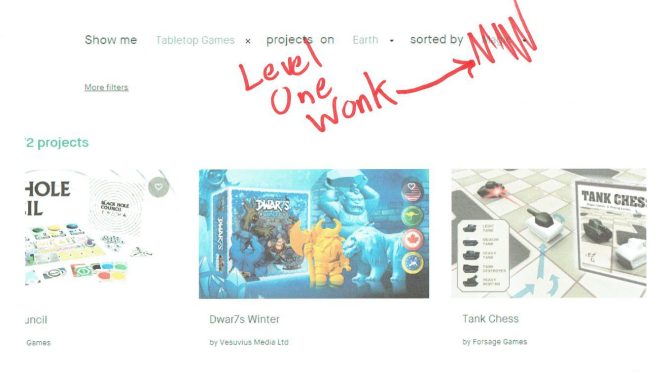
Welcome to Crowdfunding Carnival for October! I have to admit, autumn snuck up on me and I’m not quite in spooky season mode yet. That’s ok, because we have a wide range of games that designers are trying to bring to life, no necromancy required! Want to be a dinosaur? Roadtrip to Oregon? Have the gods try to ruin your life? We’ve got you covered. And if you are already in the Halloween mood, there are a few horror games snuck in there as well.
Continue reading Crowdfunding Carnival: October, 2026Weekend Update: 9/26/2026
Welcome to the Cannibal Halfling Weekend Update! Start your weekend with a chunk of RPG news from the past week. We have the week’s top sellers, industry news stories, something from the archives, and discussions from elsewhere online.

Losing the tracks on railroading
An interesting thing I’ve noticed in the last few years is that another RPG term has been experiencing linguistic drift. I talked about this a little in the context of the term ‘heartbreaker’ a while back, and now the term that we’re seeing shift is ‘railroading’. At first I was thinking about this in terms of linguistic precision (and as such risking becoming an old man yelling at a metaphorical cloud), but the more I thought about it the more interesting I realized the implications were of the drift. When a term becomes broader, it means more is falling under that term’s umbrella; that’s perhaps obvious. But when the term is derisive, like railroading is, the cultural onus to push more game behaviors (or more specifically GMing behaviors) under the umbrella says something about how the culture is evolving.
Continue reading Losing the tracks on railroadingWeekend Update: 9/19/2026
Welcome to the Cannibal Halfling Weekend Update! Start your weekend with a chunk of RPG news from the past week. We have the week’s top sellers, industry news stories, something from the archives, and discussions from elsewhere online.

Out of the shelf and onto the table
The thing that separates the TTRPG hobby from most others is commitment. The oft-stated platonic ideal of TTRPG gameplay, the long-running campaign, requires you and three to five other people to carve out time on at least a monthly (and preferably more frequent) basis for possibly years in order to play through a game of typical length. Although one-shots certainly exist, as well as con games where you need only bring yourself, fact is that if we talk about how mainstream RPGs are designed, the campaign is how they’re meant to be used. While every hobby improves with time and experience, your bicycle doesn’t care how often you ride it, your skis don’t care how many times you make it to a mountain each winter. Traditional RPGs, typified by D&D but including the vast majority of games published from a sales basis, have entire chapters of rules which are only applicable if you’re playing the game over an extended period of time.
Continue reading Out of the shelf and onto the tableWeekend Update: 9/12/2026
Welcome to the Cannibal Halfling Weekend Update! Start your weekend with a chunk of RPG news from the past week. We have the week’s top sellers, industry news stories, something from the archives, and discussions from elsewhere online.

