For over twenty years, Fate has been a pillar in indie gaming. From its newsgroup origins in 2003 through its Kickstarter breakout in 2013 and on to today, Fate’s clever design and extensive modularity have kept it relevant to mechanics nerds and rules hackers and inspired designers and players alike. That said, Fate is a design for hackers above all others, and the popularity of systems as granular and mechanical as Fate has waned in favor of frameworks with fewer moving parts. Even Evil Hat Productions, publisher of Fate, is spending more development resources on publishing games like Apocalypse Keys and Blades in the Dark than it is on the Fate ecosystem. And it’s this context into which Umdaar bursts onto the scene.
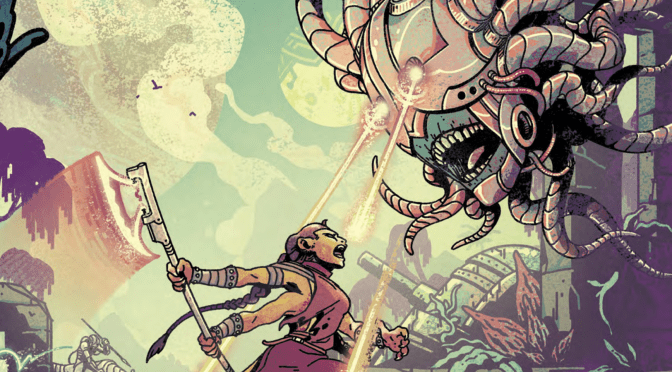
Masters of Umdaar was originally published back in 2015 as one of the settings in Fate Worlds: Worlds Rise Up. In that original format, the setting was intended to use Fate Accelerated rules and allow for semi-random generation of character species and monsters to fit into its ‘planetary romance’ setting which read like a beautiful car crash of Star Wars and He-Man. The new Umdaar is much, much more than that original entry. Clocking in at over 450 pages and now using the more traditional skills-based Fate Core framework, Umdaar has evolved from a small setting guide to a full-fledged game, complete with its own set of completely new frameworks employing Fate’s usual building blocks of Aspects, Stunts, and Extras. Both the volume of content and number of new structures not seen (or only vaguely alluded to) in Fate Condensed or Fate Core is what solidifies Umdaar’s role in the Fate line-up: Fate’s current and primary worked example.
Continue reading Umdaar: Fate’s Best, Maybe Last, Worked Example
