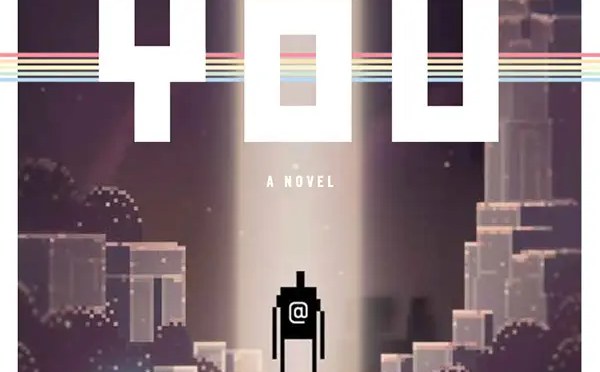
Game design stories are often told in a way that portrays the designer as a visionary, seeing something that nobody else does as they quest for their ultimate game. This often loses the reality of the medium, that design takes a lot more work than ideas and that work can often get very messy. The novel You by Austin Grossman is technically about video game design, and one of its strengths is portraying the video game industry (specifically the PC gaming industry) at a time when it was about to transform and transform the world along with it. You takes place in 1997 or thereabouts right outside of Boston, in a part of Cambridge that’s really only known to locals (incidentally, I interviewed for a job in the building that I’m 95% sure is the office in the book). The story is about Black Arts Games, a fictional publishing company whose next game will either make or break them. What the story is really about, though, is a single-minded and overzealous designer and worldbuilder who created the holy grail of role-playing games, digital or otherwise.
The viewpoint character of the story is Russell, an attempted lawyer whose interview at Black Arts Games is just the next step in figuring out what he’s doing with his life. What makes this more interesting, though, is that Black Arts was started by two of Russell’s high school friends, Darren and Simon. More interesting still is that what was arguably the first Black Arts Game was put together by Darren, Simon, Russell, and their friend Lisa first in a high school computer class and then at a summer computer camp. That first game, Realms of Gold, turned into Black Arts’ longest and most enduring franchise, and the franchise in which the company is set to release another title when Russell comes aboard.
Of course, everything goes wrong fairly quickly. The company has recently been acquired by a private equity firm and Darren takes advantage of their sloppiness by taking the company’s top designers and coders and founding a spinoff. This leaves the parent company ticked off and Black Arts short on resources, seeing Russell promoted to lead designer within weeks of his arrival. Both the impetus for Russell’s hiring and the source of basically every additional problem that will spawn throughout the rest of the book is the history of the Realms of Gold games, spanning all the way back to high school and into the brain of Simon, the most enigmatic and troubled of the friends. Of course, adding to all this complication is that Simon is dead, involved in an accident that happened close to the company’s founding. It quickly becomes clear that there is another problem, a bug in the form of a black sword called Mournblade that keeps showing up in places it shouldn’t be. But the origin of the bug, as well as the elements of this story that make it so interesting to RPGers and worldbuilders, all rest on the shoulders of Simon and the engine he created, called WAFFLE.
WAFFLE
What separates WAFFLE from mere ‘fantastical software’ is its author’s pedigree. Austin Grossman worked at Looking Glass Studios; he worked on System Shock and later Deus Ex. Looking Glass Studios was the birthplace of the immersive sim, the subgenre of RPGs and first-person shooters defined by having a living, reactive world. Deus Ex was famous for how many different approaches you could try and just how many things you could manipulate in the world. When you understand what Deus Ex was trying to be and that the author of this book was right there for it, then WAFFLE as a narrative device makes a whole lot of sense.
WAFFLE is the underlying engine that runs all of the Black Arts games, and the way it does so is insane. The engine is an economics simulator, a physics simulator, and also running the world in the background for first an entire world but then (in their later space strategy games) an entire galaxy. The only real video game whose power has come anywhere near to what WAFFLE is described as being able to do is Dwarf Fortress, and it’s perhaps not coincidental that Dwarf Fortress was featured in a video game exhibit in the Museum of Modern Art in 2012, which is pretty much exactly when Grossman would have been writing this book.
WAFFLE is, to put it bluntly, the dream of worldbuilders, digital of course but arguably also analog. It’s described as both being complex and internally consistent but also built with a nod toward narrative, with PCs being weighed down with protagonism and events biased towards what would make the player’s time the most interesting. It’s also portrayed as being impossibly, psychotically flexible. Over the course of the book Black Arts has three different game series: Realms of Gold, a typical fantasy RPG, Clandestine, a spy adventure/first person shooter (depending on when in the series), and Solar Empires, a 4X space strategy game in the style of Master of Orion or Galactic Civilizations. Somehow WAFFLE is the underlying engine for all of them, covering trade in alchemical reagents and orbital physics with the same codebase.
Of course, some of this is for conceit as well as fantasy; over the course of the book Russell plays his way through Black Arts history, loading his save from one WAFFLE-based game to the next to solve the mystery he’s been burdened with. That mystery comes from the creator of the game worlds and their fantastical engine, the most intriguing and troubled of Russell’s high school friends.
Simon
Simon is portrayed as an obsessive, the one in the group of friends with the vision that would end up becoming Black Arts Games. Understanding Simon in the narrative is limited to the way that Russell understood him, and indeed that lack of understanding is one of the driving forces of Russell’s journey through the book, that journey of playing through all of the Black Arts games in order to hunt down the Mournblade bug.
There is a lot of worldbuilding behind the Black Arts games, including four iconic characters that show up in different incarnations across all the games (transforming as necessary in order to fit into fantasy, spy action, and space opera). What was driving Simon, though, seemed to be less about the specifics of these worlds and more about the power to shape them. One throughline in the book is introduced as an interview question for Russell when he joins Black Arts, but ends up coloring most of the experiences of the group when they were younger. “What is the ultimate game? If you could play any video game you could possibly imagine, what would it be?” The answer that Simon arguably envisioned was a game where you could do anything, where you weren’t bound to the preconceived notions of what the designers tell you to do.
Simon’s death is only a narrative point in the story insofar as the presence of Simon would defuse the main conflict. This is actually mentioned early on in the book; Simon didn’t die in any particularly outlandish or tragic way, though because he was a video game designer people certainly thought he did. The more important element of the character was his single-mindedness, which drove him to work on his game engine and not tell anyone else how it actually worked (or comment his code in any way).
Simon as a character has elements of other well-known game designers. It would be impossible to overlook the history of Grossman’s coworker (boss?) Warren Spector, who came from the TTRPG world and oversaw the development of immersive sims at Looking Glass. Perhaps more similar in at least superficial ways would be Tarn and Zach Adams, the brothers who created Dwarf Fortress. Whether Simon is based on real people or not, he certainly fits the archetype of a visionary designer who ends up being defined by their life’s work more than anything else.
You came out in 2013, but I read it within the last month. Unlike most books about video games, it ends up having a timeless quality in large part due to being set in a specific time that even by the publication date was already part of the medium’s history. It’s also noteworthy that of the challenges to the video game medium, there are few that were as pressing in 1997 as they are now; the challenge of creating a living, breathing, reactive world is probably the biggest one which is still there. Although the intervening years have seen Dwarf Fortress, Rimworld, and other dense simulations, as well as incredibly detailed (though static) worlds like those of Skyrim and Cyberpunk 2077, there has yet to be a game that mixes the intense simulation of Dwarf Fortress with the scope and scale of Skyrim to any critical success.
The topic of living and reactive worlds is of particular note to roleplayers just as much as it is to video gamers. The desire for a reactive world or story is one of the primary reasons TTRPGs see continued and growing success even in a world where video games now dominate the media landscape. The technology to make a real WAFFLE doesn’t currently exist, but for gamers who want a story and world that reacts to their character, there is a lot you can do with one of your friends as a game master. Just as the fictional virtual world of Black Arts Games started with TTRPGs in the book, so too are the virtual worlds of the future going to be inspired by the tabletop games of the present. Even if You is a fictionalized account of the video games industry, it is both entertaining and thought-provoking for gamers of all stripes, especially those interested in the development of virtual worlds. I’d recommend checking out the book, and be sure to ask yourself: What is your ultimate game?
Like what Cannibal Halfling Gaming is doing and want to help us bring games and gamers together? First, you can follow me @LevelOneWonk@dice.camp for RPG commentary, relevant retweets, and maybe some rambling. You can also find our Discord channel and drop in to chat with our authors and get every new post as it comes out. You can travel to DriveThruRPG through one of our fine and elegantly-crafted links, which generates credit that lets us get more games to work with (which is eactly what we did here)! Finally, you can support us directly on Patreon, which lets us cover costs, pay our contributors, and save up for projects. Thanks for reading!

