Tag Archives: fria ligan

Dragonbane Review

Fantasy is the most popular genre of role-playing game. Even if you don’t count the sheer volume of Dungeons and Dragons players, there are more titles that slot into the fantasy genre than any other. When reading and playing games, one could be excused for beginning to think that many of these fantasy titles are little different from each other; thanks to the early days of Dungeons and Dragons, many of the genre’s tropes are filtered through RPGs in frankly wild ways and that does mean we see a lot of the same basic structures in our fantasy games. Doesn’t seem to bother anyone at Free League Publishing, though. Apparently to them, the ideal number of fantasy games a single company should put out is a half dozen.

Needless to say, Free League’s reasoning for each fantasy game they release is different, and they also reap the benefit of a more stratified European gaming audience where the appetite for different, specific experiences is greater. In many cases, it’s also not hard to see that the genre has a lot of room for variety. Mork Borg and Forbidden Lands have very little to do with each other. That does make it a little interesting, though, when Free League acquires the IP for the grand-daddy of Swedish RPGs. As of 2021 they did make such an acquisition, and the result is out now in the form of Dragonbane.

Continue reading Dragonbane Review

System Split: Death in Space and Mothership

Most big science fiction properties today err on the side of science fantasy. Star Wars is basically swords and sorcery in space, and Star Trek’s post-scarcity antimatter economy is built to support its storylines, not the laws of physics. In the tabletop RPG world, though, there are a few options for somewhat harder space sci-fi, especially if your definition of hard sci-fi includes horrors man wasn’t meant to know as well as the strong possibility of explosive decompression or straight up getting sucked out an airlock.

Today we’re going to look at two gritty space horror games which, through relatively light rules and strong emphasis on random outcomes, are easy for players but very tough on characters. Death in Space is created by Christian Plogfors and Carl Niblaeus, members of the Stockholm Kartell alongside the creators of Mork Borg and CY_Borg. Mothership is created by Sean McCoy and distributed and developed by Tuesday Knight Games, who are in the process of bringing the new Mothership box set into distribution as of this writing. Both games are about freelancers trying to survive deep in space, and quite often failing to survive deep in space. Despite similar rules and character survivability, each game has a degree of nuance with how it approaches the gameplay loop.

Continue reading System Split: Death in Space and Mothership

Meet the Party: Twilight:2000 American Roadtrip

In 2022 I ran a campaign of Free League’s new edition of Twilight:2000. After my review I was excited to try it out, but decided to adapt the premise, instead casting my players as American soldiers and refugees of a nuclear war. The campaign involved a roadtrip throughout the mid-Atlantic United States, meeting separatist groups, civilians, and opportunist criminals, and asking some questions about what the fractured national identity of the US would become in the face of such a monumental crisis. After about eight months the campaign ended, somewhat abruptly; the characters had made their way to Lynchburg, Virginia, home of several key players in the country’s nuclear industry but also, more importantly to the characters, a summer camp with about 400 kids who didn’t know when they’d see their parents again. A strong majority of players voted to end the roadtrip there to protect the kids and, after wrapping up some of the local storylines I had prepped, we concluded.

As much as our story came to an end, the American Roadtrip campaign outline for Twilight:2000 is still one I think holds a lot of promise. As time moves on the campaign shifts from survival to reunification, and has the potential to run for quite a few sessions. In today’s Meet the Party, I’ll introduce you to four characters who also exist in the American Roadtrip setting, albeit a different part. These four characters were generated entirely randomly with the lifepath rules in Twilight:2000 and, as a result, this is hardly a balanced party. That said, the lifepath rules generate characters you otherwise would never have written yourself, and have generated for us the story of a bunch of New England misfits who are crossing into the state of New York with a hope, a prayer, and a few guns.

Continue reading Meet the Party: Twilight:2000 American Roadtrip

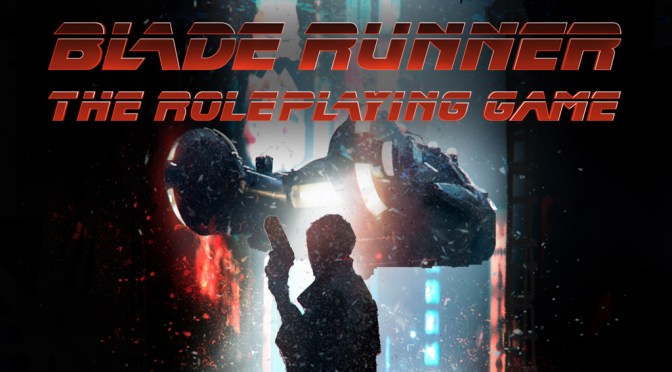
Blade Runner Review

Cyberpunk is having its second wind. The genre of postmodern science fiction best defined as ‘high-tech, low-life” was born in the 1980s, first in film, then literature, then game. Though declared dead in 1991 after Neal Stephenson’s Snow Crash seemed to parody the genre as much as embody it, Cyberpunk came roaring back in the 2010s in the wake of Citizens United, Facebook, and the second tech boom. By the time Cyberpunk 2077 was released in 2020, the setting year of its RPG predecessor, the combination of 80s aesthetic being cool again and the continued specter of corporate overlords made the children of Gibson, Sterling, and Shiner seem all too relevant. Tabletop RPGs were no exception to the trend; in addition to Cyberpunk Red becoming the best-selling non-D&D RPG of the decade so far, many imitators cropped up from all over the game design map, some adhering well to Cyberpunk themes and others not so much.

Free League, a Swedish publisher of ever increasing significance in the last few years, has stepped into the Cyberpunk ring with a licensed title. This isn’t Free League’s first go at a licensed game, with Alien receiving broadly positive reviews, but like Alien Blade Runner is a property with a lot of history and high expectations attached. Based originally on Philip K Dick’s novel Do Androids Dream of Electric Sheep?, Blade Runner basically started the Cyberpunk genre when it was released in 1982. While William Gibson had started writing in what would become Cyberpunk a little earlier (Johnny Mnemonic was published in 1981), so influential was Blade Runner that he feared Neuromancer would be dismissed as a coattail-grab.

Continue reading Blade Runner Review

The One Ring Review

So here it is. After a whole bunch of hubbub and more angry Tweeting than you can shake a stick at, The One Ring has been released. And what does that get us? The One Ring, Second Edition, is the official licensed roleplaying game of The Lord of the Rings, and is the jewel of the crown of Sophisticated Games, a company you’ve likely never heard of because all they do is hold intellectual property. Sophisticated Games is the root cause of every kerfluffle about this particular game, because they decided to hang Cubicle 7 out to dry back in 2019.

Continue reading The One Ring Review

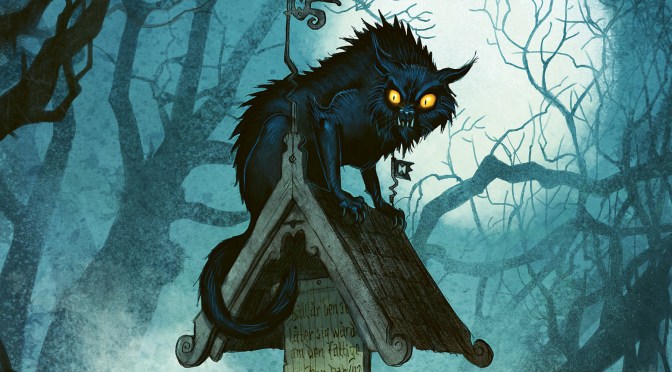
Vaesen Review

For reasons not entirely clear to me, I have never reviewed a Year Zero game. The Year Zero engine is Fria Ligan’s centerpiece, and maybe even their house system as well. Named for Mutant: Year Zero, the game system powers designs as widely varied as the Alien RPG and Tales from the Loop. And now Free League Publishing’s Vaesen. Vaesen is new territory for the Year Zero engine and indeed mainstream tabletop RPGs in general, being a game of fairy tale horror and specifically Scandinavian fairy tale horror at that. While fairy tale horror may not seem like the most natural fit for a system better known for maps, bases, and colored dice, Vaesen ends up being a pretty wonderful take on the system, its juxtaposed strengths working well provided that you buy into the high concept.

Continue reading Vaesen Review