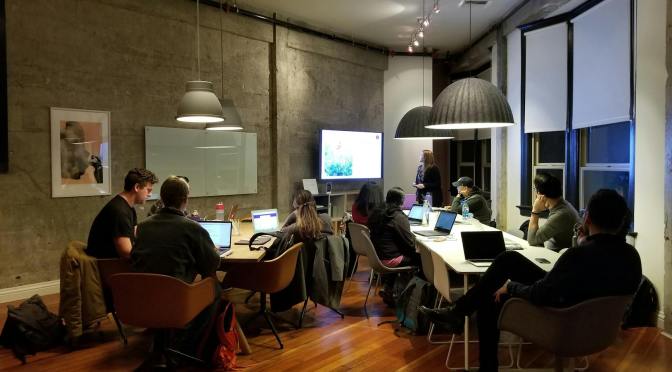
For the most part, the ideal size for a gaming group is five, four players and a GM. This is driven by group dynamics; researchers wrote in the Harvard Business Review back in 2018 that the ideal group size for meetings is between five and eight, at least if the point of that meeting is to have a productive discussion and get things done. Roleplaying games skew to the lower end of this mostly just due to the fact that in addition to the actual ‘meeting’ of a game, there is also the need to manage that many characters, their contributions, and their stories.
Ideal doesn’t mean only, and an experienced GM can run games anywhere in that 5-8 range without too many problems, at least as long as they’re realistic about how long things will take. More and more, though, games are being written towards a specific group size, usually a smaller one. In some cases it’s obvious, like Fiasco: the number of turns in the game, and therefore the amount of time the game will take, is directly proportional to the number of people playing, and even playing with five people, the maximum number recommended by the rules, the game begins to sprawl and the story begins to sag. In other cases, the restriction comes from a clear place, but the question hangs in the air about how to subvert it. A good example of this is DIE: There are six roles, six dice. That’s how many there were in the comic, therefore that’s how many there are in the game.
Initially, this article was going to be a System Hack, a discussion of all the ways to try to add a seventh or eighth player to your DIE game. Upon consideration, though, I stepped back. Yes, DIE is player-capped by a source material contrivance, at least technically. There are a couple methods described in the book of having multiple players of a single Paragon type, and all of these could be employed to increase the player count beyond six. The more I thought about it, though, the more it was clear that the player count served a bigger purpose than just aligning to the comic. And if it wasn’t already clear that the designer agrees with me, the DIE Scenarios books provide multiple different scenarios which require reducing the maximum number of players, but not a single one that increases it. With that in mind, let’s talk a bit about larger play groups and the games that are not designed to accommodate them.
I ran an Apocalypse World game with (almost) every playbook, once. It was the first time I ran the game and it was the first edition; I had ten people who wanted to play so every playbook other than Skinner was taken. The game went fine, but really that’s because out of the ten people who wanted to play we only had 4-5 who showed up regularly. When we did have the occasional eight person session, though, it was a bit chaotic. Apocalypse World recommends 3-5 people in a play group, and if I recall correctly that includes the GM. In my current game I still have seven players but it’s much more explicitly the three core characters and then supporting characters that show up occasionally. And the issue, really, is what the characters do. Each playbook in Apocalypse World (all three editions) is a story arc unto itself, and the MC has the job of making all of those story arcs present themselves in the broader campaign. It’s hard enough doing that with 3-4 characters, but add in more and it gets even tougher. Our group has also seen this playing Back Again From The Broken Land as well as DIE: Each character is getting enough time and focus for their personal story that the amount of space to add in more is challenging.
When you begin to look at counterexamples for group size, the limiting factor more clearly becomes GM input. Consider first D&D, a game which has always been centered around the broad procedures of dungeon crawling and wilderness exploration and the narrower procedure of combat. The key word here is procedure. Mapping a dungeon, keying a hexmap, and writing a combat encounter all scale essentially infinitely against player count. The contents of those things may change between a three character party and an eight character one, but both preparing and running those elements does not. And indeed, if you think about norms of D&D roleplaying, they generally see the story (when there is one) collapse back to the level of ‘the party’. While we didn’t really talk about the edge cases, at least some “It’s What My Character Would Do” moments are not blatantly anti-social but rather players trying to exert individual character motivations over group ones. It’s of course easier to talk about characters stealing from, betraying, and killing each other because those break the social contract of the game, but lesser infractions are often just a push for spotlight time, and the answer, “D&D doesn’t have any tools to help a GM actually manage individual character arcs”, is as unsatisfying as it is true.
The other most significant counterexample is LARP. 30-50 person LARPS are fairly common; that size could be considered on the small end for boffer events. The reason this works is simply because the GM-player relationship in a LARP is completely different. The use of a shared imagined space means that the distance between character interactions is constrained physically, not by a GM. Much of the work establishing who a character is and what their goals are is either done entirely in advance of the game or by the player of that character, once again making GM intervention during the event relatively minimal. And finally, it’s important to note that LARP GMs have staff. The majority of my LARP experience has been as an NPC, and it’s just easier as a GM to make things happen when you have half a dozen to a dozen effectively staff to go out and run events and modules for you. And in addition to having staff, you don’t have (at least not in the same way) protagonists; the story is happening to the whole group and within the space of the event, players must take responsibility for how they participate in it.
So let’s return to DIE as our example for a moment. How is a game with eight players really going to differ from a game with five or six? For one thing, there is a more subtle version of what happens in Fiasco that goes on in DIE as well. As we’ve talked about before, the entire underlying conceit of DIE is to create broken characters who then must struggle with the decision of whether or not to stay in their fantasy world. For the most part, these plots arcs happen alongside each other; there’s not really a ‘party’ version of coming to grips with your past. I should note that there are DIE scenarios which aim to make the trouble of the past a shared item between all characters; while the baseline scenario does some of this by setting character creation in high school, it’s only the really messy scenarios like ‘Bizarre Love Triangles’ that really get everyone intertwined (and I find that one a difficult sell to my group for reasons entirely unrelated to size). You also have the opposite phenomena, like in the more recent ‘No Rezes’ scenario which makes the Master’s past trauma the centerpiece of the game.
When looking at some of the scenario design of DIE, both in the literal scenarios and in how the base GM advice works, you can see some of the struggle with trying to write a game around parallel character paths. Much of the advice and implemented encounter design in DIE jumps from one character to another in terms of how spotlight is shared; while the characters are supposed to be close it’s still unavoidable that you end up poking at their conflicts in completely unrelated ways. While this is a bit of a weakness of the design it’s also one that’s mitigated by limiting player count: Have few enough players and you still feel like you’re getting a fair amount of engagement, even if only part of the entire scenario is aimed at you specifically.
Using DIE as an example and D&D as a counterpoint, it’s a bit clearer what sorts of games necessitate smaller play groups. In DIE, you’re managing multiple character arcs which each need individual time in the sun to evolve and resolve. In D&D, most of the challenges that the mechanics are designed to support are solved at a party level; spending time on individual arcs either means stepping away from other players at the table or making them go along for the ride which will create the same dynamic as a game like DIE. Other games create this dynamic as well: Burning Wheel also demands that players create individual character goals and desires, and Apocalypse World provides both story and mechanical differentiation which allow players significant freedom in choosing their own path and priorities.
So if we were to try to create a scenario in DIE which would smoothly allow for integration of more than the game’s cap of six characters, we’d be looking for a central conflict which every character is party to, and that every character must work together to solve. It’s an interesting note here that the events of the comic actually fit this better than the core game scenario: Being sent to DIE during a high school reunion is essentially demanding that each character bring their own baggage, but having to return to DIE as a result of events that already happened to every character is a singular, unifying arc. Having that singular, unifying arc may not completely resolve the increased levels of entropy that are going to happen at a large, character-focused game table, but they will at least increase the level of broad participation.
I think the best way to conclude this reflection would be to wrap up our use of DIE as an example with a strawman scenario. This scenario would allow for eight players: We will use the already included rules to have a PC Master and a separate traditional GM, and then we will add one more character who will not start play as a Paragon. The working title of this scenario is ‘Unbury the Dead’, and it is based in part on adapting the DIE comic plot to a starting conceit which, like the base game, involves most characters entering DIE for the first time. Character creation will start much the same way as it does for a typical game of DIE, until you get to the big questions. One of the characters died tragically in high school, and that death causes the gaming group to split apart. At some point down the line, the group is brought back together to enter DIE, where they find their old friend is not in fact dead. Mechanically, this character will start the game as a Fallen. As ‘the dead don’t get a vote’, this will create immediate conflict around leaving DIE, not to mention how the mechanics of the Fallen work. It’s a scenario with a lot of potential bleed and the need for more development, but it is a DIE scenario with a player count of eight that, in the right hands, could be executed well and make for a memorable game.
Large groups can be tough. Not only are you trying to ‘run a productive meeting’, but keeping everyone engaged and managing spotlight gets more complicated the more people there are. Ironically this is a place where more mechanics probably helps more than it hinders; having specified roles and tasks and a singular group goal will keep everyone aligned, and games focused on survival, combat, or another singular goal (group mechanics in Forged in the Dark games often do this well also) will keep players focused. That said, sometimes you want high drama, seven character arcs, and a spotlight swinging around the stage. In that case, you’re still going to want an overarching conflict that keeps everyone’s attention, but you’re also going to need to do some more work. Games with lower recommended play counts usually have them for a reason, but like any rule in an RPG, you can houserule it. If you don’t want to do the work of trying to expand an intentionally smaller and more intimate game, though, there are a whole range of games out there where teamwork and mechanical engagement help keep larger tables together.
Like what Cannibal Halfling Gaming is doing and want to help us bring games and gamers together? First, you can follow me @LevelOneWonk@dice.camp for RPG commentary, relevant retweets, and maybe some rambling. You can also find our Discord channel and drop in to chat with our authors and get every new post as it comes out. You can travel to DriveThruRPG through one of our fine and elegantly-crafted links, which generates credit that lets us get more games to work with (which is eactly what we did here)! Finally, you can support us directly on Patreon, which lets us cover costs, pay our contributors, and save up for projects. Thanks for reading!
 Cannibal Halfling Gaming
One thought on “Big groups, small games”