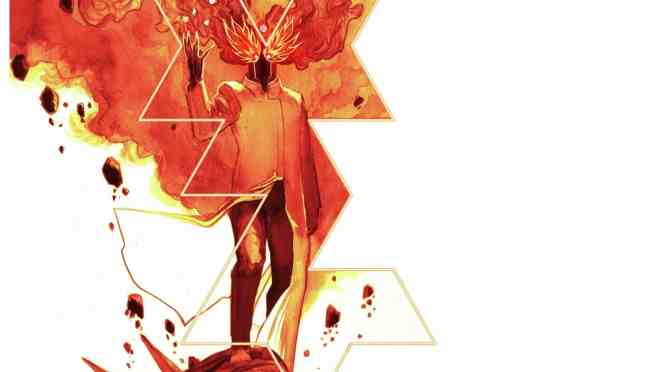
Playing the same scenario over again is a tough proposition. As good as the first time went, finding something else to discover, some other way to engage with the scenario, or simply just another perspective is not easy. Admittedly, the core scenario of DIE, Reunited, isn’t any old module. This past month my group played it again, and doing things over again was a core component of the twist I introduced.
You’re likely familiar with the first time my group played Reunited, it’s the basis for Seamus’s review of DIE, and it was an incredible experience sinking our teeth into the game over one long day. There was interest in revisiting DIE this year, and my thought was there was going to be one of the scenarios for the game; last year I ran Distant Fans from the core rulebook and it went well, though not quite with the same gutpunch as Reunited. When the stars aligned and our gaming weekend was going to step down to six people on its final day, I decided to lean in to returning to the gutpunch. Arguably, I leaned too far.
(This Adventure Log has content warnings for suicide, parental death, and the sort of non-consenusal chicanery the Dictator always seems to get up to in this game.)
The title ‘If you could DIE all over again’ refers to the central premise of the scenario. Yes, you all used to play fantasy roleplaying games together as teenagers, in school. However, you didn’t know that the Master received six odd dice from somewhere she doesn’t exactly recall all the way back in December of senior year. Her captivation with the stones was quickly overshadowed by being accepted early decision into her dream school, and the dice weren’t mentioned again for nearly 17 years. So, when the old friends get together for an unconventional fifteen-year high school reunion, start the game and are swept into DIE, both them and their seventeen year old selves show up on the icosahedron. The teenagers have seen all of the memories that their elder selves generated in the latter half of their lives. Unsurprisingly, some of them are pissed.
Let’s back up. Six friends met at a swanky private high school in a small New England town (which totally doesn’t resemble the small New England town the Master’s player grew up in, not at all). Nat, the Master, is an obsessive writer and TV Tropes addict who started gaming simply because she believed it to be the next frontier in storytelling. Marisa, the Fool, is the school’s musical star, all but destined for Broadway. Maybe because of her ego or maybe because of her tall frame, she’s also a bit of a bully, though she likes Nat well enough. Thaddeus, the Dictator, is an introverted overachiever with overbearing parents who found a refuge in online gaming and decided to try the analog version. Trax, the Godbinder, was a jock who was in a car accident that took the use of his legs early in school. While he knew Nat and the others from classes, he joined the game simply because he overheard Nat talking about it and thought it sounded interesting. Ophelia, the Neo, was also a bit of a jock, playing field hockey but also being very into fantasy and horror. She joined, though, because of a hard crush on Trax. Finally, Dewey, the Emotion Knight, was another goth kid like Nat was and was asked to join relatively early on. Dealing with trouble at home and somewhat self-imposed loneliness, he didn’t feel like he was in a position to say no.
Everybody graduated, and as is fated to occur, trouble came their way. Nat actually succeeded in making a life out of her passion, but not in the way she wanted. When her ‘great American novel’ flopped, she ended up becoming an immensely successful writer through a catalog of formulaic and schlocky romances written under a pseudonym. The failure of what she thought was her greatest achievement haunts her. Marisa did make it all the way to Broadway, but choked, pulled off stage in the middle of her first scene of opening night. Instead of facing the failure that occurred, she ran, spending years on the margins and in and out of homelessness. When Nat calls her about the game it is actually the first time they’ve spoken since that night. Thaddeus is able to work on defying his parents wishes with the help of his older sister; they were close through childhood and arguably got even closer after she defended his choice not to go the legacy route for college in spite of their father’s demands. However, Thaddeus never got over a fear of being alone, and ended up marrying a manipulative and controlling woman after college. His now-wife, Ingrid, was so jealous of the relationship Thaddeus had with his sister that she forced him to cut her out of his life as a pre-condition for getting married. Trax was sure he was going to see the world, be as mobile as he could with his physical limitations. However, his father died, and his drive died along with him. Trax ended up working at the school, trying to help kids where he could. Ophelia went from spending much of her time in school volunteering to finally acting on her crush with Trax, causing a tumultuous and complicated relationship just as his Dad was sick. Trax’s Dad tried to arrange one more roadtrip with his son, but due to the relationship and other chaos in his life, Trax wasn’t up for it. He didn’t know it was the last opportunity, and Ophelia blames herself for him not being able to take it. She ended up bouncing between a number of messy relationships and now works on the insurance side of healthcare, painfully aware she isn’t helping anyone anymore. Dewey, in an odd way, saw things get better. His trouble at home was caused by his mother’s on and off illness, and as a result he spent high school balancing between keeping grades high enough for scholarships and working nights to keep the family afloat. After college, his mother died, and while it was a loss, it was also a relief. He’s built up a comfortable life with a job, volunteers at the school, and now hosts his own game night. With all that happened, though, he knows that at 17 he would have never understood how much effort it takes to be happy.
Teenagers not understanding ends up being a consistent theme across the story, and it becomes eminently clear after the thirtysomething Personas meet for the game, get sucked into DIE, and fight Fallen in the shape of their weird, sociopathic bullies, a pair of sadistic twins. They push through the encounter into the Infinite Library, their fantasy world from high school. The world that the group created together was a massive library where each book was a world, and only adventurers could travel between them. Greeting the Personas was Gutenberg, the NPC librarian who had curated their adventures back in high school. Gutenberg had pulled out six books on a circulation cart, each with a stylized die on the front. Apparently the dice of the Circle of Paragons had each been transported to a different book world. Complicating the matter was that there were already Paragons on their way to claim these dice, and only one person per die would get a vote in the final circle and get to go home. With that information in hand, the group entered the first book, the one adorned with a cube for the die of the Fool.
As the Paragons entered the book, they found themselves backstage at a theater. It wasn’t long before they found teenage Marisa, barring the door to a dressing room while something was bashing madly at it to get out. She called for help, but her eyes locked on older Marisa with venom.
“You! This is your fault!” The teenager hissed.
“You have no idea what you’re talking about,” elder Marisa replied.
“I saw what happened to you,” the teenager said. “I saw all your friends giving you well wishes and I saw you running away! Like a coward!” Elder Marisa stepped to her younger self, the other Paragons rushed in to hold the door. Teenage Marisa had the same sword, the same flashy outfit. They sized each other up, elder Marisa skinnier and worse for wear compared to her younger self. Teenage Marisa pointed her sword at her elder self, who walked closer until the sword rested on her sternum.
“You don’t have the nerve,” elder Marisa said. “I didn’t.”
“I saw what you did,” teenage Marisa said. And, with the Fool’s energy of killing yourself in a time loop, teenage Marisa drove the sword entirely through her elder version, causing her to fall dead to the floor. When the player was offered a chance to come back as a Fallen to take down the younger Paragon, they said no, instead opting to take the reins of the teenager. The party fought a werewolf in the dressing room and had to fight another three onstage to get out, but they were able to abscond with the d6 and return to the library.
The remaining books were equally fraught. The d12 of the Godbinder revealed a ribbon of asphalt across an infinite desert, with Trax’s father showing up in a large American muscle car. At first, Trax couldn’t face his father again, even as a simulacrum. But, given the world and the opportunity, he decided to invest in a couple miracles. His prayers to the Eldritch God were answered; he was a twisted God of fate and time who took the name of the car that hit Trax and took the use of his legs, Veloster. But, in exchange for amusement and the right to pop in on all the Paragons, Trax regained the use of his legs with no God debt, and summoned a school bus from the Echo of the group’s high school guidance counselor to track down his teenage self. The two Godbinders finally got in the car together, having a long conversation with their paternal echo about inevitability and changing the past. Elder Trax left the book with the d12, making a promise to his younger self that he’d live a better life.
The book of the Dictator was a castle on an island, and the teenage Thaddeus was already there and already angry. With identical willpower, it came down to obstinance and dice luck (and this player has historically had terrible dice luck). Thaddeus the younger was merciless, defeating his elder handily and wasting no time turning to the rest of the party. The rest of the party, though, bound Thaddeus the younger with a pact that they had made with Thaddeus the elder: The Voice cannot be used to interfere with an encounter between elder and younger Paragon, they need to figure it out for themselves. Thaddeus the younger reluctantly accepted the deal, knowing he’d need the help of the party to defeat the basilisk that was definitely an Echo of his older self’s wife.
Ophelia’s book was a wedding venue, an echo of one of her broken off engagements. Younger Ophelia was in the bridal suite, steeling herself to face the two cockatrices representing those engagements. Ophelia the elder, though, didn’t come in with a fight or encouraging words. She got down in front of her younger self, handed her the knife she was armed with, and said
“Please kill me.” After a moment of stunned silence (in and out of game), Ophelia the younger shook her head and gave the knife back.
“I know it wasn’t easy but you did what you could,” she said.
“Nothing worked,” the elder Ophelia said. “It didn’t work with Trax, it didn’t work with anyone. And I kept Trax from seeing his Dad. I ruined everything.” Ophelia the younger started to cry.
“I can’t change anything,” she said. “It doesn’t matter if I convince you that it’s not your fault, if I go back nothing will change, and then I just live it again, and for what? Don’t make me go.” She cried into the Neo’s outfit, and then they both cried. Perhaps not satisfied with the answer, but at least understanding it, Ophelia spent her fair gold from the earlier fight with the Fallen to power up and take down the cockatrices, grabbing the d10 from a ring box they were defending.
Dewey’s book, the penultimate book, was a twisted labyrinth of a hospital. Elder Dewey, the grief knight, found Younger Dewey, the rage knight, with so much rage that he had instantiated rage in elemental form next to him. Dewey sat down next to his younger self, the other Paragons stayed back and watched.
“You know it’s neither of our faults, right?” he said. The elemental of pure rage nodded. Teenage Dewey was quiet, fuming. They sat in silence for a while, until Dewey had an idea. With the help of Trax, he beseeched the librarian to “loan out some athletic equipment” and two bowstaves appeared within the world of the book. Elder Dewey handed one to younger Dewey, and they sparred. With each hit the younger rage knight landed, he vented, and after they fought to a simple tapout, the elemental of pure rage had dissipated. Elder Dewey said goodbye to the Echo of his mother, and took the d8 as the Paragons headed for the last book.
The Master’s book was a little different. The Paragons landed in what was obviously Nat’s family’s vacation house in New Hampshire, and on the porch sitting in the wooden rocking bench were elder Nat and younger Nat. Younger Nat was sitting with her head in elder Nat’s lap, with elder Nat gently brushing her fingers through the younger’s hair. They had been in the book together the whole time that the others had been journeying and fighting, and had a lot of time to talk through some stuff and figure out what life looked like. When the rest of the Paragons joined them, Nat looked around the circle, regarding who had made it there, and then said goodbye to her younger self as the teenage Paragon dissipated into dust after one last hug. The dust was reintegrated into Nat, and it was time for the final circle. As the Paragons looked around, a seventh figure joined them. It was the Eldritch God Veloster, but like any true Eldritch God he revealed his true form, that of the Grandmaster. His plot to use the forked Paragons to show the true power of DIE had backfired; the intense focus on memory and on the lives that the Paragons had left had made all of them anxious to get back home. He accepted defeat, noting cryptically that these stories may bring them all back to the domain of the Infinite Library once again if they so chose. Nonetheless, the vote was unanimous and without drama: “The Game is Over”.
Thaddeus and Marisa awoke back in December of senior year. There they were, burdened with the knowledge of one potential outcome of their lives, not entirely sure how to change them. There were things they could change, though, key decisions that would filter through everything and ensure that once they showed up at that reunion in 17 years they would be different and in fact better people. Thaddeus went to find his sister. Marisa picked up her phone and called Nat.
For this scenario, few modifications were needed from Reunited. The core book already has rules for including other Paragons in a game, and I went a step further and copied the existing Paragons’ stats. I had a fleeting idea to assign each Persona a Paragon twice, but after revisiting combinatorics for the first time since college it became clear that such a gambit would be unfeasible for actually generating a group of Paragons that could complete the circle and go home with multiple differing outcomes.
The biggest modification I did make was to the questionnaire. I stole key questions from The Last Game Before Graduation to bulk up the teenager section, and added questions directed at how the teens played RPGs mostly for my own personal edification. In the process I saw why the questionnaire is the length it is; my character creation process ballooned with four or so more open-ended questions. There was, however, one question I added which is absolutely prerequisite to running a game in the mode of If you could DIE all over again, and it’s added in the last section of questions about the Personas as adults. The question is simple: What decision have you made that your teenage self would never forgive you for? While in some cases it was an obvious carryover from earlier questions, it always added something and allowed me to prep the different areas easily and effectively.
As far as actually running the game went, I definitely struck a nerve. This was the right time to run a scenario like this; players were a bit more cavalier about writing their characters after having played before, willing to go harder on intracharacter relationships and allowing their characters to be broken. One thing I noticed is that we had a lot more safety engagement at the table…many, many more ideas were negotiated out and that’s because everyone was going so much harder. Notable X-Cards were having one of the school staff be a sexual predator and having one of the characters catfish another through their online personas. To me, those deletions serve as proof that safety tools do their job…if we weren’t a group comfortable with each other and the tools we employed to keep the game fun, we wouldn’t have gotten those suggestions or a bunch of the really tough ones that we did end up including.
Playing the game itself was raw. I’ve personally found that having a dialogue with your younger self and their actions is a primary but also emotionally difficult way to engage with who you are as a person and why you think the way you do. Apparently everyone here agreed with me, because they brought those teenage conflicts to the fore and then poured their heart out at the table. I feel like our earlier games dealt more with the core DIE conflict of fantasy, reality, and the mess created when they overlap. This one was constantly asking a more primal question: Who are you?
It’s also worth noting the profound convergence that occurred in this game thematically. I wrote before about this being our group’s 20th anniversary. While our roster has changed a number of times over the years, our core group administrators are both from the college group, and we have at least three core players who have been here the whole time. Questions of growing up, the decisions we make, and how we’re affected as people are profoundly cutting because for some of us, we got to watch it happen to each other for real. What really enabled me to run a scenario seemingly designed to evoke as much bleed as possible and have it go over well is that I’m running it for people that, in many cases, I literally grew up with. It took a long, long time for this group of mostly straight men to show this much vulnerability to each other, and DIE shows that we have the ability to have these potent conversations. It’s also why I’d tell anyone considering running this scenario to either think carefully about their group, or be prepared to maybe not go to the same depths that we did.
After this run, the group is likely going to put DIE down for a while. We can only play so many heavy games as it is, but returning to one usually requires something different than what you did the first time around. I personally want to run the Bizarre Love Triangles scenario, but the overt focus on romance and relationships is something the group is still reluctant to try. Even if we’re giving it a rest, this game and the others in the past have all indicated that DIE is something special and is worth playing if you have the right group for it. Playing DIE has also taught me more about what I want out of roleplaying games and, over the last nearly three years, has subtly changed not only what I look for in games but also how I engage with those which I already play. While roleplaying games are fascinating texts in and of themselves, the experiences they generate stand alone from those texts, and almost have to be examined as separate entities. You’re going to see something from me very soon to that effect, and I’m more than happy to admit that DIE, including this most recent playthrough, is an important catalyst to these further examinations.
Speaking of further examinations, DIE is coming back in print. The next series of DIE, DIE: Loaded, is once again being published by Image Comics. The first issue is out November 12th.
Like what Cannibal Halfling Gaming is doing and want to help us bring games and gamers together? First, you can follow me @levelonewonk.bsky.social for RPG commentary, relevant retweets, and maybe some rambling. You can also find our Discord channel and drop in to chat with our authors and get every new post as it comes out. You can travel to DriveThruRPG through one of our fine and elegantly-crafted links, which generates credit that lets us get more games to work with (which is eactly what we did here)! Finally, you can support us directly on Patreon, which lets us cover costs, pay our contributors, and save up for projects. Thanks for reading!
 Cannibal Halfling Gaming
Hey all, thanks for checking out this Adventure Log. I’ve been doing more non-RPG writing recently, and a piece of fiction I wrote about this game is my first piece of fiction for my new personal site, New Wonk Media. Check it out here if you’re interested: https://newwonkmedia.com/2025/11/17/nat-and-the-dice/
Thanks for continuing to read all of our gaming commentary and material, and engaging with our love for games like DIE which continue to inspire us.
LikeLike