Diegesis, Mimesis, and You

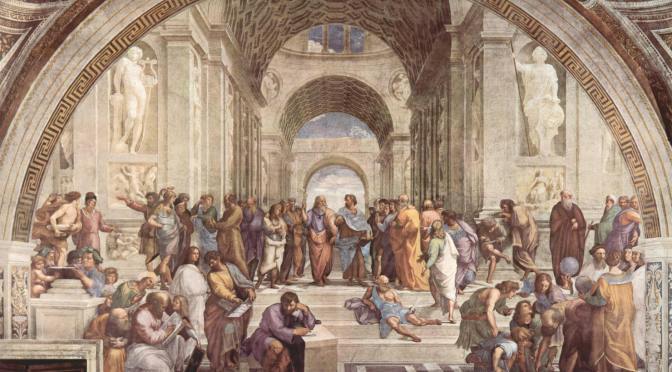
The term ‘diegesis’ (and derived adjectives ‘diegetic’ and ‘non-diegetic’) comes from film criticism, but has been used recently in RPG critique. In essence, diegesis defines the narrated world relative to the viewer (or in our case, the player). This is somewhat of a heady, academic definition, so let me give an example. In a movie, the soundtrack is typically non-diegetic. That means that the music playing that the audience hears does not interact with the narrative, with what’s going on on the screen. In some cases, though, the soundtrack is diegetic, meaning that the events of the narrative do interact with the music. The perfect example of that would be musicals: The soundtrack you hear is in fact the characters breaking into song, that is part of the narrative and the world.

And just like musicals, roleplaying games are creating assumptions about their worlds that do not align with the real world. You are never going to suddenly hear a musical cue and break into song while waiting for a bus; similarly you will never find yourself suddenly able to rebuild an engine or speak Mandarin because you were able to invest ‘skill points’. These aren’t bad things: both dramatic works and games are designed in service to their goals as art and entertainment, not to be ‘realistic’ or ‘grounded’. On the other hand, there is a vast world of critical opinion around how much the conceits of both films and games live in either diegesis or exegesis (the realms of the narrative and the audience, respectively); calling musicals divisive would be putting it mildly, and the same can be said about RPG mechanics which treat the characters more like narrative game tokens than extensions of the player.

Continue reading Diegesis, Mimesis, and You
The three layers of Triangle Agency

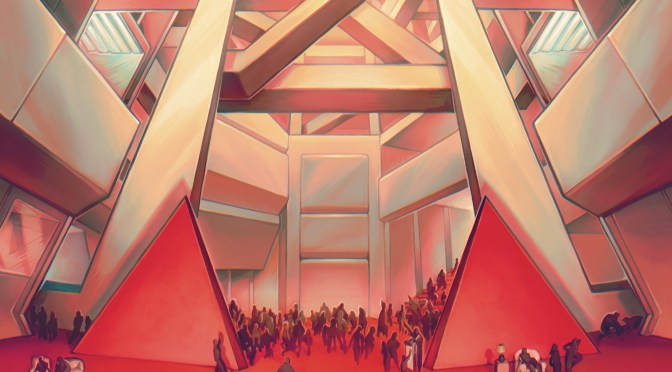
Depending on how you look at it I either chose the best or the worst time to read Triangle Agency. Over winter break I finally beat Control, and found I absolutely loved its setting and vibe. The whole reason I picked it back up again (after getting stuck with it many months ago) was that I had also finished reading all four books in Jason Pargin’s John Dies At The End series, and in doing so discovered that I actually love cosmic horror so long as that schmuck named Lovecraft isn’t involved. When Triangle Agency, a game I thought looked kind of interesting when it was funding on Kickstarter, started picking up some end-of-year momentum, it seemed like a perfect complement to all the other horror/conspiracy media I had been consuming.

In fact, Triangle Agency followed so closely in the footsteps of Control that by the time I finished the player section, I was unclear on how it was going to differentiate itself. Cute-but-horrific is the artstyle of the book, and I wasn’t loving it compared to Control’s “dead serious but yet so absurd you’ll still laugh”. However, as I finished reading the GM’s section, my opinion of the book had picked up dramatically. This is, in part, because Triangle Agency is not Control, but in part because the most interesting ideas in the setting are back there in the GM’s section, telling you how to turn a light and kind of goofy monster-of-the-week game into the conspiracy horror game Triangle Agency actually wants to be.

Continue reading The three layers of Triangle Agency

The intent of RPG reviews

It’s another new year, and I am once again asking, in one form or another, the same question I’ve asked myself in January for several years now: Why am I here? Why do I want to be here, writing about roleplaying games? Now, I’m not asking this question because the spark is gone or it feels futile (it does some of the time, but hell if that’s going to stop me). Instead, I’m checking in on myself. What am I trying to do? Am I succeeding in that?

This year, I’m also asking: Why are you here? I don’t necessarily mean at this site specifically, but why are you reading about RPGs online? More specifically, why are you reading RPG reviews? I know for a fact that the reason many go to read reviews is not exactly aligned with the reason I write them, and that’s likely why I felt the need to discuss the intent of RPG reviews.

Continue reading The intent of RPG reviews

Crowdfunding Carnival: January, 2025

Welcome to the first Crowdfunding Carnival of the year! No way around it, it’s a slow January, like many that have come before. Indie designers are often holding their cards until ZineQuest (formally announced in December), and major publishers are focused on closing out the year, which often means entering the new year with no projects on the slate (lest there be liabilities with no revenue recognition). As such, coming out of the New Year’s holiday there is often a small slate of projects, if any worth reading at all.

But fear not! This month’s update will be short but sweet, with three projects that are certainly worth looking at. While there are no major publisher campaigns active at the moment, there are two small format games tackling ambitious topics: Civilization building and mashing up time travel and giant robots. Then, we have a large-format labor of love which, though it follows in the footsteps of those before it, is still worth some consideration.

Continue reading Crowdfunding Carnival: January, 2025