
The RPG theory ship sails on unbidden, even as RPG networks of practice seem to be drifting apart. In November, there was a great post over on The Dododecahedron which bucked the trend and pulled theory work from outside of the author’s primary discipline, the OSR. Starting from a description written by Vincent Baker about the PbtA ‘conversation’, Dododecahedron author Rowan describes OSR play as an onion with four concentric layers: Character on the outside, then working inward to Mechanics, Procedures, and finally Adventure. Adventure is in the middle as the diegetic ‘fiction’ that the players are engaging with is the source of truth for OSR play. From there are Procedures, which describe the rules for how to go about play; that is to say, what travel looks like, or when random encounters occur, or how to track consumables. The next layer out is Mechanics, which describe the “rules” as most RPGs understand them; this is where initiative, ability checks, and all those specific bits live. Finally on the outside is Character, where elements like attributes, experience points, and skill ratings, all the things that make characters unique, sit.
Continue reading Coring the Onion: OSR structuralism and non-OSR gamesTag Archives: RPG Theory
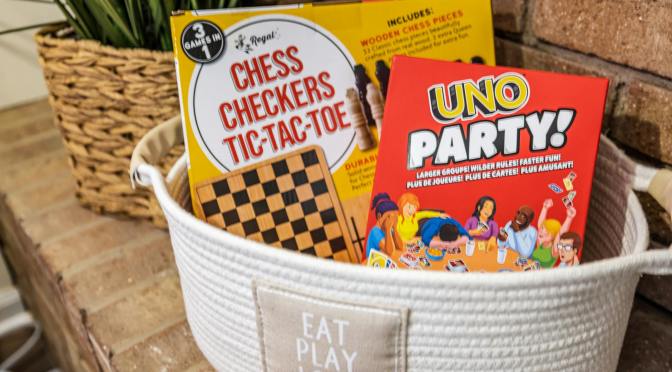
What actually happens when your group switches games?
It’s known that table dynamics affect play as much as (and some argue more than) what game you’re sitting down to play. And although both game and player are important, player aims often get talked about less or even disparaged through ‘taxonomies’ which typically valorize the playstyle of the author instead of providing objective analysis. Games are simply easier to discuss and critique; even movements which seemingly downplay the primacy of mechanics end up spending a lot of time discussing written material in the form of modules and settings which rarely if ever lead to the best gaming experience (because of, once again, player dynamics).
I started puzzling over this a few weeks ago, and wanted to return to the discussion at hand because I think it’s an important part of figuring out what you actually want to play. Needless to say, the ‘what’ in this sentence must necessarily be broader than what book you aim to pick up and puzzle through, but that’s always been the case: Even within a single game, editions, supplements, and pre-written material would always enter consideration before a single person sat down at the table. And, of course, the play outcome is still wholly dependent on the group even after the material choices are made.
Continue reading What actually happens when your group switches games?
Gaming groups and the social ‘system’
Moreau Vazh wrote an excellent post on their blog Taskerland, entitled “System Matters, Explicit Mechanics Less So”. Framing the debate on rules density historically, the post points out that gaming groups end up behaving in patterns similarly seen in many groups of people who have come together to do something creative. Of course, given that the norms of roleplaying are a great deal younger than, say, the social conventions of playing music in a group (an activity which is highly delineated and has many, many titles associated with said groups), there’s still a lot of push and pull in terms of figuring out how everyone actually wants to roleplay. Many of the norms we do have were developed either from prior art (often wargames) or came up simply because they were written into D&D back in 1974 (or perhaps a few years later, depending on the actual rule). Either way, these norms are still evolving, and as Vazh correctly points out, the hobby spends way more time agonizing over mechanics than attempting to understand the social dynamics which lead to game preferences and styles of play. And this leads to the core thesis of the Taskerland post, that ‘system’ is so wrapped up in the social norms and conflict resolution approaches of a group that the way a group plays games often transcends mechanics.
Continue reading Gaming groups and the social ‘system’
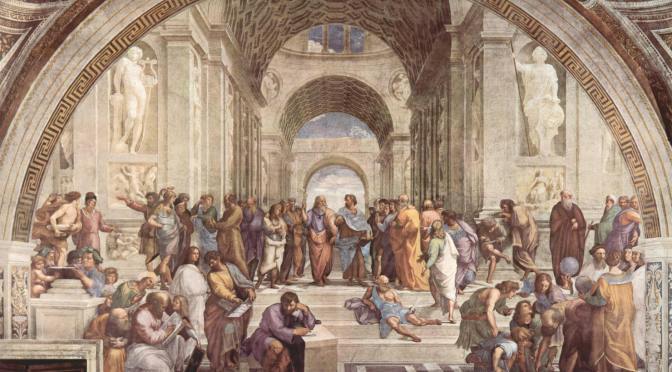
Diegesis, Mimesis, and You
The term ‘diegesis’ (and derived adjectives ‘diegetic’ and ‘non-diegetic’) comes from film criticism, but has been used recently in RPG critique. In essence, diegesis defines the narrated world relative to the viewer (or in our case, the player). This is somewhat of a heady, academic definition, so let me give an example. In a movie, the soundtrack is typically non-diegetic. That means that the music playing that the audience hears does not interact with the narrative, with what’s going on on the screen. In some cases, though, the soundtrack is diegetic, meaning that the events of the narrative do interact with the music. The perfect example of that would be musicals: The soundtrack you hear is in fact the characters breaking into song, that is part of the narrative and the world.
And just like musicals, roleplaying games are creating assumptions about their worlds that do not align with the real world. You are never going to suddenly hear a musical cue and break into song while waiting for a bus; similarly you will never find yourself suddenly able to rebuild an engine or speak Mandarin because you were able to invest ‘skill points’. These aren’t bad things: both dramatic works and games are designed in service to their goals as art and entertainment, not to be ‘realistic’ or ‘grounded’. On the other hand, there is a vast world of critical opinion around how much the conceits of both films and games live in either diegesis or exegesis (the realms of the narrative and the audience, respectively); calling musicals divisive would be putting it mildly, and the same can be said about RPG mechanics which treat the characters more like narrative game tokens than extensions of the player.
Continue reading Diegesis, Mimesis, and You
Postmodernism and RPGs
If you’re a millennial and deigned to even dip your toe into art or literary criticism, you ended up in a discussion about postmodernism at some point if only because of the time you grew up in. Modernism was a dominant bloc of philosophical and artistic thought in the western world from the 19th through the twentieth century, heavily informed by how society was changing at the time. While I’m not an especially well-read critic (I had the good fortune to study engineering in school, which is why I can blog for free), I do understand the broad tenets of modernism, which are rooted in scientific inquiry and the ability to discover truth, human capacity to create order, and an implied mission to improve all aspects of life and society through creation of something new. Modernism rejected earlier principles of realism, allowing for more innovations of form in visual art, music, and literature. And if you think I’m not about to tie this back to RPG theory communities and extensions of form like journaling and lyric games…well, you’re wrong.
Continue reading Postmodernism and RPGs
The Trouble With Combat
Role-playing games have their origins from wargames. The through-line from Chainmail to Dungeons and Dragons is an undisputed point of historical record, and the through-line from Dragon Pass to RuneQuest pretty much the same. And as the eponym of wargame is war, it’s pretty clear that all wargames have concerned themselves with killing and dying all the way back to the invention of chess. The problem is that, derivative as they are, role-playing games are not wargames. Role-playing games need not merely concern themselves with killing and dying. After nearly fifty years of evolution, I’d argue that role-playing games shouldn’t only concern themselves with killing and dying.
To be fair, even back to the earliest editions of D&D there were more interesting things going on than just monsters to slay. By 1983 we had Call of Cthulhu, where few or none of the foes within the game were intended to be ‘taken on’ in a violent manner. White Wolf games prized intrigue and social dynamics over outright violence, though both clearly had a place. White Wolf games, though, especially Vampire:the Masquerade, revealed the distinct liability of designing a game, regardless of genre or intended primary activity, with a wargame-like combat system at its center.
Continue reading The Trouble With Combat
“We Didn’t Touch Dice the Whole Session!”
Role-playing games are games which involve role-playing, and that would only be a tautology if the category was consistently named. As it is, plenty of games termed RPGs can run just fine without any role-play to speak of, and plenty of role-play described in so-called RPGs lacks the structure which would allow it to fit the loosest definition of a game. Whether not an RPG is a game or involves role-play, it is certainly a product, and perceived experience sells a product as well as if not better than the actual experience that the product delivers. There is no other medium where the audience exclaims, quite positively, that they did not in any way engage with the experience as delivered to them.
When gamers state, often with happiness, that they went through a whole session without touching their dice, this is a tacit declaration that they did not engage with the game they were playing as intended; if the game did not intend for the players to roll many dice, or had no dice at all, such a declaration wouldn’t typically be made. This is not debatable, the experience of not engaging with the rules is special only insofar as the rules are there to be engaged. As much as it’s clear that the game isn’t being played as intended, what we cannot do in a blanket way is state this is a bad thing. RPGs are designed to deliver specific experiences and many of them, especially more rules-intensive games, deliver multiple specific experiences depending on the fraction of the game you’re engaging with. Looking at what players are or aren’t doing with a specific game requires which mechanics they are or are not engaging with, as well as what they’re doing in their game which isn’t in the rules and is done without touching any dice at all.
Continue reading “We Didn’t Touch Dice the Whole Session!”
For RPGs, storytelling will win
Role-playing games were initially an offshoot of wargames. What made them different was first a question of scale, moving down from military units to single combatants, and then a question of intent, aiming to play out scenarios with more ambiguity than a classic side versus side battle scenario. As soon as the RPG medium began spreading out from its origin, many people other than wargamers saw the promise that these games held. Science fiction and fantasy fans flocked to RPGs, driven by the promise of new stories and new paracosms that could be created with the games. They were the largest influx into the hobby until the Basic D&D Red Box completely opened the floodgates in 1981.
Now, at the beginning of 2023, the influence of the RPG is seen a little differently. Sure, we’re still over here with our books and dice, but over the last fifty years or so RPGs carved a path through interactive media, permanently changing the board game, wargame, and video game hobbies. In the same way, these hobbies, no younger than the RPG at their youngest, have changed the RPG. The world of games, in a broad sense, is different, and that means the RPG fits into that world differently. With the constant growth and innovation happening across the tabletop games industry and across entertainment, it’s clear that the differentiator in RPGs is story.
Continue reading For RPGs, storytelling will win
The Trouble With Drama Mechanics
Role-playing games are all about characters, otherwise they wouldn’t be role-playing games. And what really gets someone invested in a fictional character, whether they’re playing the character or watching or reading the character, is the character’s personal journey. We love to see it in books and movies and we love to see it in RPGs, but in RPGs we typically aren’t given additional rules to support these sorts of stories. This is in part because these stories haven’t been the focus of most RPGs, well, ever, but it’s also in part due to the belief of designers that characters’ inner lives should be governed by the people who play them, not by rules.
The issue with this is that mechanics are what provide richness for games. We want PbtA games to have a palette of different moves, and we want each playbook to feel different. We want a military simulation to differentiate between all its guns and vehicles. So why would we not want rules that help us look at and play out character drama? When I looked at Hillfolk a few weeks back, one thing I thought it did very well was stake out three necessary drivers of dramatic conflict: character desire, character internal conflict (the ‘dramatic poles’), and character external conflict (‘fraught relationships’). What was missing was the next step, which was to provide structure and guidance to build and play with those drivers.
Continue reading The Trouble With Drama Mechanics
The Five Mechanic Game
There’s a wide world of games out there, but the ones that get played and talked about the most are more similar than you may think. In the realm of traditional games, most games have their rules structured the same way, at the same level of detail, to accomplish roughly the same goal. It means many of us that grew up among the bursting libraries of games in the 80s and 90s thought we were well-read, only to be waylaid by some markedly different ideas when the games of the Forge era like Burning Wheel and Apocalypse World started becoming popular.
Last week, I talked a bit about the idea of complexity, and grounded it to the idea of how many mechanics a game has interacting at once. This makes a game like Blades in the Dark, with many overlapping systems, more complex, while a game like Dread, where there is only one mechanic and it’s essentially ‘Jenga Or Die’, is less complex. What’s more interesting, though, is what it says about the middle. Basically every traditional game, from the real bloats like Exalted all the way down to little digest editions like Savage Worlds, have roughly the same type and number of mechanics. That number is five: character creation, task resolution, combat, game mastering, and at least one subsystem of note.
Continue reading The Five Mechanic Game Cannibal Halfling Gaming