
I returned, once again, to the halls of PAX East this weekend! When I wasn’t just wandering around, reading RPG books, or running sessions at Games on Demand (two sessions each of A Stern Chase Is A Long Chase and Fabula Ultima this time) I was sitting down to try games out. In case you’re attending PAX East 2026 Sunday Edition, I’ve provided the booth numbers you can find these games at to peruse them, but by and large I expect this will be something for folks to follow up on afterwards – so please peruse the many fine and elegantly crafted links to these fine and elegantly crafted games!
Category Archives: Articles

Weekend Update: 3/28/2026
Welcome to the Cannibal Halfling Weekend Update! Start your weekend with a chunk of RPG news from the past week. We have the week’s top sellers, industry news stories, something from the archives, and discussions from elsewhere online.
Continue reading Weekend Update: 3/28/2026
System Hack: Colony Sim Cortex Lists part 2
Welcome back to our System Hack! We’ve moved into the detail part of this hack, actually nailing down what everything in the game is and how it works. Now that we’ve nailed down what the skills are, it’s time to talk about Resources and Items, how they’re made, and what they do. Later on this leads us to part 3, where we lock down the tech tree and more specific base stations. After that’s all situated, it might be time to prototype this thing as a game.
RimWorld does give a guide in terms of what level of simplification we should go for. Resources like ‘compacted steel’ and ‘compacted machinery’ sidestep massive parts of the metal and machining supply chain, and also end up neatly creating resource constraints at different stages of the RimWorld gameplay loop. We’re not necessarily restricted by the same intent with our designs; this game is still an RPG at its heart and things like trading and finding more resources aren’t necessarily constrained to a single map and random events. With no (or at least much less) dead-ending, it’s okay to make the resources palette a bit broader and a bit more interesting.
Continue reading System Hack: Colony Sim Cortex Lists part 2Weekend Update: 3/21/2026
Welcome to the Cannibal Halfling Weekend Update! Start your weekend with a chunk of RPG news from the past week. We have the week’s top sellers, industry news stories, something from the archives, and discussions from elsewhere online.

Three Tiers of RPG Purchasing
There’s a wide world of games out there, and from a gamer’s perspective it’s an embarrassment of riches. More games than you could ever play or even read, and altogether too many things to do and places to start. How gamers navigate the hobby is important for game designers, who are all jockeying for the dollars that gamers spend.
Everyone goes about their gaming purchases in different ways, much as they go about buying groceries, appliances, or furniture. In gaming, a hobbyist is likely to make many gaming purchases over time, and how they segment these purchases depends on what they’re trying to do. The assessment of how buyers behave with regards to their purchases is called customer segmentation, and it’s a key element of market research and strategy consulting. When you understand how your customers act, it’s easier to plan for their behavior and make more effective product and marketing decisions.
Continue reading Three Tiers of RPG PurchasingWeekend Update: 3/14/2026
Welcome to the Cannibal Halfling Weekend Update! Start your weekend with a chunk of RPG news from the past week. We have the week’s top sellers, industry news stories, something from the archives, and discussions from elsewhere online.
DriveThruRPG Top Sellers for 3/14/2026
- Cyberpunk RED: Interface RED Volume 5
- Traveller: The Core Expeditions
- Outgunned Superheroes
- Public Access
- Traveller: Vehicle Handbook Update 2026
From the Archives
About this week seven years ago, we started taking a look at stories very closely, a thread that would wind its way across many articles and musings from then to now. From the archives this week is Level One Wonk: Narrative, a discussion of prescriptive and emergent narrative and likely the first time we reference simulation video games like RimWorld and Dwarf Fortress.
Discussion of the Week
Apologia for plain paragraphs: Sam Sorensen wrote a blogpost comparing heavily broken up, bulleted game text with minimally formatted prose, and based on the quote replies (linked above) it perhaps did not go the way that was intended. Reading through the post there’s two intermingled arguments: That RPG designers do bullets and secondary formatting poorly (likely true, requires bringing receipts) and that minimally formatted prose is better than highly structured bullets (non-falsifiable, controversial). As usual, the real answer is almost certainly to use both, and to learn the underlying layout skills that allow you to make both prose and lists as usable as possible.
Have any RPG news leads or scoops? Get in touch! You can reach us at cannibalhalflinggaming@gmail.com, through Mastodon via @CannibalHalflingGaming@dice.camp, and through BlueSky via @cannibalhalfling.bsky.social.

Breaking Down Random Generation
Random character generation is an artifact of older editions of D&D, with the OSR and other throwback movements embracing it wholeheartedly. In the present day both old-school D&D derivatives as well as the range of games derived from WFRP’s take on d100 mechanics are still locked in with random generation, with the classic ‘roll 3d6 six times in order’ being both common mechanic and a meme. The problem with random generation in this way is that putting characters arbitrarily at different places on a probability distribution, in effect making characters better or worse based on nothing but luck, is a pretty poor way to accomplish the ultimate goal of random character generation, which is to introduce variability to the type of characters that players ultimately play.
In reviewing how a number of different games handle random character generation, specifically random attribute generation, I can’t help but think that these designers know that players don’t like random generation and don’t actually like rolling bad characters. It’s widely known what the most common response to early D&D’s attribute requirements for certain character classes was: Cheat! It therefore stands to reason that games which still commit to random generation either create a system that employs randomness more deliberately, or create a system which softens the blow of the dice.
Continue reading Breaking Down Random GenerationWeekend Update: 3/7/2026
Welcome to the Cannibal Halfling Weekend Update! Start your weekend with a chunk of RPG news from the past week. We have the week’s top sellers, industry news stories, something from the archives, and discussions from elsewhere online.
DriveThruRPG Top Sellers for 3/27/2026
- Traveller: The Core Expeditions
- Cyberpunk RED: Interface RED Volume 5
- BattleTech: Force Manual: Mercenaries
- Traveller: Vehicle Handbook Update 2026
- Storypath Ultra Core Manual
Top News Stories
D&D 2024 is now officially called ‘5.5e’: I suppose this is news.
From the Archives
At this time in 2018, designer Fraser Simons was kickstarting his follow-up to The Veil, Cyberpunk FitD game Hack the Planet. While perhaps not the most ambitious extension of the mechanics from Blades in the Dark, the game took the setting building and storytelling present in The Veil and expanded it, envisioning a dystopian future city where the residents were only protected from the ravages of climate change by mitigations from massive corporations. The PCs, of course, are out to change that. From the archives this week is The Independents: Hack the Planet.
Discussion of the Week
I wish it was easier to go broad in this hobby: It’s good to occasionally remind people, as I like to say, that there’s a wide world of games out there, and at a wide range of price points. Fate, one of the cornerstones of 2010s indie, is Pay-What-You-Want. All of the ‘Without Number’ games have free versions. Many, many more expensive trad games have starter sets, which we are big proponents of here. And this isn’t even getting into things like Bundle of Holding, massive itch.io bundles, and other (completely legal) secondary markets. When accounting for inflation, AD&D 1e cost $180…we don’t have to accept “sticker shock” as a reason to devalue game designers’ work.
Have any RPG news leads or scoops? Get in touch! You can reach us at cannibalhalflinggaming@gmail.com, through Mastodon via @CannibalHalflingGaming@dice.camp, and through BlueSky via @cannibalhalfling.bsky.social.
Crowdfunding Carnival: March, 2026
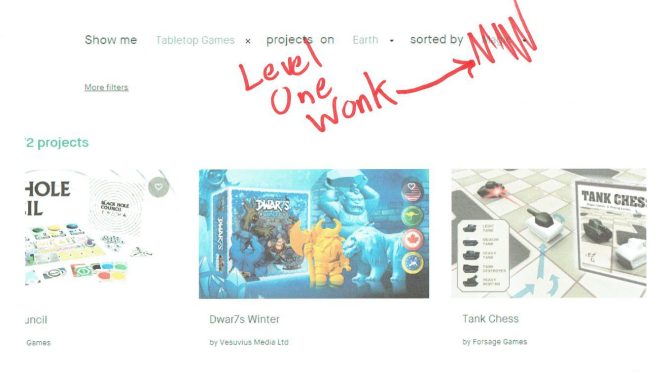
Welcome to Crowdfunding Carnival for March! We’re wrapping up Zine Month, but despite Backerkit’s more delineated timeline there are still some straggler campaigns here and there. We’ve also seen the big campaign space heat up, as not only were there several notable campaigns during Zine Month (looking at you, Blades 68) but we have big announcements at the end as well, including at least one out-of-nowhere success. Without further ado, let’s check out some games.
Continue reading Crowdfunding Carnival: March, 2026Weekend Update: 2/28/2026
Welcome to the Cannibal Halfling Weekend Update! Start your weekend with a chunk of RPG news from the past week. We have the week’s top sellers, industry news stories, something from the archives, and discussions from elsewhere online.
DriveThruRPG Top Sellers for 2/28/2026
- Traveller: Vehicle Handbook Update 2026
- Cyberpunk RED: Interface RED Volume 5
- Gods of the Forbidden North: Volume 3
- Warhammer Fantasy Roleplay: Temple of Spite
- Outgunned Superheroes
Top News Stories
Paramount wins Warner Bros. Discovery: We discussed this a bit at the end of last year, but Netflix’s purchase of Warner Brothers Discovery was beat out by a counteroffer by Paramount. While this is still another move towards consolidation in an already top-heavy industry, the monopoly play of Netflix in particular did not come to pass.
Hasbro lawsuit dismissed: The lawsuit brought against Hasbro in January has been dismissed. This is likely because it’s hard to sue someone for financial mismanagement after they make a butt-ton of money.
From the Archives
On this day eight years ago we discussed a fascinating PbtA game intended to emulate the intrigues and dark fantasy of properties like Game of Thrones. Since then, I’ve run the game and found it’s very good at doing exactly what it says on the tin…if your group actually wants that sort of story, though, is another question. From the archives this week is The Sword, The Crown, and The Unspeakable Power.
Discussion of the Week
This dungeon doesn’t play nice and neither should they: Johan Nohr, of Mork Borg fame, describes his group going through the Tomb of Horrors. Short, punchy, and exactly the sort of PC logic I both encourage and dread in my own games.
Have any RPG news leads or scoops? Get in touch! You can reach us at cannibalhalflinggaming@gmail.com, through Mastodon via @CannibalHalflingGaming@dice.camp, and through BlueSky via @cannibalhalfling.bsky.social.
 Cannibal Halfling Gaming