Welcome back to the Crowdfunding Carnival! Now, it’s Thursday, which is a little unusual. I did this, though, for you, dear readers. You see, yesterday was the first day of ZineQuest, and a veritable torrent of zines hit my inbox around the time this article would have otherwise gone to post. That just won’t do, so I held off to pick through the wreckage for you. So now we have over 40 zines, and it’s been just one day! There are some other games too, and of course our second installment of the Crowdfunding Carnival/Kickstarter Wonk fifth anniversary retrospective. Onward!
Continue reading Crowdfunding Carnival: February, 2023All posts by Aaron Marks
Rolemaster Unified Review
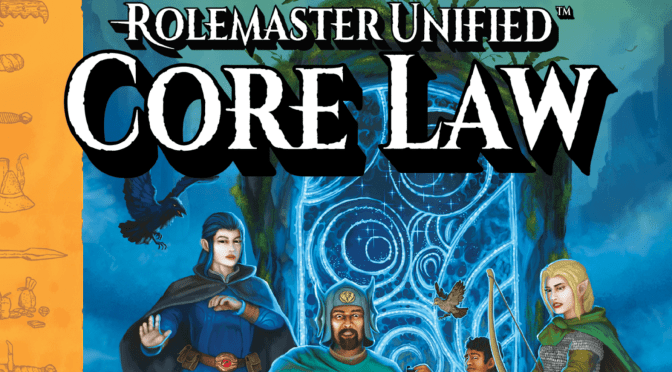
The OSR is a movement of nostalgia. Rather than seeking to actually emulate the way RPGs were played in the 1970s and 80s, the OSR is seeking to bottle the lightning of the first time you found a Player’s Handbook or Basic Set and just played, actual rules be damned. While the OSR as a movement is certainly informed by the cultural phenomenon of having the D&D red box show up in toy stores and in the hands of many kids and teens in the 1980s, the roleplaying hobby itself was already significantly more diverse than any one movement could capture. As an example, around the time that the OSR casts its rose-tinted glasses toward, there was a successful and long-lived game called Rolemaster.
Continue reading Rolemaster Unified Review
Most Games Don’t Matter
After graduating into one of the worst recessions the global economy had yet seen, I cut short a fruitless job search to go to grad school. I ended up with a Master’s Degree in Innovation Management, a field which sounds like it was made up by the Business School industry but yet taught me a lot. While invention is the act of creating something new, innovation is the act of deriving value from new things, from inventions. According to the World Economic Forum 1.7 million patents were granted in 2021, which is a huge number. But even setting aside things like filing the same patent in multiple countries, a small fraction of those patents represent anything like tangible value to society at large. While invention can happen with a bit of creativity and some work, innovation is significantly more dependent on exogenous factors, on what happens to the invention after it comes into being. RPG designers are like inventors in that way; many many people are designing, are inventing, but the vast majority of games will never make an impact on the market at large.
While there are certainly forces contributing to a greater stagnation of the RPG hobby (D&D comes to mind), the low ‘hit rate’ for new RPGs when it comes to moving the needle in the greater marketplace is largely structural, and unlikely to change in the long run. On the creator side, making an RPG is relatively easy, requiring significantly less money and specific skill than making video, digital games, or visual art, and often less time than writing long-form fiction. This means that the number of entrants into the market will be relatively high. On the consumer side, RPGs have higher switching costs than virtually any other form of media; a consumer needs to find a minimum of 2-4 friends to play with them, with a play time of two hours on the low side. Beyond that, when the presumed norm of the medium involves campaigns of literally dozens of four-plus hour sessions and understanding at least one densely-written rulebook, the perceived switching costs are significantly worse than the already high actual switching costs. These things combined to make the number of consumers in the market relatively low, and the number of games they will consume lower still.
Continue reading Most Games Don’t Matter
Intellectual Property for Gamers
The biggest piece of news in the RPG world so far in 2023 has been OGL 1.1. Wizards of the Coast announced a revision to the Open Gaming License for Dungeons and Dragons back in December, and then earlier this month a copy of the new license, OGL 1.1, was leaked to the gaming press. As of last week, the full text of the leaked license is available for anyone to read. While the terms of OGL 1.1 are simply worse for third party creators than OGL 1.0a, the previous version of the agreement, the worst part of the whole thing is the attempt to ‘de-authorize’ OGL 1.0a, a move which, if deemed legal, could threaten the futures and possibly even the back catalogs of dozens of creators. With the stakes that high, there has been an outcry on social media directed towards Wizards of the Coast and its parent company Hasbro. Among that outcry, though, is a lot of armchair legal work which is only confusing matters.
There are really only two things that need to be understood about what’s going on with the new version of the OGL. First, OGL 1.1 is a problem for game designers because it gives Wizards of the Coast a lot of control over licensees’ work, and takes away licensing rights which many designers assumed would be there in perpetuity because of the earlier version of the agreement. Second, intellectual property law and contract law, which cover what goes on both in and around the OGL and games affected by it, are both arcane enough that nothing about the new agreement’s legality, applicability, or enforceability is truly known unless a case goes to court. With that said, let’s take a look at intellectual property law and why it’s particularly weird for games.
Continue reading Intellectual Property for Gamers
For RPGs, storytelling will win
Role-playing games were initially an offshoot of wargames. What made them different was first a question of scale, moving down from military units to single combatants, and then a question of intent, aiming to play out scenarios with more ambiguity than a classic side versus side battle scenario. As soon as the RPG medium began spreading out from its origin, many people other than wargamers saw the promise that these games held. Science fiction and fantasy fans flocked to RPGs, driven by the promise of new stories and new paracosms that could be created with the games. They were the largest influx into the hobby until the Basic D&D Red Box completely opened the floodgates in 1981.
Now, at the beginning of 2023, the influence of the RPG is seen a little differently. Sure, we’re still over here with our books and dice, but over the last fifty years or so RPGs carved a path through interactive media, permanently changing the board game, wargame, and video game hobbies. In the same way, these hobbies, no younger than the RPG at their youngest, have changed the RPG. The world of games, in a broad sense, is different, and that means the RPG fits into that world differently. With the constant growth and innovation happening across the tabletop games industry and across entertainment, it’s clear that the differentiator in RPGs is story.
Continue reading For RPGs, storytelling will winCrowdfunding Carnival: January, 2023
Happy new year! First month of the year, first week of the month, that means it’s time for a Crowdfunding Carnival! We’re in the post-holiday doldrums, for sure, and between the solstice season behind us and ZineQuest ahead of us, there aren’t many games being crowdfunded right now. Fear not! I did find a few. At the same time, there’s a whole new year ahead of us, like a blank character sheet. Now seems like a great time not only to look at the games which ran out of the 2023 starting gate, but also at what I think 2023 will bring for RPG crowdfunding in general.
Continue reading Crowdfunding Carnival: January, 2023
Level One Wonk Holiday Special: 2022
Welcome to the Holiday Special for 2022! 2022…what a year. For Cannibal Halfling Gaming, 2022 was the year of pandemic bifurcation. Having started at around this time of the year in 2016, We now have three non-pandemic and three pandemic years in our history. Needless to say, it’s been a strange time in our lives, both for gaming and for everything else. At this time, though, the year is ending and we get to take a chance to stop, collect our thoughts, and look back at what the year brought us.
Continue reading Level One Wonk Holiday Special: 2022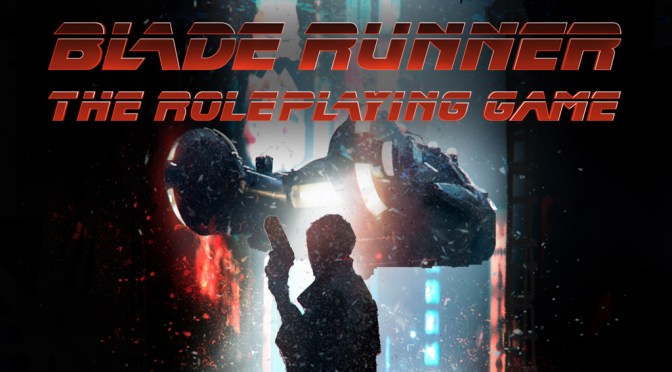
Blade Runner Review
Cyberpunk is having its second wind. The genre of postmodern science fiction best defined as ‘high-tech, low-life” was born in the 1980s, first in film, then literature, then game. Though declared dead in 1991 after Neal Stephenson’s Snow Crash seemed to parody the genre as much as embody it, Cyberpunk came roaring back in the 2010s in the wake of Citizens United, Facebook, and the second tech boom. By the time Cyberpunk 2077 was released in 2020, the setting year of its RPG predecessor, the combination of 80s aesthetic being cool again and the continued specter of corporate overlords made the children of Gibson, Sterling, and Shiner seem all too relevant. Tabletop RPGs were no exception to the trend; in addition to Cyberpunk Red becoming the best-selling non-D&D RPG of the decade so far, many imitators cropped up from all over the game design map, some adhering well to Cyberpunk themes and others not so much.
Free League, a Swedish publisher of ever increasing significance in the last few years, has stepped into the Cyberpunk ring with a licensed title. This isn’t Free League’s first go at a licensed game, with Alien receiving broadly positive reviews, but like Alien Blade Runner is a property with a lot of history and high expectations attached. Based originally on Philip K Dick’s novel Do Androids Dream of Electric Sheep?, Blade Runner basically started the Cyberpunk genre when it was released in 1982. While William Gibson had started writing in what would become Cyberpunk a little earlier (Johnny Mnemonic was published in 1981), so influential was Blade Runner that he feared Neuromancer would be dismissed as a coattail-grab.
Continue reading Blade Runner Review
Avatar Legends Review
Magpie Games currently holds the record for the most funded tabletop RPG Kickstarter with Avatar Legends, its game set in the universe of Avatar: the Last Airbender and The Legend of Korra. The Kickstarter campaign earned nearly $10 million from over 80,000 backers, a truly staggering total that, when considering campaigns for specific RPG titles, has yet to be beat. Surely the completion of this game would be met with renewed interest and immense sales success, so we’ve been looking forward to the release- wait. I’m being told that the game was released before Halloween. Huh. Well, one would naturally assume that the release would see a second wind of- so apparently the PDF version on DriveThruRPG hasn’t sold more than 500 copies since coming out. Odd. Now, to be fair, the physical game isn’t yet available, and PDF fulfillments from those preorders don’t count among the numbers I’ve cited. Even so, the campaign sold nearly 8700 PDF-only rewards, so getting not quite to 5% of that number upon release is…worrying.
As many pointed out and grumbled about during the campaign, Avatar Legends is the largest licensed RPG Kickstarter as well as the largest RPG Kickstarter in general, and as such the buyers’ motivations are often a little different. Consider: around 2,800 people paid $50 for the pledge tier which got them a physical core book and PDF copies of everything else. However, over 39,000 people opted for the $75 tier which added all the physical stretch goals. Those physical stretch goals were one more book, dice, a cloth map, a card deck, a pack of journals, and a tile. Combine that with the tier level that gave the physical stretch goals in addition to a copy of the special edition core book, and the vast majority of backers paid for the doodads. And everything I have to say in this review will not take away from those doodads, I’m pretty sure.
Continue reading Avatar Legends ReviewCrowdfunding Carnival: December, 2022
And the crowdfunding feels like a Carnival!
The games draw you in like a beer
And the folks at the bar, who put bread in my jar
They said ‘this month’s intro got real weird’
It’s December, usually a low time for crowdfunding. People have shifted their discretionary budgets towards holiday gifts, holiday travel, and anything else they need for this season’s set of traditions around turning on all the lights and screaming to beat back the coming solstice darkness. Even so! There are a number of interesting crowdfunding projects on at least two crowdfunding services which are worth a closer look.
Continue reading Crowdfunding Carnival: December, 2022
