
My gaming group consists of roughly 10 adults, each able to commit to any given gaming session only when the vagaries of their schedule allows. We run two campaigns at a time, taking into account the availability of two GMs and whichever player has a character who is a ‘hinge’ to the upcoming session. Sometimes, we cannot get a session of either campaign together but still have 3 or 4 players. In the last year or so, I’ve finally acknowledged that the only effective way to pull out some quick gaming when such an attendance squeeze arises is to pick a backup system and pull out a module.
Continue reading On ModulesAll posts by Aaron Marks
Crowdfunding Carnival: October, 2023
Welcome to Crowdfunding Carnival for October! We’ve got some horror games this month, appropriate for Halloween. We also have Tarot, Cryptids, and badgers and coyotes! The magic of RPGs only gets more magical with every new and offbeat game I see. As usual, we’ll check in with those major publishers, see what the indies are bringing forth, and then finally take a look back at the Kickstarters from five years ago.
Continue reading Crowdfunding Carnival: October, 2023
System Split: Death in Space and Mothership
Most big science fiction properties today err on the side of science fantasy. Star Wars is basically swords and sorcery in space, and Star Trek’s post-scarcity antimatter economy is built to support its storylines, not the laws of physics. In the tabletop RPG world, though, there are a few options for somewhat harder space sci-fi, especially if your definition of hard sci-fi includes horrors man wasn’t meant to know as well as the strong possibility of explosive decompression or straight up getting sucked out an airlock.
Today we’re going to look at two gritty space horror games which, through relatively light rules and strong emphasis on random outcomes, are easy for players but very tough on characters. Death in Space is created by Christian Plogfors and Carl Niblaeus, members of the Stockholm Kartell alongside the creators of Mork Borg and CY_Borg. Mothership is created by Sean McCoy and distributed and developed by Tuesday Knight Games, who are in the process of bringing the new Mothership box set into distribution as of this writing. Both games are about freelancers trying to survive deep in space, and quite often failing to survive deep in space. Despite similar rules and character survivability, each game has a degree of nuance with how it approaches the gameplay loop.
Continue reading System Split: Death in Space and Mothership
Meet the Party: Twilight:2000 American Roadtrip
In 2022 I ran a campaign of Free League’s new edition of Twilight:2000. After my review I was excited to try it out, but decided to adapt the premise, instead casting my players as American soldiers and refugees of a nuclear war. The campaign involved a roadtrip throughout the mid-Atlantic United States, meeting separatist groups, civilians, and opportunist criminals, and asking some questions about what the fractured national identity of the US would become in the face of such a monumental crisis. After about eight months the campaign ended, somewhat abruptly; the characters had made their way to Lynchburg, Virginia, home of several key players in the country’s nuclear industry but also, more importantly to the characters, a summer camp with about 400 kids who didn’t know when they’d see their parents again. A strong majority of players voted to end the roadtrip there to protect the kids and, after wrapping up some of the local storylines I had prepped, we concluded.
As much as our story came to an end, the American Roadtrip campaign outline for Twilight:2000 is still one I think holds a lot of promise. As time moves on the campaign shifts from survival to reunification, and has the potential to run for quite a few sessions. In today’s Meet the Party, I’ll introduce you to four characters who also exist in the American Roadtrip setting, albeit a different part. These four characters were generated entirely randomly with the lifepath rules in Twilight:2000 and, as a result, this is hardly a balanced party. That said, the lifepath rules generate characters you otherwise would never have written yourself, and have generated for us the story of a bunch of New England misfits who are crossing into the state of New York with a hope, a prayer, and a few guns.
Continue reading Meet the Party: Twilight:2000 American RoadtripCrowdfunding Carnival: September, 2023
Welcome to the Crowdfunding Carnival for September! There are a lot of games on Kickstarter this month; the post-GenCon recalibration has happened just as expected. Beyond that, there’s a large number of big campaigns; beyond the ones we cover here there’s a big Free League campaign for a supplement to The One Ring as well as a new collection of Game Master Advice.
There’s something else going on here, though. Is it getting…spooky? It’s not just vampire commandos and weird wizards, it really does seem like Halloween is starting earlier every year. Check out what’s on offer this month, and see if you agree.
Continue reading Crowdfunding Carnival: September, 2023
Fantasy World Review
While Apocalypse World was the starting line for Powered by the Apocalypse, Dungeon World was what got the ruleset to really take off. By adapting the rules of the perennially popular Dungeons and Dragons as well as showing gamers what it looked like when Apocalypse World was hacked, Dungeon World not only moved significantly more copies than Apocalypse World but also kickstarted the popularity of PbtA in general. Now, years later, Dungeon World’s somewhat inartful mushing of Apocalypse World and D&D together is looked upon less fondly, given years of innovation and expansion of the PbtA ruleset. When you combine that with the checkered behavior of one of its authors, Dungeon World is a game that has sent many of its fans looking for a replacement.
Oddly, straight-up fantasy has not seen a lot of entrants into PbtA. There is Fellowship, but that is designed around a specific Tolkienesque sort of story. There is The Sword, The Crown, and the Unspeakable Power, but while that plays to Game of Thrones and popular dark fantasy themes, actually playing the game demands engaging in a unique and quite adversarial experience. No, the sort of fantasy romp typified by D&D but also offered in games like Forbidden Lands, RuneQuest, and even GURPS Dungeon Fantasy, is not really present to the same degree in PbtA as it is in other places. Maybe it’s the OSR attracting the sort of small press hackers and designers who want to write fantasy, or maybe Dungeon World’s shadow is too long. Either way, there’s a new fantasy PbtA game in town.
Continue reading Fantasy World Review
What GMs Want
Starting last year and continuing into this one, there have been stories about a “dungeon master shortage” in the TTRPG hobby, specifically meaning D&D Fifth Edition. D&D rocketed up in popularity in the last decade or so since Fifth Edition was first released, but that means that some of the game’s liabilities have finally caught up with it. D&D was never great on rules clarity, but Fifth Edition, while aiming for simplicity on the player side of things, finally and completely left the DM in the lurch as the rules for that side of the screen were either executed poorly or, in many cases, removed entirely. Given the edition’s rise in popularity, the demand for DMs has completely outstripped the pool of game veterans who cut their teeth on earlier editions and could use their experience to fill in the gaps left in the 5e Dungeon Master’s Guide.
While there is no acute GM shortage across the rest of the hobby, the travails of D&D have brought the game-running role back into focus. Many indie games over the last decade have eschewed having a single player take on running the game (called both GMless, implying no need for any facilitation, and GMful, implying there is still a need for facilitation but it is split amongst multiple players), but the traditional “one GM-many players” paradigm still rules the roost across the spectrum of popular RPG designs. As the D&D hobby is finding out quite painfully, if you’re singling out one player to take on more responsibility, you’ve got to help them out.
Continue reading What GMs Want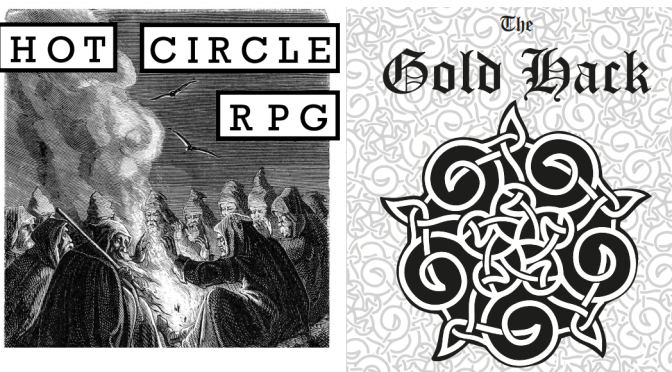
System Split: Burning Wheel Hacks
Burning Wheel is past its twentieth birthday. The game, a famously complex child of the Forge, is one that everyone seems to either love or hate. I personally love it, but in this week’s System Split I’m extending a fig leaf to those on the other side (or at least those who tried to love it and bounced off).
Burning Wheel is a game predicated on its detail; thanks to its long lists of traits, skills, and lifepaths each one of its mechanics operates in a way that is predicated on its setting, itself a nerd-among-nerd’s joy of medieval history (via Desmond Seward and Barbara Tuchman) and Tolkien (via, well, Tolkien). You can’t really take much out of Burning Wheel and have it remain Burning Wheel…when the designers tried to take things out of Burning Wheel, they ended up with Torchbearer.
That all said, just because Burning Wheel is all layered into itself like an indie RPG biscuit doesn’t mean that there aren’t buttery nuggets we can take out. Those systems, like the mechanics around Beliefs, can certainly stand alone even if we usually see them in the context of something more. With that in mind, I turn to the subjects of today’s pondering. Hot Circle, a clear riff on Burning Wheel, is written by Casper Dudarec and aims to take the core mechanics of Burning Wheel down to a simple and portable core. But wait! The Gold Hack, more of a riff on the recent editions of Burning Wheel (i.e. Burning Wheel Gold), is written by Martin Van Houtte and…aims to take the core mechanics of Burning Wheel down to a simple and portable core. Huh.
Continue reading System Split: Burning Wheel Hacks
Solitaire Storytelling: Desperation
Welcome to another Solitaire Storytelling! Until now, Seamus has been the one leading the way on solo games coverage here, finding a lot of interesting gems among all of the recent releases. Now, though, I’m throwing my hat in the ring and seeing what solo gaming has to offer. My first game is not only a solo game, it supports between one and five players. It also comes from one of the best known names in the narrative and storytelling game world, Bully Pulpit Games. In addition to a few straight-up RPGs like Night Witches and publishing other designers’ games, like Star Crossed, Bully Pulpit Games and its lead designer Jason Morningstar are likely best known for Fiasco, a comic game of Coen Brothers-style antics and table improv. The game I played this week takes a card-based format like that of the newest Fiasco edition and uses it for a very different purpose; instead of comedy we’re leaning into horror.
Continue reading Solitaire Storytelling: DesperationCrowdfunding Carnival: August, 2023
Welcome back to Crowdfunding Carnival! While I’m not in Indianapolis this month, I’m still working to sift through all the cash-in board games and sexy elf minis to bring you the best in RPG crowdfunding from Kickstarter, Crowdfundr, Backerkit, and Gamefound. It’s Kickstarter and Backerkit that are really carrying the month this month, and I have ten campaigns that I’m excited to talk about.
Continue reading Crowdfunding Carnival: August, 2023 Cannibal Halfling Gaming