itch.io is, in most ways, a great digital storefront. While it’s mostly associated with videogames, basically any kind of file can be sold there. It has become a popular place to sell ebooks, comics, music, and TTRPGs1. Unlike almost every other online storefront I can think of, I’ve never heard any horror stories about itch.io2 removing NSFW content in order to appease payment processors. Even if the site has received some criticism recently in relation to the speed with which they facilitate the formation of charity bundles, that doesn’t change the fact that itch.io has been used to raise a lot of money for various left-leaning causes.
Continue reading itch.io Needs to Introduce Revenue SharingCategory Archives: Editorial
Reviews, opinions, and whatever else strikes our fancy!
Salvage Union Review
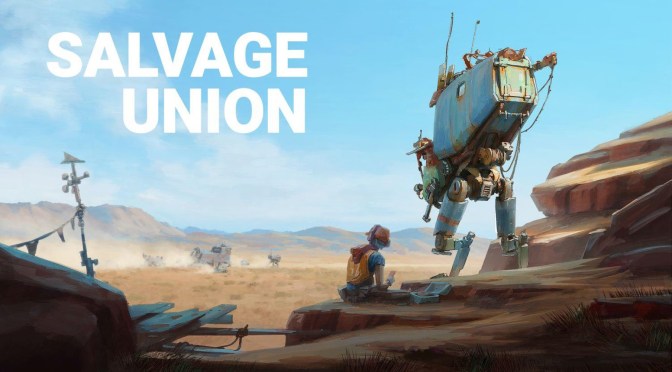
Mecha runs through the history of Cannibal Halfling Gaming; the core contributors would have never met if not for a Gundam play-by-post back in the late aughts. Mecha in RPGs has been popular more broadly as well, though usually best represented by the idiosyncratic and crunchy Robotech and Mekton as well as the more grounded (and also crunchy) Heavy Gear. Salvage Union is the latest in a line of mecha games to aim for the narrative side of the genre, though instead of the high-flying high-drama settings of mecha anime, it’s aiming for a more grounded approach couched in the post-apocalypse.
In Salvage Union your mech pilots are living on the outskirts of a society that has been sequestered in arcologies due to environmental devastation. You make your way through the world by gathering scrap to trade, modify your mechs, and maintain your Union Crawler, a large moving settlement that is your home. Like any good mecha game, Salvage Union is built on interesting decisions: Where to go looking for scrap, what systems to attach your mech, how to manage your energy and heat in mech combat. While the mechanical bones are solid (if light), the supporting setting that explains what happened to the world and what your place is in it are left a bit sketchy for a book with so many specific mech chassis contained within.
Continue reading Salvage Union Review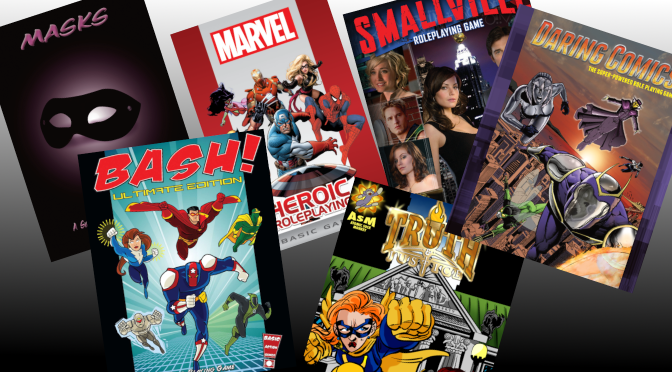
Rules-Lite Superhero RPGs Revisited: Part 6 (Conclusion)
A few months ago I wrote a survey of Superhero RPGs, and more recently I began looking into the best games from that survey in more detail. Here are links to Part 1, Part 2, Part 3, Part 4, and Part 5; since everything I say here supersedes what I said in my original post, I recommend looking at that one after reading this one, if at all [you probably shouldn’t].
Continue reading Rules-Lite Superhero RPGs Revisited: Part 6 (Conclusion)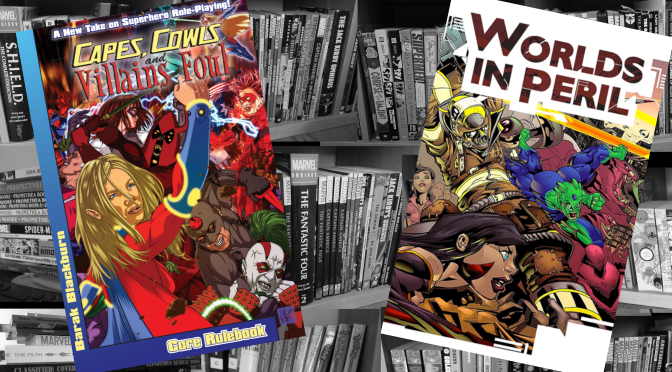
Rules-Lite Superhero RPGs Revisited: Part 5
In case you missed them, links to Part 1, Part 2, Part 3, and Part 4. This is going to be the final part of this series where I cover new games; in the conclusion, which will go live on the 16th, I will discuss which games I thought were the best. There are a lot of really good ones!
Continue reading Rules-Lite Superhero RPGs Revisited: Part 5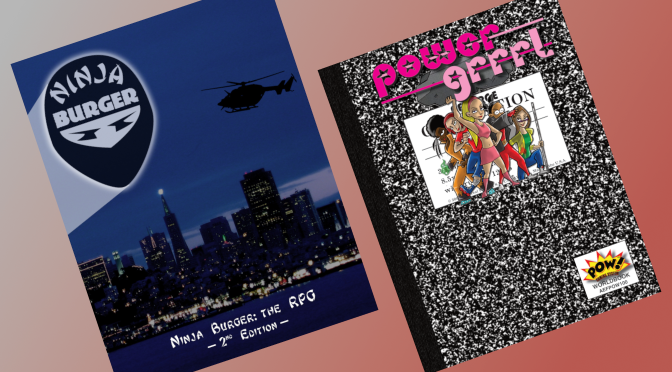
A Look Back at aethereal FORGE’s Comedy Games
aethereal FORGE was a small independent RPG publisher active during the aughts. While multiple artists, editors, and other contributors were hired by æF, the publisher’s products were largely conceptualized and written by a single person, Michael Fiegel.
Continue reading A Look Back at aethereal FORGE’s Comedy Games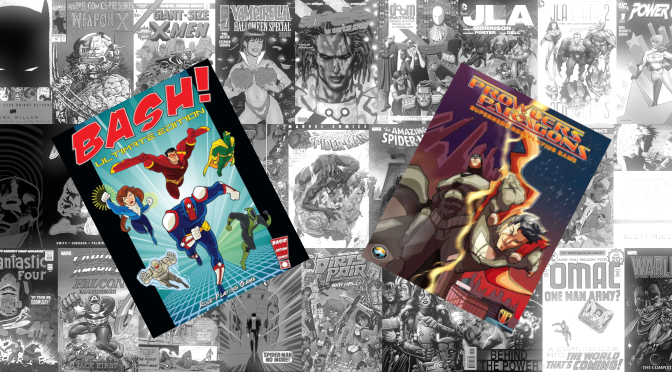
Rules-Lite Superhero RPGs Revisited: Part 4
Here are links to Part 1, Part 2, and Part 3 if you missed them. Anyways, this week’s post is going to be a lot shorter than usual.
After finishing 90% of an entry on Prowlers & Paragons I discovered Sean Patrick Fannon, co-author of the “Ultimate Edition”, has an extensive history of sexual harassment. The original version of the game that Fannon did not work on is still available on DriveThruRPG, but I cannot personally comment on its quality.
Continue reading Rules-Lite Superhero RPGs Revisited: Part 4
Cyberpunk Edgerunners Mission Kit Advance Review
Few tabletop roleplaying games have leveraged other forms of licensed media into improved sales of the original material better than R Talsorian Games’ Cyberpunk. No game has popped back into our weekendly noting of bestsellers more times long after initial release than Cyberpunk RED, and while they’re not the only factor the biggest noticeable spikes were in the wake of first Cyberpunk 2077 and then Studio Trigger’s Cyberpunk: Edgerunners anime. For those who played as V and watched David Martinez chrome up and went looking for more, though, RED could be a bit jarring: it’s still Night City, but a very different one, not 1:1 the setting the players and viewers would have been hooked by. Clearly the bait was good enough, but a certain Fixer got us a look at something that will pull them in ever better ahead of its release: the new Cyberpunk Edgerunners Mission Kit. Wake up, samurai. We’ve got a beginner’s game to review.
Continue reading Cyberpunk Edgerunners Mission Kit Advance Review

DOGS Review
Vincent Baker’s Dogs in the Vineyard occupies a strange place in TTRPG history. The game’s thematic content relating to Mormonism in the wild west was unusual in itself, and it was the reason the game ultimately was removed from circulation by Baker. Games disappear all the time, but because Vincent Baker was an acclaimed designer even before he created Apocalypse World, Dogs in the Vineyard has gained a certain level of mystique. Of course, we live in the age of the internet. If you really want to find a PDF of Dogs in the Vineyard, you can. But there’s a newer option that divorces the mechanics of Dogs in the Vineyard from its setting.
Continue reading DOGS Review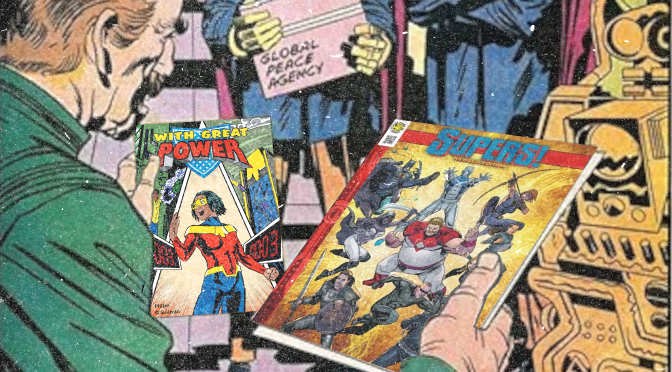
Rules-Lite Superhero RPGs Revisited: Part 3
Here are links to Part 1 and Part 2 in case you missed them. To open this part, I’d like to talk about hallmarks of the superhero RPG genre; there are some things I’ve noticed across all of these games that I think are worth highlighting.
Continue reading Rules-Lite Superhero RPGs Revisited: Part 3
Rules-Lite Superhero RPGs Revisited: Part 2
Here’s a link to Part ,1 in case you missed it. I originally was going to just go straight into talking about the games, but I decided I’d quickly talk about some of my favorite superhero comics here. I’m doing this partially so that you, as a reader, can know what I care about in superhero comics, what I would want to see emulated in a game . . . but it’s mostly so I can create a cool visual motif for this article. You can skip this if you don’t care.
Continue reading Rules-Lite Superhero RPGs Revisited: Part 2
