
Edge Studio has been quiet for much of its current existence. While Edge had an original incarnation making RPGs like End of the World, in its current version it’s the RPG arm of Asmodee, built up in part from the original Edge Studio but primarily from the roleplaying team of Fantasy Flight Games. Immediately after Edge Studio was formed they did little besides finish existing Fantasy Flight obligations, mostly in the form of Legend of the Five Rings supplements. While Edge was also responsible for releasing the Twilight Imperium supplement for Genesys and a few 5e-based games, there has not been an Edge-developed RPG system. Until now. Finally in broad distribution at the end of November, Arkham Horror is both a new swing at an old license but also a completely new set of RPG mechanics, the Dynamic Pool System. While the Dynamic Pool System certainly drinks from the same well as Genesys, for Arkham Horror it presents much simpler mechanics; there are no custom dice, only d6s, and while the game provides the comfortable framework of character classes there are really only two mechanical levers players need to worry about pulling, skills and knacks. All in all, it’s a simpler ruleset designed to be an easier way to play Call of Cthulhu. The question, of course, is if that’s something that we want.
Continue reading Arkham Horror RPG ReviewCategory Archives: Editorial
A Brief PAX Unplugged 2024 Retrospective
I haven’t been able to attend every PAX Unplugged, but I was there at the start and as the convention circuit has grown back I’ve actually managed to chain a few of them together. In addition to noting as many familiar faces and games as I could manage for a middle-of-the-night article, I wanted to write about some of my own experiences now that the 2024 iteration is over to highlight a few things. Also, Aaron has been doing five-year retrospectives about Crowdfunding Carnival for a while now, so why not do a seven-year con one of my own?
Cannibal Halfling’s Reviewed Games at PAX Unplugged 2024
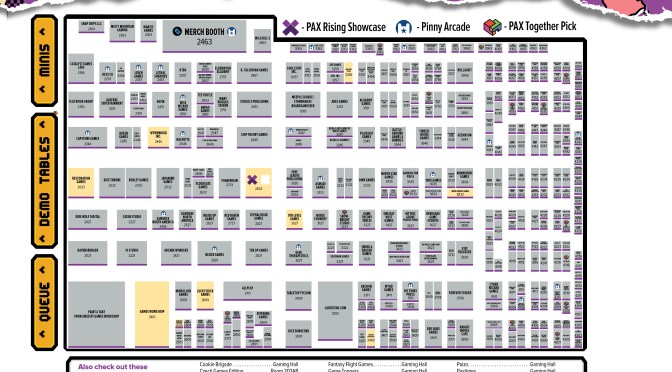
Cannibal Halflings are once again haunting the halls of PAX Unplugged, and once again we’re seeing a lot of familiar faces (and games). There’s… so darn much, there’s no way I’ll cover everything we’ve even already looked at, never mind everything at Unplugged that is worth checking out, but hey, got to start somewhere, right?
Continue reading Cannibal Halfling’s Reviewed Games at PAX Unplugged 2024

Network effects make you play D&D
As children of the social media age, we’ve heard the term ‘network effects’ before. Network effects are the observation that, for certain goods and services, their utility (benefit to the user) increases the more people are using them. The classic example is a social network like Facebook: The more of your friends are on a social network, the more useful it is to you. Services with strong network effects are also built with strong switching costs; a network effect is only defendable if there’s a disincentive to join multiple networks at once, and if leaving one network for another is difficult. This is why extracting your data from a service like Facebook is a pain, and why these services try to prevent you from exporting your contact list at all costs. Make the service more useful by getting more people on it, but then make it hard to leave so these people stay.
What does this have to do with RPGs? There are few direct network effects or switching costs involved with the act of playing a game: You find a group of your friends who are willing to play (and maybe learn) the game, then you play it. If you want to play something else, you put it down. For better or worse, though, roleplaying games are a hobby which involves multiple points of interaction and modes of social signaling. And while the hobby may not have switching costs, it does have barriers to entry. These are both real barriers, like finding a group of people you play well with, scheduling multiple game sessions, and spending a fair amount of time prepping campaigns and characters, as well as imaginary ones, like the amount of effort it takes to learn the next new system, and the risk of playing the ‘wrong game’. It’s important to acknowledge perceived barriers to entry because that’s where network effects within the hobby begin to affect your behavior; specifically, indirect network effects are quietly encouraging you to play D&D.
Continue reading Network effects make you play D&D
So You Want To Slay The NaGaDeMon
Welcome to November! Welcome to National Game Design Month!
A ‘NaNo Rebel’ that was spun off from NaNoWriMo* by Nathan Russell in 2010, National Game Design month is almost exactly what it says on the tin: a month dedicated to designing games of all kinds by creating, talking about, and playing them! It’s only inaccurate in terms of the first word, since people from all over the world now participate, but ‘slaying the InGaDeMon; doesn’t quite roll off the tongue or conjure images of a defeated serpentine foe.
But how, asks the neophyte game design adventurer, can I slay such a beast? Especially considering such a time limit, and the month has already started? Well, I’m no wizened elder in this regard, but I have fought against several NaGaDeMons and experienced both victory and defeat, so here are my own tips and tricks!
Zombie World Review
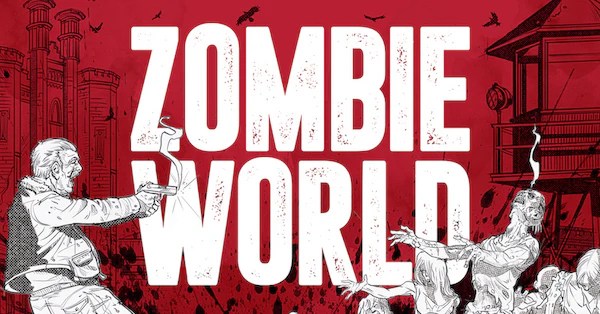
Apocalypse World won accolades due to its design, but Powered by the Apocalypse won sales thanks to its handling of genre. The minute that someone took a stylized post-apocalyptic soap opera and ran D&D with it, everyone wanted to see what they could do with the framework. Horror is no different; PbtA has proven adept as a basis for monster hunting, urban fantasy, and Victorian Penny Dreadful, among others. Naturally, someone turned to zombies.
Zombie World is a Magpie Games production, primarily designed by Brendan Conway (of Masks fame). Given coverage of their current licensed games, one could easily surmise I have a chip on my shoulder regarding Magpie’s output. Luckily, Zombie World is a great example to show that this is not the case; the game is both intensely innovative and intense to play. There are some problems with the game but the biggest one affects how well the game has sold, not the quality of the play experience. What is that problem? The game is card-based, and for all of the (positive) impacts it has on the play and packaging, it has made the game difficult to translate into a digital counterpart, affecting sales and availability.
As a card-based game, Zombie World threads the needle of using tried and true PbtA mechanics while making the best use of its unique form factor. In my opinion this is accomplished well; the game reads and plays fast and the 32 page rulebook included really is all you need. To really test how this all worked, I picked up a copy of Zombie World and took it to my online gaming group’s in-person gaming weekend for a one-shot. While the players were going harder than normal given the vibe of the weekend, I was still surprised at how quickly and easily Zombie World devolved into Walking Dead-like drama; our game involved backstabbings, double-dealing factions, and, of course, overrunning both the harbor and city hall of a large city with zombies.
Continue reading Zombie World Review
The Digital Divide
There was in fact a great split between roleplaying games at a table and those on a computer, but it happened years ago. The first digital version of D&D came about in 1975, merely a year after the game was released; it was called Dungeon and was originally developed for the PDP-10 mainframe. Although Dungeon was an unlicensed emulation of the D&D ruleset, the primary thing that prevented it from taking off in university computer labs was its exceptionally steep memory requirement…36 kilobytes. Needless to say, the reality of the RPG video game has changed.
Dungeon, and its successors like DND (Dungeons of the Necromancer’s Domain, but we all know the intent of the acronym) helped to kick off the RPG video game in the mid 1970s, but by the 1990s it was a completely different world. While TSR was failing and getting acquired by Wizards of the Coast, games like Baldur’s Gate and The Elder Scrolls: Daggerfall were both imminently successful and also almost nothing like their tabletop forbears. Video games were already doing things that no tabletop GM could have dreamed of, while also casting aside the elements of RPGs that computers weren’t really capable of doing at the time. Baldur’s Gate has faster and flashier combat than any game table you can imagine, but no matter how many times you play it, the basic story will be the same each time.
Let’s gather back here in 2024. Video games, aided by unimaginable computing hardware and multi-million dollar budgets, have become something that the average nerd in the 1990s (let alone the 1970s) could only have dreamed of. At the same time, though, tabletop games have continued to capture imaginations and, over the last ten years have also exploded in popularity. The RPG has also headed back to the digital realm, just like it did in 1975. This time, though, there’s recognition. The massive, high fidelity world of video games exists, and it’s big business. Tabletop RPGs, though, are wandering back to the digital realm with virtual tabletops, digital assistants, and soon, AI game masters. With the continued re-integration of software into the hobby, it seems like a prudent time to ask: Where is the line? And, perhaps more importantly, how is this time different than it was in 1975?
Continue reading The Digital Divide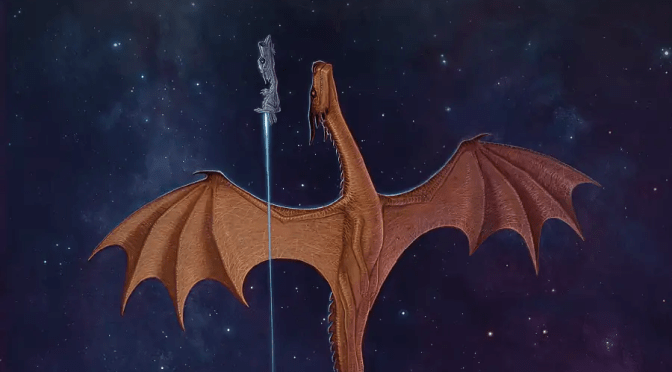
Discworld: Adventures in Ankh-Morpork Quickstart Review
A world, and a mirror of worlds. Atop four giant elephants atop a giant turtle rests Sir Terry Pratchett’s Discworld – where the most dangerous barbarian is an old barbarian, where fleeing your destiny is the surest way to run into it, where a million-to-one chance always works out, where a single humble hero will always win while outnumbered, and where you have to practice believing in the little lies (stories) in order to make the big ones become true (justice, mercy, etc.. It’s been the subject of Roundworld-made roleplaying games before, but sometimes stories like to repeat themselves with a new twist, and this time there’s something of a primer. This is the Discworld Quickstart Guide from Modiphius Entertainment!
Continue reading Discworld: Adventures in Ankh-Morpork Quickstart Review

We Need to Have Another Talk About AI
For a lot of people I think talking about the negatives of AI is pretty exhausting and trite. In online bubbles that are primarily dominated by artists, you could be fooled into believing that only massive corporations are behind AI, and that basically anyone who isn’t a heartless CEO or an embarrassed millionaire of some kind is firmly against it.
But that’s not the reality. The big news from last month is that Wizards of the Coast wants to use AI more frequently moving forward. It’s an expected move from a giant evil corporation; nothing new to see here. What will definitely receive less attention is that a new rule banning all AI content in /r/OSR has received a not insignificant amount of backlash. This is much more significant to me, because the OSR community prides itself on having a DIY ethic. So it’s about time we had yet another intervention about AI.
Continue reading We Need to Have Another Talk About AI
Invention and Innovation in TTRPGs
Invention is a word that most people understand. Inventing is the process of creating something new, and thanks to the patent office we even have broadly accepted standards for what constitutes an invention (novel, unique, non-obvious). Innovation is a bit more difficult to put a finger on, in no small part due to its continual dilution as a popular buzzword. Broadly, though, innovation is the combination of invention and value creation, the ability to make new things useful. I’ve actually talked about the invention/innovation dichotomy before, when I opined on how Most Games Don’t Matter. Indeed, a lot of the gap between invention and innovation in the tabletop RPG world is the gap between the hundreds if not thousands of games that come to market and those which actually make a market impact. That said, I don’t need to retread the grounds of how oversaturated the RPG market is. I want to discuss the innovation that does occur and what it actually means to bring that innovation to market.
Continue reading Invention and Innovation in TTRPGs
