
Last week I puzzled over my “review” of Lovecraftesque. The game is certainly well done, and it is an improvement over earlier games like Fiasco in terms of how it is structured and how it uses board game elements like a game board and cards and tokens. It’s also a Mythos game that uses themes and structure from Lovecraft’s work instead of literal elements of the Mythos, and so I was fairly critical in how it didn’t go deeper to some of the underlying themes below the surface-level stories of horrors from beyond comprehension. But the question in the back of my head while I was writing was “So what? The designers don’t owe me a deeper game.” This is true. And I’ve been thinking about it.
Continue reading Do games need a reason to exist?
Weekend Update: 3/22/2025
Welcome to the Cannibal Halfling Weekend Update! Start your weekend with a chunk of RPG news from the past week. We have the week’s top sellers, industry news stories, something from the archives, and discussions from elsewhere online.
Continue reading Weekend Update: 3/22/2025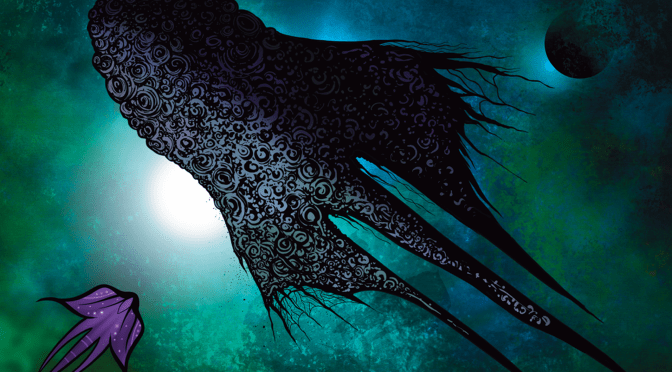
Lovecraftesque: Shadows Over Story Games
As I’ve been consuming more cosmic horror, I find that my relationship with games set in Lovecraft’s Cthulhu Mythos mirrors my relationship with licensed games. I think there is so much room for them to be great, and then I’m inevitably disappointed nearly every time I read one. In the case of licensed games, this is often because they’re pretty bad; the relationship between licensed games and money is inextricable, and the best licensed games borne out of love and fandom are often from a time in the hobby’s history that’s long gone. In the case of H.P. Lovecraft, it’s a bit more complicated. Lovecraft is a divisive figure, both having essentially invented cosmic horror and changed science fiction forever while also being a known racist, even beyond the conventions of his time. The biggest problem I have with the Cthulhu Mythos in pop culture is twofold: First, the xenophobic roots of Lovecraft’s works are rarely examined or critiqued in games, an omission made even more galling by designers’ desires to hew to a 1920s setting for their games without asking more serious questions about it. Second, the continued sanitization of Lovecraft creations in pop culture (the ‘Cthulhu plushie’ phenomenon) makes it that much more difficult to have conversations about xenophobia, cosmicism, and even New England folklore and dissect how these factors all influenced Lovecraft and his work.
Continue reading Lovecraftesque: Shadows Over Story Games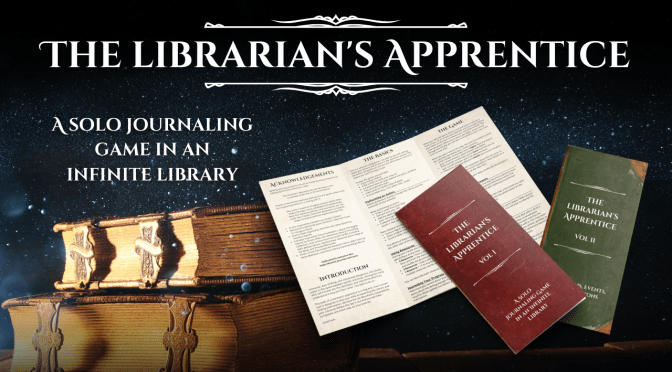
Solitaire Storytelling: The Librarian’s Apprentice
Infinite, ever-shifting, and sometimes dangerous, the Library exists in the space between worlds and times. Among the many who call it home are the Librarians, and only those who truly understand it may join their ranks. I seek to do so.
The path of a Librarian’s apprentice is a long one. My current task is designed to test my skills at traversing the Library and finding information. If I retrieve the six documents requested by my Librarian before the day is out, I will have completed one more step on my journey.
I think I’ll be okay. After all, I stumbled into the Library on my own and survived in the stacks for a while, dodging all manner of dangerous tomes and trespassers. Now I actually have training as an apprentice and the help of my familiar. the tumblefluff Dog ear, a library spirit who helps me navigate the stacks. That doesn’t mean it’ll be an easy task; after all, as the library itself once whispered to me, there are more things twisted here than plots.
Continue reading Solitaire Storytelling: The Librarian’s Apprentice
Weekend Update: 3/15/2025
Welcome to the Cannibal Halfling Weekend Update! Start your weekend with a chunk of RPG news from the past week. We have the week’s top sellers, industry news stories, something from the archives, and discussions from elsewhere online.
Continue reading Weekend Update: 3/15/2025
Hero Forge Custom Dice Kickstarter Review
Hero Forge did its first Kickstarter more than ten years ago to launch a custom miniature printing business, and launched a second one to bring color to their minis. In between and after the fact the platform has continued to add more and more options to their catalog: new items, species, materials, and so on. Now Hero Forge has a third crowdfunding effort, and it’s focused on what you use to determine your miniature’s fate: the dice.
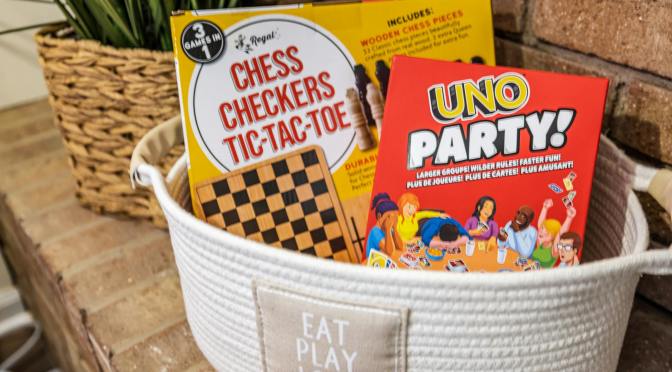
What actually happens when your group switches games?
It’s known that table dynamics affect play as much as (and some argue more than) what game you’re sitting down to play. And although both game and player are important, player aims often get talked about less or even disparaged through ‘taxonomies’ which typically valorize the playstyle of the author instead of providing objective analysis. Games are simply easier to discuss and critique; even movements which seemingly downplay the primacy of mechanics end up spending a lot of time discussing written material in the form of modules and settings which rarely if ever lead to the best gaming experience (because of, once again, player dynamics).
I started puzzling over this a few weeks ago, and wanted to return to the discussion at hand because I think it’s an important part of figuring out what you actually want to play. Needless to say, the ‘what’ in this sentence must necessarily be broader than what book you aim to pick up and puzzle through, but that’s always been the case: Even within a single game, editions, supplements, and pre-written material would always enter consideration before a single person sat down at the table. And, of course, the play outcome is still wholly dependent on the group even after the material choices are made.
Continue reading What actually happens when your group switches games?Weekend Update: 3/8/2025
Welcome to the Cannibal Halfling Weekend Update! Start your weekend with a chunk of RPG news from the past week. We have the week’s top sellers, industry news stories, something from the archives, and discussions from elsewhere online.
Continue reading Weekend Update: 3/8/2025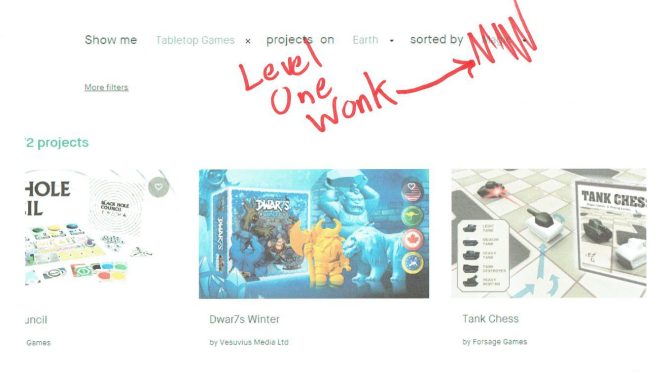
Crowdfunding Carnival: March, 2025
Welcome to Crowdfunding Carnival for March! We’re in the post-zine nowhere zone, where backers and creators alike have a little bit of a hangover. Even so, there are still some interesting games to talk about. March and April have become a key campaign window for larger publishers after zine enthusiasts put them on blast for trying to campaign during Zine Quest (even if such campaigning may have been a net positive), so even in the early part of the month I have a number of campaigns and early campaign notices that all seemed to show up in my inbox exactly on February 28th. This means that even though there’s a smaller number of campaigns this month, we’re still seeing at least two major licensed campaign pushes. It’s even possible one of the two might be worth backing!
Continue reading Crowdfunding Carnival: March, 2025Weekend Update: 3/1/2025
Welcome to the Cannibal Halfling Weekend Update! Start your weekend with a chunk of RPG news from the past week. We have the week’s top sellers, industry news stories, something from the archives, and discussions from elsewhere online.
Continue reading Weekend Update: 3/1/2025 Cannibal Halfling Gaming