
It’s time to move from theory to practice. As we move on to the next stage of this System Hack, I’m going to start taking the elements we discussed in the first set of articles and make them into actual game elements. For today, that means character creation. When we discussed characters for this System Hack, we landed on some pretty straightforward prime sets: Attributes, Skills, and Distinctions. As such, we’re going to lock in our Attributes and Skills. For Distinctions, the number I’d want to write is perhaps a bit high to cover comprehensively in one article, but I am going to lock in what the three Distinctions each character has are, what they do mechanically, and how they’ll be roughly categorized.
Continue reading System Hack: Colony Sim Cortex Lists part 1Tag Archives: Advice
Organizing an itch.io Bundle
I’ve organized five itch.io bundles. Four of them have already happened, and one of them is still live for a few more hours. Here are links to all of them1:
Continue reading Organizing an itch.io BundleSystem Hack: Colony Sim Cortex Tasks and Work
When you boil it all the way down, RimWorld is a game where you assign tasks to your colonists and optimize how they get performed. Every time you place down blueprints, place a zone, or add a ‘bill’ to a production structure, you’re effectively communicating a specific task. When it comes to our tabletop colony sim, these sorts of tasks are going to be a cornerstone of the gameplay loop just like how they are in RimWorld. The actual implementation, though, is going to be quite different.
Structured time in RPGs is seen as something to be avoided, at least outside of combat. In most trad games, the passage of time is something either tracked closely in increments no more than a few seconds, or glossed over entirely. We have started to see games, especially games using Free League’s YZE system, paying more attention to the passage of time, while Edge’s new DPS mechanics used in Arkham Horror are assigning a mechanical bounding to the typically loose definition of a ‘scene’ by anchoring characters with a dice pool that exhausts over the span of one scene. It’s useful to consider rules like these for our game, but a Colony Sim is going to require something different. With productive tasks being primary, constant and consistent time tracking is going to be needed to fairly assess what’s going on in the colony.
Continue reading System Hack: Colony Sim Cortex Tasks and Work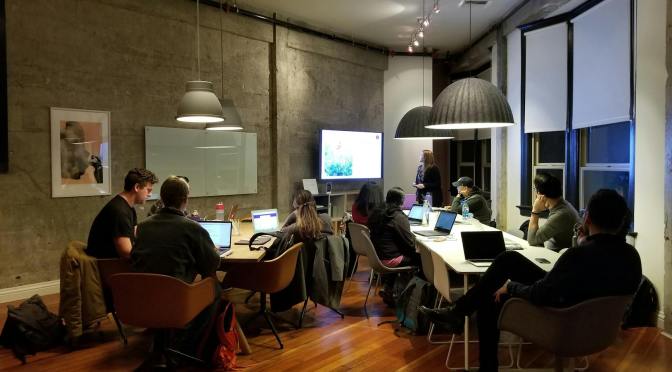
Big groups, small games
For the most part, the ideal size for a gaming group is five, four players and a GM. This is driven by group dynamics; researchers wrote in the Harvard Business Review back in 2018 that the ideal group size for meetings is between five and eight, at least if the point of that meeting is to have a productive discussion and get things done. Roleplaying games skew to the lower end of this mostly just due to the fact that in addition to the actual ‘meeting’ of a game, there is also the need to manage that many characters, their contributions, and their stories.
Ideal doesn’t mean only, and an experienced GM can run games anywhere in that 5-8 range without too many problems, at least as long as they’re realistic about how long things will take. More and more, though, games are being written towards a specific group size, usually a smaller one. In some cases it’s obvious, like Fiasco: the number of turns in the game, and therefore the amount of time the game will take, is directly proportional to the number of people playing, and even playing with five people, the maximum number recommended by the rules, the game begins to sprawl and the story begins to sag. In other cases, the restriction comes from a clear place, but the question hangs in the air about how to subvert it. A good example of this is DIE: There are six roles, six dice. That’s how many there were in the comic, therefore that’s how many there are in the game.
Continue reading Big groups, small games
Confessions of a “realistic” GM
I feel there is a certain arc that you see among tabletop gamers, especially those who get their start with D&D. D&D is, like anyone’s first RPG, the gateway to a new world, a new mode of expression and imagination. While lots of people enjoy games, some end up enraptured, vibrating at the thought of what they can do and create. So they become a DM and start writing, start doing as much as they can with the game. And they start hitting walls. Some of the walls are from the game; the sort of ‘game logic’ of D&D only tells a limited palette of stories no matter how much the marketing says otherwise. So they try another game. And another game. In most cases, game logic still prevails. Some of the walls, though, are from the other players. Even if the DM wanted to try another game, the players wouldn’t necessarily go along with it. And from the perspective of the person who was most excited by the game, it certainly looks like the other players aren’t taking it seriously enough. The stakes that our aspiring writer sees in their worlds, the other players…don’t. So how do they fix this? How do they make everything feel serious to everyone at the table? How do they make the players feel the way they feel?
This story is a familiar one, and I know that because it’s my story. I was the one who was vibrating out of my chair with excitement at the idea of creating worlds in D&D, and my disenchantment with how D&D actualized those stories led me to Cyberpunk. And when it seemed like the intrigue of the stories wasn’t resonating with my players, I tried to make the game more serious, more internally consistent, more “realistic”. And years later, when I found a literal generation of heartbreakers and retroclones dedicated to making D&D more lethal, making wizards less powerful, and generally making the game more difficult, I finally realized two things. One, there is a nearly universal desire for grounding and meaning among those who tell stories, whether they do so with TTRPGs or something else. And two, for those of us working in the TTRPG medium, making the game ‘grittier’ is usually the answer to a different question than the one actually being asked.
Continue reading Confessions of a “realistic” GM
The funnel and beyond: Pre-play character creation
In RPGs, character creation methods abound. You can create characters mechanically with point and option spends, build them alongside a backstory with a lifepath, or just roll some dice and see what comes out the other end. When it comes to actually aligning the characters with the game you’re about to play, so much so that you need to bring the GM along for the ride, I think I’ve found one of the best options. Now, one reason you’ve likely never done this before is that it’s time-intensive and it can be a lot of extra work for the GM if not all of the players. Another reason, though, is that to really play through character creation, you need mechanics to do so. Precious few games have these mechanics, but after giving one such system a spin I’m pretty comfortable saying it should be more of a thing for campaign play.
Continue reading The funnel and beyond: Pre-play character creation
So You Want To Slay The NaGaDeMon
Welcome to November! Welcome to National Game Design Month!
A ‘NaNo Rebel’ that was spun off from NaNoWriMo* by Nathan Russell in 2010, National Game Design month is almost exactly what it says on the tin: a month dedicated to designing games of all kinds by creating, talking about, and playing them! It’s only inaccurate in terms of the first word, since people from all over the world now participate, but ‘slaying the InGaDeMon; doesn’t quite roll off the tongue or conjure images of a defeated serpentine foe.
But how, asks the neophyte game design adventurer, can I slay such a beast? Especially considering such a time limit, and the month has already started? Well, I’m no wizened elder in this regard, but I have fought against several NaGaDeMons and experienced both victory and defeat, so here are my own tips and tricks!

Weekend Update: 9/29/24
Welcome to the Cannibal Halfling Weekend Update! Start your weekend with a chunk of RPG news from the past week. We have the week’s top sellers, industry news stories, something from the archives, and discussions from elsewhere online.

Guide for the Perplexed: Retail Institutions
Welcome to the second installment of Guide for the Perplexed! Last time I introduced three of the largest RPGs that aren’t D&D, games with long enough histories and big enough communities that they’re easy to get into and find players. Now I’m going to talk about a different angle for finding games and finding players: The places you go to shop for games.
I’ll be the first to admit that it’s a lot easier to find games online; between DriveThruRPG and itch.io virtually every game imaginable is one click away (and the two publishers that don’t use these sites are huge and have their own). That said, the ‘friendly local gaming store’ can not only give you access to games, but also advice and even networking. Admittedly the reputation of the game store has been pretty negative for a lot of the hobby’s history; game stores were historically seen as unfriendly to women and minorities and the progenitor of many horror stories as a result. Luckily this is changing, and as even D&D itself is aiming to become more welcoming and accessible, few stores are going to stay in business without putting some effort into the ‘friendly’ part of the moniker.
Continue reading Guide for the Perplexed: Retail Institutions
System Hack 101
Here at Cannibal Halfling we’ve been system hacking for more than six years: Taking game systems we know and love and making them do something else. In some cases this has been fairly concrete, like adding mecha to Genesys or designing a way to play Fiasco with two tables that switch it up at The Tilt. Other times we’ve gotten abstract, talking about dice or playing cards or what ‘advancement’ is. In every case, though, there’s been a common thread: We’ve looked at an existing piece of game design and, with our experience playing and running games, made it do something else.
This sort of hacking is both easier and harder than clean-sheet game design. We’re working with the assumption that the game we’ve chosen works, and works very well, for a core of what we want our game to be about. That means that as we address the things that it doesn’t do well or doesn’t do at all, we need to preserve the strengths that already incited us to pick the game in the first place. Luckily, hacking is built into the culture of roleplaying and, because of that, is often built into the games we play from go. Apocalypse World had an entire chapter on creating custom moves before anyone knew that there was a demand for it. Fate has structured essentially all of its rules supplements into ‘toolkits’ for helping you make the system do what you want. The OSR is predicated on backwards compatibility with the entire d20 universe. We are a hobby composed of hackers.
Continue reading System Hack 101 Cannibal Halfling Gaming