Tag Archives: Opinion

The Meaning of Heartbreaker

Ever since Dungeons and Dragons was first released, there have been designers who thought they could do better. Some of them were right, and right fairly quickly; Ken St. Andre, Greg Stafford, and Marc Miller are all luminaries of the hobby who made their mark before the 70s ended. Many others, though, were not. After all, game design is like many creative pursuits, and while some have the talent and skill to pull it off, others…don’t.

As the hobby developed, someone came up with a name for the less inspired clones of D&D and its ilk: the fantasy heartbreaker. There are a couple of etymologies for this phrase. The first refers to the heart of the designer. In the 70s, 80s, and 90s, if you wanted to put out a game, you really had no choice other than to get it printed. Not only was there no PDF or print on demand, there was a much smaller ‘small press’ industry, and fewer printers who would take on a run of a few hundred books. No, these designers usually, if they wanted their book in print, had to order a run of at least a couple thousand. The heartbreak, then, is having a pallet of game books, unsold, in your garage or basement, serving only as a reminder of the massive bill they produced.

The second etymology refers to the heart of the critic, and due to the common use of the longer phrase ‘fantasy heartbreaker’ I believe this one is more accurate. A fantasy heartbreaker specifically is a clone of D&D, hence the genre modifier. What makes it a heartbreaker is, to put it bluntly, wasted potential. The motivation of a designer who writes a heartbreaker is to make a better version of the game they’ve been playing; generally they have somewhere between one and half a dozen interesting and often very good ideas about how to make a game they’d rather play. What they don’t have is the understanding of how to integrate those ideas into a coherent ruleset. The result, both then and now, is a game with several good ideas shoe-horned into rules which are basically D&D without any understanding of what changes were needed to make their ideas work. A critic sees the good ideas, then sees the rest of the game, and then their heart breaks.

Continue reading The Meaning of Heartbreaker

On Game Preparation

Games are static documents. No matter what supplements or errata are released after the fact, the text of a game is just words on a page once it leaves the designer’s head. What makes a role-playing game more than that, though, is the act of play. Role-playing games are different from board games or card games because unlike those, where there are procedures and set-up and specific things to do, role-playing games in their text form merely template the play experience. In traditional role-playing games, it’s up to the game master, or GM, to actually produce the play experience.

I haven’t discussed much in the way of procedures for running a game, and this oversight became more clear as I was attempting to write about how specifically to run a long-duration game in the conclusion of Meet the Campaign: Anti-Boredom. Also, and surprisingly, there’s been some discourse about game prep recently? I was under the mistaken impression that understanding how best to prep for a campaign or session was essentially a solved issue at this point, that writing about prep would mean giving advice, not taking a position.

That all said, there is better and worse prep technique, and there are better and worse games to prep for. One reason that so much of what constitutes ‘GM Advice’ in the broader RPG discussion world is merely advice on how to prep for and run a gaming session is that the monopoly game, Dungeons & Dragons, is a poor tool for GMs. When it comes to running the game D&D has been getting worse by the edition, really, and players who were raised on earlier editions, versions of the game that were much more specific about how to prep and play them, are only getting older. So if you are struggling with running your game, my first piece of advice is to stop playing Fifth Edition D&D.

Continue reading On Game Preparation

Meet the Campaign: Anti-Boredom part 3

From time to time, you’ll see the gaming press and sometimes even the broader ‘nerd’ press pick up a story about a years-long or decades-long RPG campaign. One thing you’ll immediately notice is the focus of these articles: “Meet the GM who keeps on using the same damn world”. “This group has been playing one single game for 35 years. See how the GM does it.” The GM is the key to any campaign, but when a campaign is both long and sustained, others take notice. Long and sustained is the key for an anti-boredom campaign, and though it may not last 35 years, putting in the work will help keep a long, complex, and rich campaign going for longer than you may have initially thought possible.

GMing a long-running game isn’t about shortcuts, but it’s not not about shortcuts either. As a campaign builds history and increases in complexity, the amount of work the GM must do just to keep everything straight is going to increase. ‘Lazy GMing’ isn’t a preference here, it’s a way to make sure you can do everything you need to do without burning out. This is also where much of the content of the other articles begins to synthesize. A system with more mechanics that support what you want to do will take less effort to run. A setting that is constrained but has depth is much easier to do bookkeeping for than a sprawling wasteland of 150 dungeons and ten nation-states. That said, once the game has started, all that’s left to do is run.

Continue reading Meet the Campaign: Anti-Boredom part 3

Galactic & Going Rogue – Games of Rebellion and Sacrifice

An interstellar empire controls the galaxy with fear, propaganda, and alienation. Only constant aggression, weapons development, and violence keep it propped up, but even with its brittle foundations it can cause untold death and destruction before it could ever collapse on its own. However, heroes both plucky and jaded are building a community beyond the empire’s reach and fighting for the liberation of the galaxy. We’re telling a galactic story of rebellion, relationships, and war among the stars before going rogue and putting it all on the line to pass the torch of hope onwards!

Continue reading Galactic & Going Rogue – Games of Rebellion and Sacrifice

Crowdfunding Carnival: October, 2022

Welcome back to the Crowdfunding Carnival! It’s actual carnival season here in the northeast, with a lot of state fairs happening in the month of October due to the fall harvest. If you’re not into fair food, rickety rides, and farm animals, though, we still have plenty of entertainment coming out of crowdfunding sites as the days get shorter.

October is kind between GenCon and the holiday season, so we’re a little short on product announcements in the hobby as a whole. There’s definitely still action in the crowdfunding space though; last week I reviewed Rae Nedjadi’s Apocalypse Keys, which is being crowdfunded with the help of publisher Evil Hat as we speak. As of this writing there’s a little less than a week to go, so click through if you’re interested.

Beyond the games, there’s also some moves happening in the crowdfunding business. Some are large, some relatively small, but all worth examining. Let’s take a look.

Continue reading Crowdfunding Carnival: October, 2022

Apocalypse Keys Review

Powered by the Apocalypse, or PbtA, is one of the most popular RPG rulesets in the indie gaming sphere. After getting its start with Apocalypse World and the Bakers’ permissive license, PbtA blew up first among single designers and small groups and then in the wider gaming sphere. While Apocalypse World was modestly successful in its own right, many of the games it spawned, including Monster of the Week, Dungeon World, and Blades in the Dark, multiplied its success many times over.

Mainstream PbtA success continues to this day, fed mostly by two mid-sized publishers: Evil Hat Productions and Magpie Games. Magpie Games, arguably the largest and most successful company to design primarily PbtA games, first saw success with titles like Urban Shadows, Bluebeard’s Bride, and Masks, and has gone on to rake in millions of dollars from some of the first licensed PbtA games, Root and Avatar Legends. Evil Hat Productions, more known as the company behind Fate, doesn’t design PbtA games in house, but publishes several of significance. Evil Hat publishes Monster of the Week, Thirsty Sword Lesbians, and Blades in the Dark, and they’re about to add another PbtA game to their library.

Continue reading Apocalypse Keys Review

The Trouble with RPG Prices

In the past we have discussed playing RPGs, of course. We’ve also discussed reading RPGs, and collecting RPGs. One thing we haven’t discussed much, though, is buying RPGs. A tabletop roleplaying game is a creative work that can take up to hundreds of man-hours, not to mention the intellectual and emotional investment of almost everyone involved with bringing it to fruition. Despite this, there are plenty of people on the internet who deign to call RPGs overpriced. This is in spite of the fact that most indie RPGs cost $30 or less while D&D Monopoly, a monstrosity of branding that should pay me for having to know it exists, costs about $50.

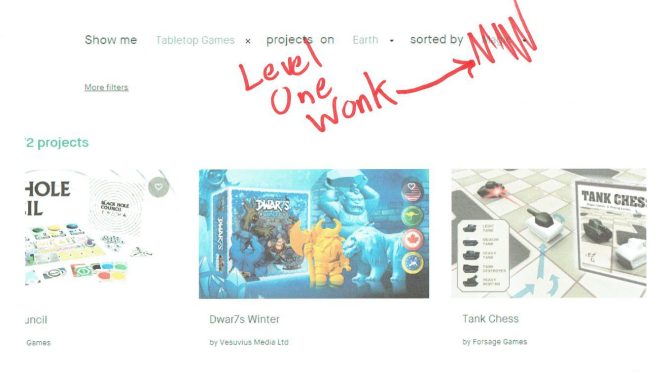
The trouble with pricing is that people not trained in economics think it’s a science. I, however, am the Level One Wonk, with over five years of real actual economics experience and actual professional industrial economics training. All economics aligns to a popular aphorism by George Box: “All models are wrong, but some are useful”. The notion of an ‘invisible hand of the market’ is wildly incorrect, even something you consume every day, electricity, only can be sold in a carefully constructed market that is watched every day by engineers (and still fails wildly from time to time anyway). Similarly, creative goods, far from the ‘widgets’ of every dismal Econ 101 textbook, don’t follow nearly any of the rules proscribed by the masters of micro. So, in order to speak more clearly about RPG pricing, we’re going to talk about some of the economics that doesn’t really work for role-playing games, and then talk through some of the psychology that does.

Continue reading The Trouble with RPG Prices

Back Again from the Broken Land Review – Small Heroes, Heavy Burdens, and Stories

You are small people who walked into a big war. The Doomslord’s forces were gathered in the Broken Land, and your fellowship unexpectedly played a key role in the Doomslord’s fall. Now, laden with stories to tell and burdens to bear, you set off on the journey home. But the Doomslord’s Hunters are still out there, and it’s a long way to walk. Let’s see if you can make it Back Again from the Broken Land with a storytelling game of small adventurers and a journey home from Cloven Pine Games!

Continue reading Back Again from the Broken Land Review – Small Heroes, Heavy Burdens, and Stories

Power Rangers RPG Review

There is a new generation of companies emerging in the RPG world. Free League and Modiphius were founded in 2011 and 2012, respectively, but an even younger studio is making big waves. Renegade Game Studios was founded in 2014 by hobby game industry veteran Scott Gaeta, and his business acumen shows through in Renegade’s portfolio. In addition to publishing more indie titles like Alice is Missing, Kids on Bikes, and Overlight, Renegade rocketed into the trad scene when they took over publishing White Wolf games Vampire: the Masquerade and Hunter: the Reckoning from interim publisher Modiphius. Now, they’re internally developing licensed RPGs that have already turned them into a sales powerhouse. Two Renegade titles showed up on the ICv2 top 5 RPG list last quarter, and I was unaware either were out, let alone already selling so well.

These two games, GI Joe and Power Rangers, make sense as sales successes. The licenses are for properties that peaked in the early 90s, aiming squarely at a mid-millennial market while Wizards aims younger (the core D&D demographics have been teens and twenty-somethings at least as long as Wizards has owned the game, if not even longer). And if it wasn’t these games it could have been others; Renegade also published a Transformers RPG and will soon release an official My Little Pony RPG as well.

Continue reading Power Rangers RPG Review