Tag Archives: OSR

Coring the Onion: OSR structuralism and non-OSR games

The RPG theory ship sails on unbidden, even as RPG networks of practice seem to be drifting apart. In November, there was a great post over on The Dododecahedron which bucked the trend and pulled theory work from outside of the author’s primary discipline, the OSR. Starting from a description written by Vincent Baker about the PbtA ‘conversation’, Dododecahedron author Rowan describes OSR play as an onion with four concentric layers: Character on the outside, then working inward to Mechanics, Procedures, and finally Adventure. Adventure is in the middle as the diegetic ‘fiction’ that the players are engaging with is the source of truth for OSR play. From there are Procedures, which describe the rules for how to go about play; that is to say, what travel looks like, or when random encounters occur, or how to track consumables. The next layer out is Mechanics, which describe the “rules” as most RPGs understand them; this is where initiative, ability checks, and all those specific bits live. Finally on the outside is Character, where elements like attributes, experience points, and skill ratings, all the things that make characters unique, sit.

Continue reading Coring the Onion: OSR structuralism and non-OSR games

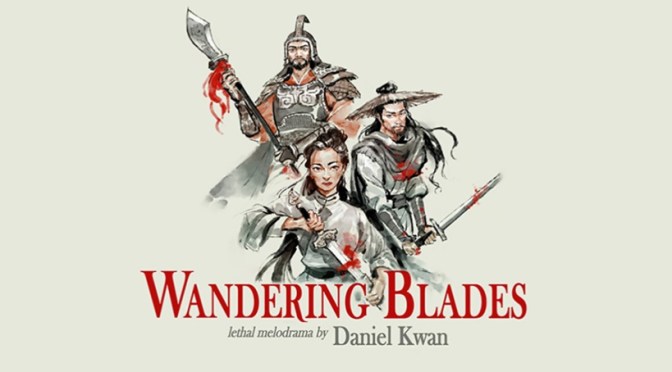
Wandering Blades Review: Old School Tech, Wuxia Style

Highly skilled martial artists roam the lands seeking to redress wrongs, help the downtrodden, and free the innocent from oppression. Heroism, action, melodrama! These are the hallmarks of the wuxia genre, and when they show up in the tabletop sphere they tend to come with a pretty big set of rules and no small amount of actual magic. In this case, though, we have a game trying to use old school renaissance-style mechanics to enable wuxia genre conventions:  Wandering Blades!

Continue reading Wandering Blades Review: Old School Tech, Wuxia Style

Crowdfunding Carnival: May, 2025

Welcome to the Crowdfunding Carnival for May! It’s spring, and the buds on the trees have burst open into green leaves. Similarly, the post-ZineQuest hangover is over and RPG campaigns are bursting forth all over Kickstarter and BackerKit. Want a game about fishing, or making jam? How about a three-book space opera extravaganza? There’s lot’s to check out this month, so let’s get to it.

Continue reading Crowdfunding Carnival: May, 2025

Black Sword Hack and the evolving OSR

The Old School Renaissance is a microcosm within the RPG world. Although many (including myself) refer to the OSR as a whole, cohesive thing, the reality is that the movement is more the result of at least half a dozen origins that random-walked into game preferences which, to an outsider, look similar. The broad preference towards the genre establishment of Dungeons and Dragons (or at least Appendix N, if not the system itself) bounds the definitions we work with; other retroclones and revivals like Cepheus and RuneQuest aren’t included, even if they too are ‘old school’. No, the main thing that all vectors of the OSR have in common is that they are trying to recreate the time when the roleplaying game was new. And when RPGs were new, either literally or in the eyes of the designer, the new thing that they first touched was (almost always) D&D.

All OSR games are aiming for either D&D as it was, D&D as it could be, or D&D as it was supposed to be. D&D as it was is simple; Old School Essentials is a straight-up retroclone and proves that ‘Basic D&D without shitty layout and shitty editing’ is a winning recipe. It’s the best known and best selling retroclone, but the retroclone camp of the OSR is arguably the oldest (to the degree that OSR is a label we can trace it back to OSRIC). D&D as it could be is where we start getting a lot of the distillations; the rules in early editions were such a mess you barely used any of them, so clearly one could write a game only using those few rules we could actually make work. This is where Into the Odd comes in, this is arguably where The Black Hack comes in, and, if rules were in any way supposed to be primary in the game, this might be where Mork Borg would come in. This example shows setting and tone are a different topic here than ‘game’. D&D as it was supposed to be is a tough one, and there aren’t many games that really aim for this mark. Whitehack is the one that comes to mind for me, taking the length and complexity of the original booklets and turning that into something much more flexible and consistent.

Continue reading Black Sword Hack and the evolving OSR

Meet the Party: The Mecha Hack

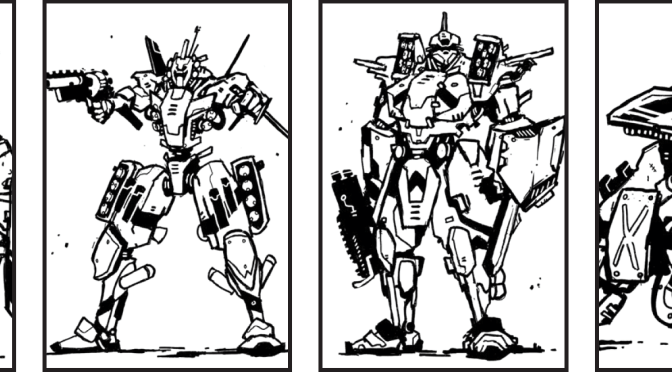
A mercenary band of mecha pilots stands prepared to fight another day in the Lodestar Alpha system, all for the credits its various factions are willing to provide for their services. Wing Crusader, Onyx Edge, Jester Epoch, Dagger Alpha, Iron Glory, and Chimera Sunset are the weapons of war that will see their pilots make their fortune and maybe decide the fate of the system altogether. All pilots, get in your giant robots and get ready to launch. Let’s do a quick little review of, and then Meet the Party for, The Mecha Hack from Absolute Tabletop!

Continue reading Meet the Party: The Mecha Hack

Lands of Legends Review – A Thousand Options For Your Game

Adventuring through an old-school-style sandbox setting, or mapping your way through a sprawling hexcrawl? The biggest challenge of playing a game where the characters can go any direction they want is making sure there’s something worth finding in every direction they can possibly go – even more so if the world is functionally boundless. From vast ancient cities consumed by the forest to a monastery of living mummies, from a desert falling into a black hole serving as the hourglass for the world’s life to a barge-bound casino-temple to the god of luck and gambling, there are plenty of options to be found in the Lands of Legends from Axian Spice!

Continue reading Lands of Legends Review – A Thousand Options For Your Game

System Split: Worlds Without Number and D&D Fifth Edition

It’s never been a better time to be a dungeon crawler. Dungeons and Dragons Fifth Edition and Pathfinder, two versions of the same underlying D&D ruleset, are bestsellers 1 and 2 in the RPG world, and have been for some time. Pathfinder is built for detail and breadth of options, while D&D’s Fifth Edition is built for accessibility and continuity with earlier versions and settings. They offer two versions of a fairly modern D&D experience, where GMs run story arc-based campaigns built around fighting monsters and exploring dungeons. Characters are treated like protagonists, and death is relatively rare. At the same time, we’ve seen a resurgence in “old-school” playstyles, usually represented within the D&D ecosystem by the OSR. Old-school games tend to have fewer rules, presenting challenges and decisions to the players rather than the characters. They tend to have weaker characters who aren’t treated like protagonists, and they need not be organized around a story.

There is a middle ground, though, and a new entrant in the middle ground has stormed into the DriveThruRPG sales charts. Worlds Without Number presents a dangerous old-school world, but uses rules innovations from later versions of D&D (and other role-playing games) to make the game more accessible and make the characters feel a bit more heroic. On top of all that, it provides tons of tools to help GMs run interesting game worlds with or without a driving story. Although many people will simply call Worlds Without Number an OSR game (and there are fair reasons for that), I think that it deserves to be examined against the current state of the art. That’s why this System Split pits Worlds Without Number against Dungeons and Dragons Fifth Edition.

Continue reading System Split: Worlds Without Number and D&D Fifth Edition

Electric Bastionland Review

Role-playing games are rooted in rulesets which provide a simulation to help determine what happens in-game. In most traditional games, this simulation is, in broad strokes at least, based on physics; the game provides rules intended to reflect a world which players find consistent and believable. In many recent indie games, the simulation is based on narrative; the rules define what happens next based on what makes the story either adhere to a given narrative schema or, in some cases, just more interesting. What about the middle ground, though? What would it look like if a game were simulating tropes rather than physics, but of a setting rather than a storyline? It would look an awful lot like Electric Bastionland.

Continue reading Electric Bastionland Review

Mörk Borg Review

What is an RPG? There’s a question that could send you down a rabbit-hole. At least one person per possible answer is already out there, ready to spew hate at you from Twitter. What’s an RPG book? That one, in theory, should be a little easier. An RPG book, whether we mean a physical book or a PDF, is the document that enables you to play an RPG. These can be core rulebooks, they can be setting books, or they can be supplements for either the setting or the rules, but they are, broadly speaking, the documents in which an RPG is contained. So what does that look like? You may be imagining text, some tables and charts, and probably some pictures. As much as these books vary, you probably think you know what the next RPG manual you crack open is going to look like. That’s why you need to crack open Mörk Borg.

Continue reading Mörk Borg Review

Around the OSR in Five Games

Few segments of the RPG fandom are as misunderstood as the OSR. At least, that’s what they keep saying on Twitter. The OSR, or “Old-School Renaissance”, are gamers who appreciate both the mechanics and implied playstyle of older editions of D&D, any of the TSR versions but usually Basic D&D and usually the versions of it (B/X, BECMI, or Rules Cyclopedia) that existed roughly from 1981 to 1991. The real problem with the OSR is a marketing problem; in the past it has been hard to distinguish those genuinely interested in the play philosophies of older D&D from those who were merely retreating to older games. Every time I’ve tried to look into the OSR and OSR games, I’ve come away asking the same question: “why are there so many hacks of Basic D&D and why exactly should I care?”

Continue reading Around the OSR in Five Games