
I’ve previously discussed my misgivings about worldbuilding, at least my misgivings about how the (separate) hobby of worldbuilding interacts with setting design for an RPG. Of course, if you are one of those lightly deranged folks who insists on writing a setting from the ground up, you know that you cannot ignore all the brass tacks of worldbuilding, even if said worldbuilding is nowhere near sufficient for making a gameable setting. For what it’s worth I’ve spent most of my GMing time over the past several years engaging with existing settings or games which encourage shared setting creation; the eldritch swamps in which my Apocalypse World game took place are just as attributable to my players as they are to me. Now, though, I’m writing a setting for a somewhat more traditional game, to be run in GURPS. I’m trying to balance two elements in setting creation: First, I am writing something specific, with different assumptions and conflicts than other settings I could bring to bear. Second, even in a traditional setting I don’t want to give up that sort of engagement with my players, who bring in not only interesting ideas but also clear opinions about what they want to interact with in the setting. So, without a system like Apocalypse World that cements that player input, how should we be prepping a setting to ensure that the game will involve “worldbuilding to find out what happens?”
Continue reading Worldbuild to find out what happensTag Archives: worldbuilding
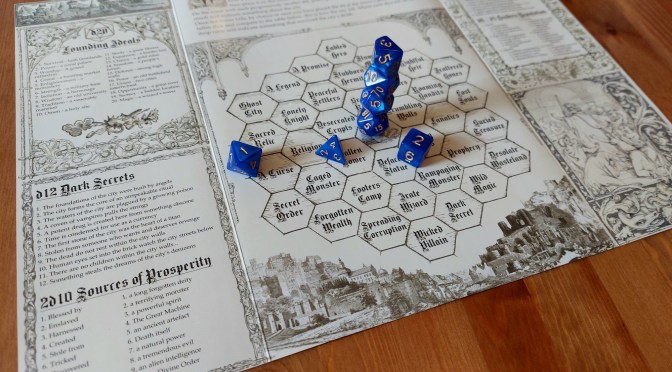
When The Walls Fall Review – Fallen Cities and Falling Dice
The ancient city was originally founded as a place of study; a great library was its first building, and it remained ever its heart. However, the city grew to form the core of an unspeakable ritual, powered by harnessing a long forgotten god. Eventually, its distant neighbors could not tolerate the ideas it was spreading, and they attacked. That was when the walls fell, leaving a ruined city with a defaced statue at its heart… and broken roads, spreading corruption, and fanatics of that forgotten god bleeding out of it into the countryside…
Continue reading When The Walls Fall Review – Fallen Cities and Falling Dice
Adding Flavor To The Table
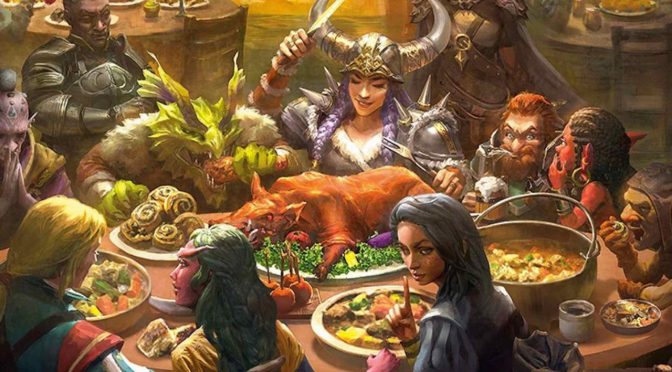
Between spending some time at the Flying Stag earlier in the week and recovering from the trials and tribulations of Thanksgiving, I’ve got food and drink on the mind with a side of tabletop worldbuilding. So your party of characters wander into the tavern and order… what? An ale? Your freighter crew has two weeks of… consumables? That’s it? We can do better than that; both people running games and playing them can get some extra detail out of their setting and characters by keeping one fact in mind: even most protagonists have to eat.

The Trouble With Worldbuilding
In theory we all know what worldbuilding is. The process of creating a fictional world isn’t technically related to role-playing games, but it has become inextricably intertwined with the hobby, given the preponderance of science fiction and fantasy settings in the most popular games. In considering and examining worldbuilding, I’m not going to spend a lot of word count talking about what it is, or even how to do it well. Instead, I’m going to talk about how worldbuilding affects RPGs specifically, which boils down to a lot of mistakes, missed opportunities, and general poor form.

