
Welcome to the Cannibal Halfling Weekend Update! Start your weekend with a chunk of RPG news from the past week. We have the week’s top sellers, industry news stories, something from the archives, and discussions from elsewhere online.
Continue reading Weekend Update: 11/8/2025Tag Archives: TTRPG
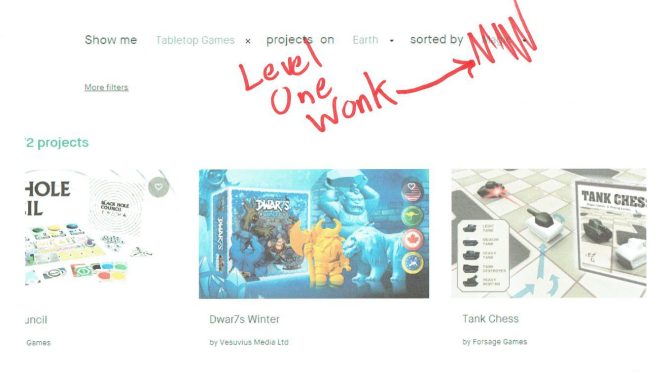
Crowdfunding Carnival: November, 2025
Welcome to Crowdfunding Carnival for November! There are a ton of campaigns out there this month; my initial pass easily got to 20 even after I realized that there were a lot and started filtering more aggressively. We’ve definitely got more designers putting in the juice, but there are some other interesting developments going on.
First, Gamefound has come roaring onto the scene again. While the provider got some recognition during the Kickstarter blockchain kerfluffle, their network was pretty weak until recently. First, over the summer Gamefound acquired Indiegogo (not the other way around). Second, Gamefound is currently in the midst of RPG Party, an event that started in mid-October to help promote and drive engagement with RPG campaigns specifically. Chaosium and Magpie got on board with RPG Party, so between their involvement and the recent access to the Indiegogo mailing list, Gamefound has jumped from also-ran to contender seemingly overnight.
But let’s move onto the games. This month features campaigns from all three major crowdfunding providers, meaning the space is starting to heat up a bit. Competition is a good thing, and supporting competitors to Kickstarter is a great idea when Kickstarter United is still on strike.
Continue reading Crowdfunding Carnival: November, 2025Weekend Update: 11/1/2025
Welcome to the Cannibal Halfling Weekend Update! Start your weekend with a chunk of RPG news from the past week. We have the week’s top sellers, industry news stories, something from the archives, and discussions from elsewhere online.
Continue reading Weekend Update: 11/1/2025
Cultures of Play, Quanta of Play
The assumptions, intentions, and design of tabletop roleplaying games are infamously broad; seeing eye to eye on how to play is as primary a challenge as finding a time on the calendar for four to six people. Back in April of 2021, the blog The Retired Adventurer published a post called Six Cultures of Play which still sees reference as a succinct overview of distinct play traditions which have evolved over the last fifty-ish years of structured tabletop roleplaying. Between solid analysis and the author’s own admonitions not to see bright lines between the cultures where there aren’t any, I see the article as a useful model to start thinking about how people game and what they want.
Of course, the gaming world hasn’t stayed still, and from the publication of the original post to the renaming of Twitter to “X” in 2023, fragmentation was the word of the day. Since then, we’ve seen continuing fragmentation joined with an upswell in interest in fairly specific playstyle differentiation, driven by migration away from Wizards of the Coast products and strong take-up of “D&D alternative” products including not only Pathfinder but Daggerheart, Tales of the Valiant, and Draw Steel. The core ideas in the Cultures of Play post still hold true, but the consistent signpost in my mind is in the introduction, where the author describes a culture of play as equivalent to a ‘network of practice’. A community of practice is a group which forms around something they collectively do (or practice) which they have a passion for and want to do better; a network of practice is also that but doesn’t assume the same consistent strength of relationships, therefore being a more appropriate term for a larger, more nebulous group. As broad as a network of practice can be, I don’t really think it aligns with a ‘culture of play’ anymore.
Continue reading Cultures of Play, Quanta of PlayWeekend Update: 9/27/2025
Welcome to the Cannibal Halfling Weekend Update! Start your weekend with a chunk of RPG news from the past week. We have the week’s top sellers, industry news stories, something from the archives, and discussions from elsewhere online.
Weekend Update: 6/28/2025
Welcome to the Cannibal Halfling Weekend Update! Start your weekend with a chunk of RPG news from the past week. We have the week’s top sellers, industry news stories, something from the archives, and discussions from elsewhere online.
Continue reading Weekend Update: 6/28/2025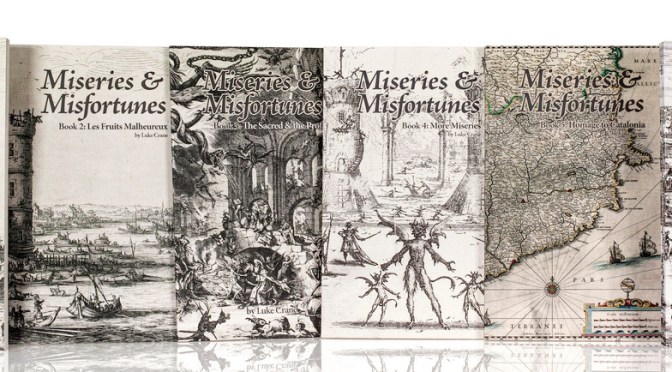
Miseries and Misfortunes: When D&D stands for Dauphins and Defamation
Luke Crane is best known as the designer of The Burning Wheel, an intensely detailed medieval fantasy/Tolkien RPG which aims for a very different fantasy experience than what you find in Dungeons and Dragons and its contemporaries. The Burning Wheel has more and more complex rules than D&D, but it’s also a game with a strong sense of time and place; Crane’s inspiration for the fantasy side of the game was Tolkien outright (which is not the case with D&D), and the rest of the setting was inspired by history nonfiction by the likes of Barbara Tuchman, Desmond Seward, and others. The result is a game heavily steeped in 12th-13th century medievalism, but with the historicity sanded off with some genericization and, oh right, wizards and elves and giant talking rats.
The next biggest non-licensed game from BWHQ (both Mouse Guard and Burning Empires are licensed) is Torchbearer, which is more than anything a direct shot at D&D. While it uses somewhat similar mechanics to Burning Wheel, it is much more focused on dungeon crawling, taking some of the more structured procedures of 0e and Basic D&D and extending them to everything, including not only the dungeons and wilderness exploration but also town visits and social interactions. Torchbearer is a distinct game from Burning Wheel, and while Burning Wheel is known for its complexity Torchbearer is known for being fiendishly difficult due to its constant Grind and aggressive resource management.
Luke Crane designed another game, more similar to Burning Wheel than the others in BWHQ’s portfolio. What’s truly strange about this game, though, is that it is a hack of Basic D&D. That in itself isn’t that weird, plenty of designers hack D&D for many purposes good and ill. What is weird, though, is that this hack of Basic D&D looks at the trajectory that Torchbearer plots from Burning Wheel and runs straight and fast in the opposite direction, aiming for more intrigue, more historical accuracy, and not a single dungeon to bother with. This game is called Miseries and Misfortunes.
Continue reading Miseries and Misfortunes: When D&D stands for Dauphins and DefamationWeekend Update: 1/18/2025
Welcome to the Cannibal Halfling Weekend Update! Start your weekend with a chunk of RPG news from the past week. We have the week’s top sellers, industry news stories, something from the archives, and discussions from elsewhere online.
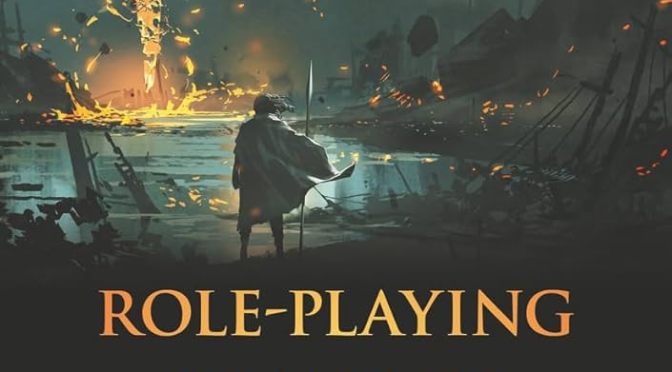
Role-Playing Games in Psychotherapy: A Non-Therapist’s Review
While roleplaying games can certainly allow players to explore certain things and work through some stuff, an important axiom to remember is that your GM is not your therapist. Therapy is a serious business, and you shouldn’t be unloading your psychiatric needs on someone who is not trained to handle it (or try taking on those needs yourself, if you’re the GM), for their good and your own. Unless, one supposes, they were your therapist first, and are now running a game for you as part of your usual appointment. Such is the purpose behind Role-Playing Games in Psychotherapy: A Practitioner’s Guide by Daniel Hand.
Continue reading Role-Playing Games in Psychotherapy: A Non-Therapist’s Review
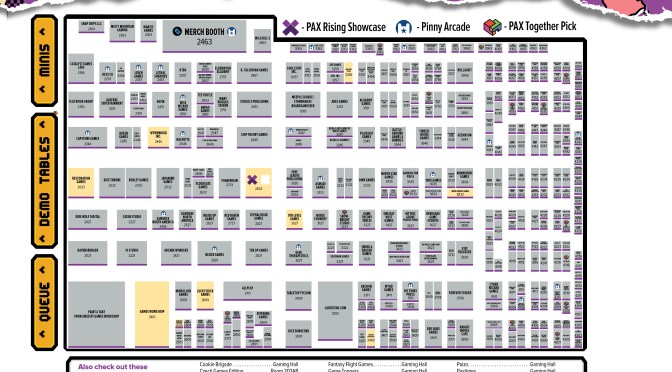
Cannibal Halfling’s Reviewed Games at PAX Unplugged 2024
Cannibal Halflings are once again haunting the halls of PAX Unplugged, and once again we’re seeing a lot of familiar faces (and games). There’s… so darn much, there’s no way I’ll cover everything we’ve even already looked at, never mind everything at Unplugged that is worth checking out, but hey, got to start somewhere, right?
Continue reading Cannibal Halfling’s Reviewed Games at PAX Unplugged 2024
 Cannibal Halfling Gaming