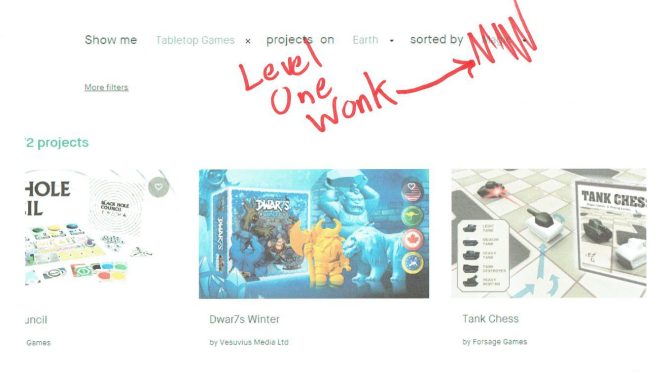
Welcome back to March! There are a lot of games on Kickstarter this month, and Kickstarter Wonk is here to help. Now, Zinequest technically ended on Sunday, but there’s still a good crop of zines at the tail end of the event. I’ve picked out 35 more that are worth checking out if you have any of your Zinequest budget left. And, since it is March again, we’re picking up what we can for our full game selection. Five full-sized games are here and they’re picking up where ZineQuest left off, with both old hands and newcomers casting their projects out for us to peruse.
Continue reading Kickstarter Wonk: March, 2021All posts by Aaron Marks

System Hack in Practice: Cyberpunk Blue
Welcome back to System Hack in Practice! We’ve looked at rolling Cyberpunk Red back to 2020, we’ve looked at pulling Cyberpunk 2020 forward into Red. Now we’re going somewhere else entirely! Let’s put down the book with the red lettering and pick up one with a blue cover; we’re shifting wavelengths into Fate Core. The working title for this monstrosity? Cyberpunk Blue.
Continue reading System Hack in Practice: Cyberpunk Blue
Kickstarter Wonk Redux: Zinequest Wonk 2021
February is only half over! Welcome to this year’s special mid-month edition of Kickstarter Wonk: ZineQuest Wonk! There are so many zines campaigned throughout the month of February that it seems particularly unfair to just highlight those who jumped to be first at the beginning of the month. That’s why this week I’m bringing another forty zines to your attention.
Continue reading Kickstarter Wonk Redux: Zinequest Wonk 2021
SLA Industries 2E Review
Are you not satisfied with the dystopia in your life? Is Paranoia too tongue-in-cheek? Is Dark Heresy not tongue-in-cheek enough? Is Cyberpunk just too grounded for what you had in mind? Well, loyal readers, there is another dystopia out there. Combine Paranoia’s sense of humor, Dark Heresy’s grim and dark setting, and Cyberpunk 2020’s love of guns, and you get something altogether different but still, well, ‘British Isles’ in its sensibilities. It’s time to freshen up your resume and go work for SLA Industries.
Continue reading SLA Industries 2E ReviewKickstarter Wonk: February, 2021
Welcome to Kickstarter Wonk! It’s February, and you know what that means: ZineQuest! ZineQuest is off to a roaring start this year, and even after merely two days my eyes are already crossing from all the zines I’ve seen. To make it even crazier, there are also actual full-length games still being funded, and I’m trying, at some level, to cover both. First, here’s three full-sized Kickstarter campaigns which are all worth your consideration and perusal. Second, I’ve picked out 40 Zinequest campaigns that both look cool and are currently active. Don’t think that’s enough? Me neither! Since Zinequest campaigns traditionally last 14 days, 14 days from now I’ll be posting a special ZineQuest Wonk which covers all the zines which have campaigns starting after this publication date. For now, though, let’s check out some games!
So You Don’t Want To Play D&D
It’s wildly common on Reddit: A thread complaining about the popularity of D&D, or a thread complaining about 5e being hacked into things it doesn’t work well for (I am guilty of that second one). Half the commenters will agree that yes, there are so many other games out there, and people should broaden their horizons! The other half will say that if people are having fun with D&D, why must you rain on their parade! And the fights continue, eventually, like they do in all discourse, repeating themselves. But you out there, venty thread creators and venty thread agree-ers, I see you. I know the real reason you’re creating these threads. You, personally, don’t want to play D&D, and either you can’t find a group to play something else with, or, more likely, your home table has you outvoted. Or, if you’re in a slightly better position, maybe you see these threads online and simply can’t imagine going back to playing only D&D (and you like fighting on the internet).
No matter the reason, I know the pain of playing a game you’re not really interested in because you still want to hang out with your friends and roll dice. There are ways to diversify your gaming experiences and be a happier gamer in general. Unsurprisingly, it doesn’t involve complaining on the internet. It also doesn’t involve slagging on D&D.
Continue reading So You Don’t Want To Play D&DSystem Hack In Practice: Painting Cyberpunk 2020 Red
Welcome back to another System Hack in Practice! Last time, we made some considerations around Cyberpunk Red, and looked at potential ways to address early complaints from Cyberpunk 2020 fans (or not). This time, we’re looking at everything the other way around: How can we take the best parts of Cyberpunk Red and bring them into our Cyberpunk 2020 game?
Continue reading System Hack In Practice: Painting Cyberpunk 2020 Red
The Elusive Shift Review
Jon Peterson has done it again, my friends. The author of Playing at the World, arguably the most comprehensive history of the creation of Dungeons and Dragons on the market, has released another book. While Playing at the World covered anything and everything that led up to the first publication of Dungeons and Dragons in 1974, Peterson’s second book, The Elusive Shift, focuses narrowly on the time it took for ‘role-playing game’ to become an established medium. The story of how D&D and indeed the tabletop RPG itself matured in this roughly five year period is fascinating, eye-opening, and ends up asking a lot of questions about the state of the hobby some forty years later.
Continue reading The Elusive Shift ReviewKickstarter Wonk: January, 2021
Welcome to the first Kickstarter Wonk of 2021! I’ve been waiting nine months to write that. Now, even though the state of the world is pretty much like it was in December, we’re still facing the biggest collective New Year’s Hangover in quite some time. That collective hangover may explain why there’s…four Kickstarters this month. January is often a thin month but this is thin even for January. Still, these four are good ones, and if you stick around I’ll also throw in some commentary about the RPG Kickstarter market as a whole in 2020.
Continue reading Kickstarter Wonk: January, 2021
The Level One Wonk Holiday Special: 2020
Welcome to the Level One Wonk Holiday Special for 2020! Traditionally the last post of the year is when I look back on the year past and ahead to the future, thinking about what’s happened in the world and what I’m going to write next. Needless to say, looking back means reflecting on some solid, unprecedented weirdness.
No two ways about it, 2020 has been a hell of a year. The pandemic created an environment the likes of which none of us have seen in our lifetimes, and that will likely define the generation that is growing up while it happens. And that meant many of us, once we were able to manage the emergent pressures on our health and well-being, needed a retreat, a release. And for readers of this site, that retreat was often going to be tabletop RPGs.
Continue reading The Level One Wonk Holiday Special: 2020 Cannibal Halfling Gaming