All posts by Aaron Marks

Gaming for nearly twenty-five years and writing about it for over fifteen, I've always had a strong desire to find different and interesting things in the hobby. In addition to my writing at Cannibal Halfling Gaming, you can follow me on Bluesky at @levelonewonk.bsky.social and read my fiction and personal reflections at newwonkmedia.com.

How Long Do You Play?

The RPG space is filled with unchecked assumptions regarding what gaming groups actually do. We already know that market information is hard to find, but it’s even harder to find information on how people consume whichever RPGs they choose to consume. Are they playing mostly in organized games hosted at game stores? With a group of friends at someone’s home? At cons? How often do they play? How many different systems do they try? We have, as one of my players once said, no hard data but a lot of assumptions and circumstantial evidence. The one element which is most significantly reflected in how games are actually designed is how long a discrete ‘game’ or ‘campaign’ is intended to be played.

Continue reading How Long Do You Play?

System Hack: Putting the Cyber into Cyberpunk Chimera

Cyberpunk as a literary genre has many touchstones, like the role of corporations in society and humanity’s relationship with technology. These have trickled down to tabletop games in different ways, but certain tropes keep coming up. Cybernetic enhancement is *the* subsystem for cyberpunk games, and has generally succeeded in early cyberpunk games where hacking, a complementary subsystem, often failed. Cyberware stands in for magic in most cyberpunk games, giving the characters access to superhuman power, though at a cost. In addition to cyberware, there is usually a digital world aspect of cyberpunk games, adjacent to but not always overlapping with the hacking rules. In early works this was a completely separate virtual world, while in modern games, there is much more focus on augmented reality, and the digital commingling with the real.

Continue reading System Hack: Putting the Cyber into Cyberpunk Chimera

DriveThruRPG Phone PDFs Review

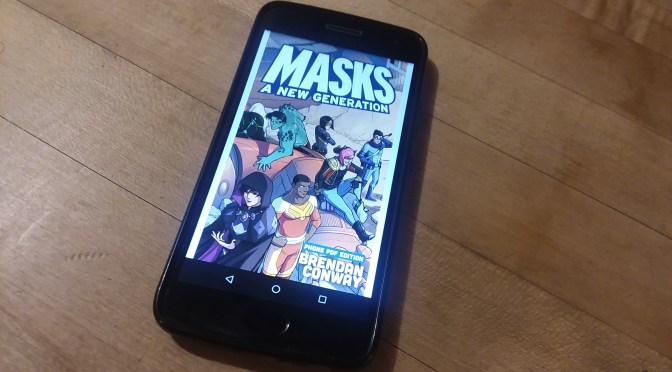
Role-playing games are a delightfully analog hobby; the best parts of coming together with your friends to roll dice and tell stories cannot be duplicated by digital media. The way we play, though, has changed, with forums and voice chat programs and online dice rollers all giving us ways to use technology to enhance the RPG experience. When it comes to the actual reference materials, progress has been uneven. Online SRDs and paywalled content providers like D&D Beyond show we at least acknowledge that digital reference materials can look different, but the majority of game PDFs out there are just books, barely improved from the days when RPG PDFs were made with a scanner.

Continue reading DriveThruRPG Phone PDFs Review

What Are Rules?

Role-playing games are perceived as complex due to their volume of rules. What really makes RPGs complicated, though, is the relative dynamism of these rules and the degree to which they sit in the text. In other words, the rules of a game you must know in order to play an RPG are not limited to those which are printed in the rulebook.

While this of course varies from game to game, it can be generally stated that a board game will contain all the rules necessary to play inside the box. This is not always true with an RPG. Given the significant breadth of concepts that a game could potentially cover, RPGs have usually needed a GM to establish a more concrete set of boundaries which make up a campaign. The key here is that what the GM is doing, from writing the world to tweaking the mechanics to actually running the game, involves making and enforcing rules which are supplemental to those actually written in a book.

Continue reading What Are Rules?

Kickstarter Wonk: October, 2019

Last month was famine. Instead of putting together a Kickstarter Wonk article at all, I wrote briefly on why Tabletop RPG Kickstarters fail. This month is feast. There are ten games below, and I can say genuinely that there are 2-3 more that easily would have made the cut as well. A great number of campaigns, and I’m probably spending a bit more money than usual this month. Speaking of money. There’s been some turmoil over at the Kickstarter corporate office, mostly involving a distasteful activity called ‘union-busting’. Kickstarter employees are trying to unionize, and someone upstairs fired two of the organizers. Not good, guys. Not good at all. 

Nonetheless, Kickstarter campaigns are primarily about the creators. Beyond that, the process to get a union formally recognized is fraught, so even if the company is making distasteful (read: bad) decisions regarding the rights of their workers, the creators on the platform and the broader business as a whole shouldn’t necessarily suffer. For one thing, it makes that whole organizing thing that much harder if there’s evidence that organizing a union is impeding business. The intent of organized labor is to make productive compromises between a company and its employees, and a preemptive boycott fails at that. Therefore I am still here, still promoting Kickstarter campaigns, and still spending some money to support the excellent creators on the platform. If you’re interested in supporting Kickstarter United and are a project creator, you can sign a petition here. After you’ve done that, read on, because there are some really great games out this month.

Continue reading Kickstarter Wonk: October, 2019

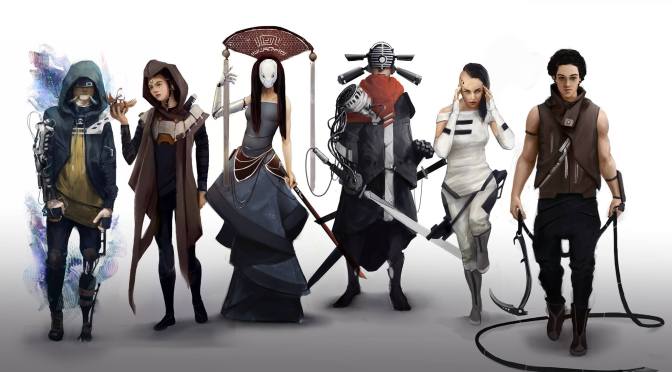
Shadowrun Sixth World Review

Old games never die, they just get new editions. Some games take big design steps and then walk them back (D&D, WFRP), while others start forking out into multiple, concurrent editions (Traveller and RuneQuest). Others still just revise every concurrent edition, walking a tight balance between satisfying the fanboys and making the game accessible to those who couldn’t or wouldn’t buy it the last time around. No game is better suited to tell this perilous story than Shadowrun. Shadowrun was born in the late 80s around the same time as Cyberpunk, but took to that genre with its own twist, adding in magic and Tolkienesque “metahuman” races. Originally developed by FASA, the same design studio behind Battletech, Shadowrun has always had wargaming roots show through by virtue of its complexity and level of detail. This both gained it many fans as well as an intimidating reputation, especially when we’re talking about the first three editions of the game.

Continue reading Shadowrun Sixth World Review

RPG Market Data is a Mess

There’s a lot of reasons people say that the RPG hobby is in a golden age right now. Increased legitimacy of the hobby in general, new audiences reaching games through streaming and podcasts, and an exploding variety of types and titles of games make for a more diverse and dynamic hobby than we’ve ever had before. But what do we actually know about the hobby and how it’s growing? What do we know about the competitive dynamics of the industry, from Wizards of the Coast down to the one-man shops? The simple answer to “what do we know” is “not much”. Finding real data about this hobby of ours is a struggle—and that’s when it isn’t downright impossible.

Continue reading RPG Market Data is a Mess

Cyberpunk Chimera Non-Combat Mechanics

Tabletop RPGs evolved from wargames, which has somewhat stunted their growth with regards to most conflicts which don’t involve killing things. As board games show us, though, we can easily develop satisfying mechanics for a whole range of things other than combat. For the Cyberpunk Chimera, we’re envisioning a world that, while potentially violent and dystopic, doesn’t center around monsters or a national enemy or anything else that assumes that the majority of problems can be solved by killing.

Continue reading Cyberpunk Chimera Non-Combat Mechanics

Why Tabletop RPG Kickstarters Fail

Kickstarter Wonk is an opportunity for me to, every month, show off some neat Kickstarter campaigns that deserve to get a little extra attention. To write these articles, I read pretty much every Kickstarter campaign that could be termed as an original RPG, and then pull from there to make my list. Some months, getting to ten is difficult because there are twenty or more games, sixteen or more that are worth covering, and narrowing down the list gets really hard. That’s when I apply some really arbitrary metrics like “the campaign ends less than two days before the article will be published” and “I will weigh my choice towards the game with original mechanics as opposed to the one which is using Fate”. On the other hand, sometimes there’s fewer than ten games I want to cover, and the last one or two which are all right will have a bit of sarcasm in the descriptions. What has not happened until now was a month where I couldn’t even muster up half a dozen games I was excited about.

Continue reading Why Tabletop RPG Kickstarters Fail

Fate Accessibility Toolkit Review

It’s time again to look at one of Evil Hat’s purple books for Fate. The Fate Toolkits, or the purple books, are the cornerstone of Fate rules hacking and, in my humble opinion, some of the best resources for a Fate GM out there. Today’s purple book takes a very different approach than the others, but still provides a comprehensive resource. The Fate Accessibility Toolkit is the book in Evil Hat’s lineup which deals bluntly with how to approach disability in your games, both in terms of characters and players.

Continue reading Fate Accessibility Toolkit Review