Tag Archives: D&D

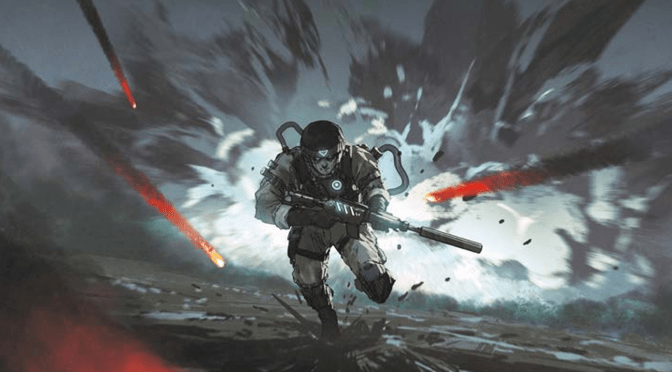
Hit points: A cyberpunk case study

Are hit points meat? Does the answer to that question even matter? Hit points are an old mechanic, ported into RPGs at the beginning from wargames, where they made the assessment of unit health more granular than ‘alive’ or ‘dead’. D&D took the concept and applied it to player-characters and monsters alike, and from there it became profoundly common. Measuring damage taken and time until expiration is one of those things where the simplest approach is often the most fun, even if it’s hardly the most realistic.

Hit points as a mechanic are not a monolith. Not even D&D still uses the original mechanic where you have a number and when it’s reduced to zero, you’re dead. Death saves, critical wounds, damage thresholds and any other number of modifiers to the hit point schema make the act of bleeding out after being stabbed a lot more complex than it necessarily has to be, but sometimes more fun, too. Of course, a lot of the relationship that a game has to how its characters get shot and die has to do with genre.

Continue reading Hit points: A cyberpunk case study

Cannibal Halfling Radio Ep. 25 – Finely Aged Business

Well, we didn’t want to call it ‘stale’… because it’s not, not really! This chat episode was recorded last year, so a lot has happened since, but there’s still some good stuff here about licenses, bundles, system reference documents, digital storefronts, and other aspects of the tabletop world as viewed through the lens of a business.

Featuring: Editor Sloane TVBand, Aaron, and Seamus

You can also drop by the Tavern of our Discord to chat with us.

If you like what we’re doing with CHR, give us a hand and leave us a rating and review on Apple Podcasts and Spotify! You can also support us on Patreon.

Music is Sneaky Adventure by Kevin MacLeod
[License], art by Khairul Hisham! Thanks for listening!

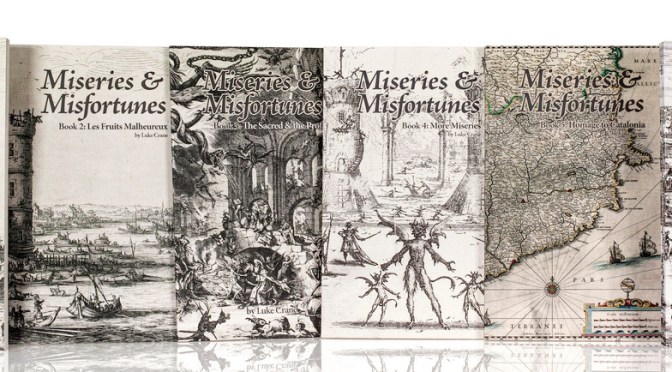
Miseries and Misfortunes: When D&D stands for Dauphins and Defamation

Luke Crane is best known as the designer of The Burning Wheel, an intensely detailed medieval fantasy/Tolkien RPG which aims for a very different fantasy experience than what you find in Dungeons and Dragons and its contemporaries. The Burning Wheel has more and more complex rules than D&D, but it’s also a game with a strong sense of time and place; Crane’s inspiration for the fantasy side of the game was Tolkien outright (which is not the case with D&D), and the rest of the setting was inspired by history nonfiction by the likes of Barbara Tuchman, Desmond Seward, and others. The result is a game heavily steeped in 12th-13th century medievalism, but with the historicity sanded off with some genericization and, oh right, wizards and elves and giant talking rats.

The next biggest non-licensed game from BWHQ (both Mouse Guard and Burning Empires are licensed) is Torchbearer, which is more than anything a direct shot at D&D. While it uses somewhat similar mechanics to Burning Wheel, it is much more focused on dungeon crawling, taking some of the more structured procedures of 0e and Basic D&D and extending them to everything, including not only the dungeons and wilderness exploration but also town visits and social interactions. Torchbearer is a distinct game from Burning Wheel, and while Burning Wheel is known for its complexity Torchbearer is known for being fiendishly difficult due to its constant Grind and aggressive resource management.

Luke Crane designed another game, more similar to Burning Wheel than the others in BWHQ’s portfolio. What’s truly strange about this game, though, is that it is a hack of Basic D&D. That in itself isn’t that weird, plenty of designers hack D&D for many purposes good and ill. What is weird, though, is that this hack of Basic D&D looks at the trajectory that Torchbearer plots from Burning Wheel and runs straight and fast in the opposite direction, aiming for more intrigue, more historical accuracy, and not a single dungeon to bother with. This game is called Miseries and Misfortunes.

Continue reading Miseries and Misfortunes: When D&D stands for Dauphins and Defamation