Tag Archives: Powered by the Apocalypse

The Endie Awards 2025 – Aaron Edition

This post is brought to you thanks to Lady Tabletop, who prompted folks to write about their own gaming experiences of the year and give out their own fun awards. Like Seamus I thought this was a neat idea, and was also glad (and relieved) that ‘The Endies’ weren’t trying to be yet another award given out because someone disagrees with the ENnies. Thinking back on the year and giving your own awards is more useful (and more fun!), anyway.

I had a much more constrained gaming year than Seamus in part because I had a very busy year; in the middle of this year my partner and I moved, which involved buying a condo, selling two condos, moving one person once and another person (and a cat) twice. In a way I’m surprised I got as much gaming in as I did, and also surprised I was able to write anything from May to August. Still, the difference in absolute number hides the point that Seamus made to me that, due to the number of campaigns I’m in and how often I run, I probably ran and played more sessions by absolute count than Seamus did.

Continue reading The Endie Awards 2025 – Aaron Edition
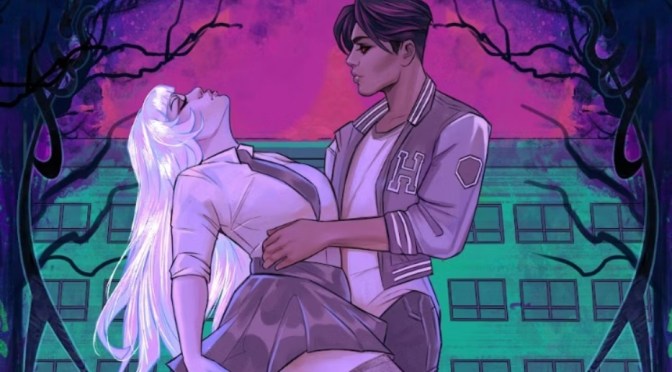
Last Kiss Backerkit Review

Ever feel like the world is out to get you? It is. Five radical teens with attitude should not be responsible for saving the world. You’re a bunch of god-damned teenagers. You might act like you have it all figured out, but you don’t. How could you when there is a literal evil force making your lives harder? So go ahead, seek out some normal high school goals like dominating on the sports field, kissing the mean girl, or becoming class president. While you play pretend, the darkness will seep in. The darkness colors the world so nothing is quite right. This is a world where disputes can be resolved via duels, where the next town over seems a world away, and where monsters live in secret. Normal doesn’t have a chance. What will you do before it all ends?
Perhaps there’s enough time for one Last Kiss…

Continue reading Last Kiss Backerkit Review

The design decision which won narrative gaming

Last week, Apocalypse World came back to crowdfunding, with the Bakers seeking funding for a Third Edition of the game. Apocalypse World was first released back in 2010 and it took the indie RPG world by storm; by the time Dungeon World was released in 2012 it was already all but certain that ‘Powered by the Apocalypse’ would be a phenomenon. It’s easy to forget that there was another indie darling riding high in the hobby in the early aughts. Fate was arguably the other big indie game, and it even made its way into the ICv2 bestseller list after the success of its 2013 Kickstarter, an honor typically reserved for D&D, Pathfinder, and a few other corporate games. The ICv2 data point is particularly interesting. Fate outsold Apocalypse World; not only did the game peek into commercial sales charts as late as 2020, Fate even holds the statistically dubious honor of being one of only three games to ever outsell D&D in the ICv2 rankings (the other two being Pathfinder and FFG Star Wars). Commercially, Fate was an indie juggernaut.

Fate has clearly not maintained the degree of impact and influence it once had. Hell, the last three Kickstarter campaigns run by Evil Hat Productions, publishers of Fate, were all Powered by the Apocalypse games. The literal keepers of Fate have, thanks in no small part to John Harper and Blades in the Dark, seemingly seen the writing on the wall in terms of salability and influence of PbtA over Fate. Why is that? To start, there’s an obvious disparity to the degree in which unaffiliated designers took the respective systems and ran with them. That said, it’s fairly clear to me that this is a symptom, not a cause. While it’s hard to beat the Bakers’ approach of ‘sure, just don’t literally plagiarize us’ for licensing, Fate was licensed under the OGL and later Creative Commons, which were both used by tons of creators in other contexts. No, the difference in third party support and expansion has to do with the design of the respective games, not their shepherding by their respective creators. And I think I know specifically which design elements made the difference.

Continue reading The design decision which won narrative gaming

The funnel and beyond: Pre-play character creation

In RPGs, character creation methods abound. You can create characters mechanically with point and option spends, build them alongside a backstory with a lifepath, or just roll some dice and see what comes out the other end. When it comes to actually aligning the characters with the game you’re about to play, so much so that you need to bring the GM along for the ride, I think I’ve found one of the best options. Now, one reason you’ve likely never done this before is that it’s time-intensive and it can be a lot of extra work for the GM if not all of the players. Another reason, though, is that to really play through character creation, you need mechanics to do so. Precious few games have these mechanics, but after giving one such system a spin I’m pretty comfortable saying it should be more of a thing for campaign play.

Continue reading The funnel and beyond: Pre-play character creation

Is Grimwild the next Dungeon World?

When Dungeon World was released in 2012, it slammed the door to Powered by the Apocalypse open so hard it broke the hinges. By taking the recipe crafted in the Baker House and mating it to the memetic power of Dungeons and Dragons, suddenly everyone could see what was so powerful about PbtA. Of course, Dungeon World was hardly a perfect recipe. Using the architecture of ‘moves’ established in PbtA but keeping both the stats and classes of D&D made for an incomplete match, and some of the mechanical choices made to get the two to pair up have received more significant criticism now that the design community has had a good decade and a half to really figure out what PbtA is. Still, the combination of a solid foundation and a lot of good ideas made Dungeon World into a rare specimen: The commercially successful fantasy heartbreaker.

Continue reading Is Grimwild the next Dungeon World?

Zombie World Review

Apocalypse World won accolades due to its design, but Powered by the Apocalypse won sales thanks to its handling of genre. The minute that someone took a stylized post-apocalyptic soap opera and ran D&D with it, everyone wanted to see what they could do with the framework. Horror is no different; PbtA has proven adept as a basis for monster hunting, urban fantasy, and Victorian Penny Dreadful, among others. Naturally, someone turned to zombies.

Zombie World is a Magpie Games production, primarily designed by Brendan Conway (of Masks fame). Given coverage of their current licensed games, one could easily surmise I have a chip on my shoulder regarding Magpie’s output. Luckily, Zombie World is a great example to show that this is not the case; the game is both intensely innovative and intense to play. There are some problems with the game but the biggest one affects how well the game has sold, not the quality of the play experience. What is that problem? The game is card-based, and for all of the (positive) impacts it has on the play and packaging, it has made the game difficult to translate into a digital counterpart, affecting sales and availability.

As a card-based game, Zombie World threads the needle of using tried and true PbtA mechanics while making the best use of its unique form factor. In my opinion this is accomplished well; the game reads and plays fast and the 32 page rulebook included really is all you need. To really test how this all worked, I picked up a copy of Zombie World and took it to my online gaming group’s in-person gaming weekend for a one-shot. While the players were going harder than normal given the vibe of the weekend, I was still surprised at how quickly and easily Zombie World devolved into Walking Dead-like drama; our game involved backstabbings, double-dealing factions, and, of course, overrunning both the harbor and city hall of a large city with zombies.

Continue reading Zombie World Review

PLANET FIST Review – Nano-Powered Narrative Wargaming

I toss down a disc of nanobots that quickly assembles itself into a squad beacon, sending its beam of light up from the balcony of the building I’m in and into the sky, before looking through the scope of my sniper rifle. A squadmate, Ultra Rare, is trying to 1v1 an assault trooper using only her knuckleblades, and I sigh wistfully; we used to be an item before I accidentally got her demoted. I fire a shot, miss terribly, and am immediately targeted by the assault trooper’s team and ripped to shreds by machine gun fire.

Reassembled in orbit, switching from a force recon loadout to that of an engineer, I crash onto the balcony in a drop pod next to the beacon and the nanodust that was the smear I left behind. I exchange greetings and a salute with another squadmate – “Butler.” “Setback.” – who walked into the room while I was dead, and I look down into the courtyard. An enemy mech is literally stomping all over an allied squad – what a bunch of blueberries. I raise my anti-materiel rifle and blast off one of its arms – and am splattered across the wall behind me by the weapons in its other one. 

I’m considering another drop pod, when suddenly I schlorp back together, on the ground next to Goblin, who apparently got splattered as well at some point. Between us is a spent revive grenade, and standing over us is Butler. More salutes, more greetings. “Setback. Goblin.” “Butler.”

Just another day on PLANET FIST.

Continue reading PLANET FIST Review – Nano-Powered Narrative Wargaming

System Split: Apocalypse World and the Burned Over Hackbook

It’s tough being the first. Back in 2010, before Dungeons and Dragons Fifth Edition (and before Fourth Edition Essentials too), Vincent Baker released the first edition of Apocalypse World. While the praise was immediate, the snowball effect of the game had just started. By the time Baker released the second edition, now (and from this point forward) sharing the byline with his wife Meguey Baker, Powered by the Apocalypse had become a force in the indie game world. After another five years, the Baker family revisited Apocalypse World again, with Vincent and Meguey working with their children to produce Burned Over.

There are two things about Burned Over which caused me to overlook it initially. The first was a misunderstanding, though also a reflection of how many indie games are made these days. Burned Over is a hackbook, and having not heard this phrase before I confused it in intent with an ashcan. An ashcan is essentially the game equivalent of a minimum viable product or Early Access; it contains the rules to play and a first draft of the written game while being otherwise incomplete. Burned Over is not incomplete; though some of the initial rules were released on Vincent Baker’s Patreon (of which I am a subscriber, full disclosure) in ashcan form, the hackbook as it stands is complete, laid out, and 100% playable. What hackbook means is that Burned Over is a hack of Apocalypse World released as a book; Burned Over requires Apocalypse World to play though this belies the differences made somewhat.

The second element which caused me to overlook Burned Over at first came from the description of what it was. When the Baker family undertook Burned Over as a project, it was described as a version of Apocalypse World which toned down the sex and violence of the original. My initial reaction was that this would be a bowdlerized Apocalypse World, and I didn’t really like that. Needless to say I was wrong, but it meant that I didn’t actually read Burned Over until I had seen praise of it elsewhere. Burned Over strongly recenters many elements of Apocalypse World without changing the core mechanics of the game or its core gameplay loop; this recentering both revises and strengthens the rules as well as shifts the game’s relationship towards its own setting. While this is perhaps too informed by recent discourse, I think Burned Over shifts Apocalypse World from genre emulation of post-apocalyptic film and games to being a post-apocalyptic work in its own right with its own setting. 

Continue reading System Split: Apocalypse World and the Burned Over Hackbook