
The most passionate fans of fictional properties are rarely satisfied with consuming them passively. Fanfic, the convention circuit, cosplay, and yes, roleplay are all ways that fans engage with their favorite shows, movies, and books, and it’s no surprise that tabletop RPGs based on fan favorite licenses have become immensely popular. Engaging with these licensed games can pose challenges, though. Every fictional world, be it that of Star Trek, Star Wars, Discworld, or Marvel, has a body of work upon which it’s based; this body of work is referred to as its canon. While the definition of canon dates far back and has roots in Christian theology, canon as we nerds typically refer to it is most directly traced back to Arthur Conan Doyle and the Sherlock Holmes stories. Sherlock Holmes was an immensely popular character and also an early example of a character who was the subject of fan fiction, or fanfic. Sherlock Holmes is also the first example of trouble with canon, as there are Doyle-penned works which are not necessarily considered ‘canon’ Sherlock Holmes stories. Arguing over canon is one of the pillars of nerd discourse, propped up by numerous comic book retcons and bigger events like the recent revision of the Star Wars canon by Disney. To say the least, the arguments don’t necessarily stop when we sit down at the gaming table.
All posts by Aaron Marks
Cortex Prime Review
Imagine for a moment that you’re back in May of 2017. Cannibal Halfling is six months old, and I’m still tagging all of my articles “Level One Wonk” because I felt more like a guest writer than a co-founder. I hadn’t started doing regular coverage of Kickstarter campaigns yet, so one week I decided to write an article about one that excited me: Cortex Prime. The campaign was about halfway over when the article was published, and I said some enthusiastic and somewhat hyperbolic things, like how Cortex Prime would be the next big thing after PbtA. What I’m trying to say is that I jinxed it. Cam, I’m so, so sorry.
Joking aside, this week is a special week for all of us who backed the Cortex Prime Kickstarter back in May of 2017: As of yesterday (October 20, 2020), Cortex Prime is done, it’s released, the campaign is actually over. After a number of roadblocks and obstacles, we have books in our hands and the game is actually on sale. And you know what? It was worth it. Like many other backers, I was already familiar with the Cortex system and its potential; in my case it was from Marvel Heroic Roleplaying. What Cortex Prime does is take that system and turn it into an immensely powerful toolbox, laying all the switches and dials bare in a way that GMs can actually use.
Continue reading Cortex Prime Review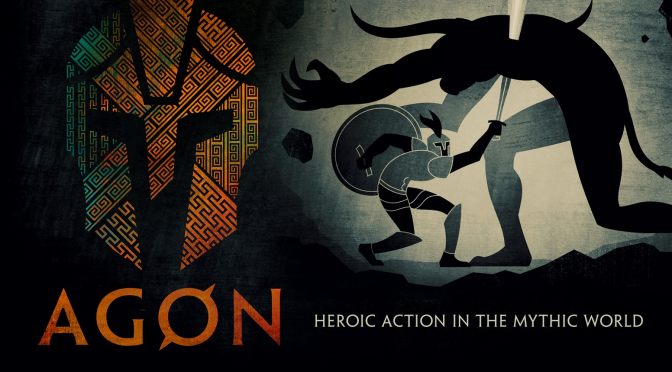
Agon Review
Fantasy RPGs borrow heavily from myth. The superstructure of character advancement in D&D has always intended to emulate character growth from humble beginnings to nearly godlike heroism. Where D&D takes this broad structure and uses it for its own unique version of fantasy, Agon goes back to the source. Agon is an RPG of mythic heroes, seeking to emulate epic poems of Ancient Greek heroes and their exploits. Where a game like D&D guides the action and the narrative in broad strokes, Agon uses a more structured set of procedures to play through the trials faced by the characters. Designers John Harper and Sean Nittner seek to provide a specific structure by which players address challenges, see the consequences, and grow in relation to their world. The result is something evocative and easy to play, but which may frustrate players used to the more open-ended approach of D&D and other older, more traditional RPGs.
Kickstarter Wonk: October, 2020
Welcome back my friends, to the show that never ends… Am I referring to world events? The continuing growth of the RPG Kickstarter market? Do I just really like Emerson, Lake, and Palmer? No matter what it is, we’re back again with Kickstarter Wonk for October of 2020! 2020 is slowly coming to a close, and the RPG market is slowly recovering…while making my 10-game articles would still be tough, I’m happy to say that the five game article format has forced me to make some tough decisions between definitely more than five great looking projects. This month we also have a bonus sixth game! Fellow Cannibal Halfling Maria’s game Hero Too: Super Edition is currently on Kickstarter, and while I think it’s great and deserves your pledges I’m noting the conflict of interest here just so no one gets huffy. In addition to these six projects of note, I’ve also reflected a bit on who the Kickstarter platform is for. People sometimes get grumbly when larger or more well-known companies use the platform, but it’s worth it to set the record straight a bit on the realities of financing game design.
No Man’s Sky and Sandbox RPGs
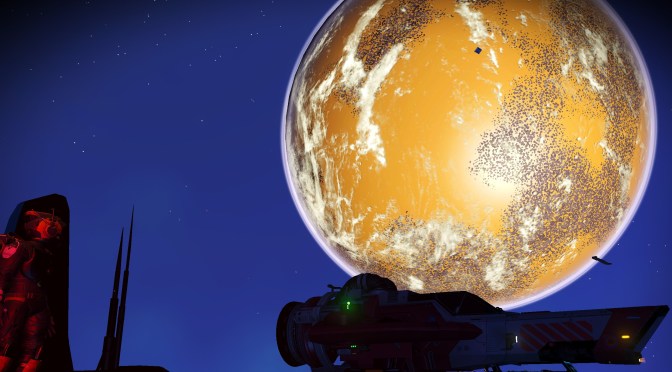
On September 23rd, Hello Games released the Origins update to No Man’s Sky, the latest in roughly a dozen major content updates to the game since it was originally released about four years ago. These content updates have turned No Man’s Sky from an overhyped mess into possibly one of the most celebrated sandbox exploration games available in the digital space. No Man’s Sky is not worth talking about on this tabletop-focused site because of its crossover potential, but rather because of how both its design and post-hoc development have laid it bare in a system sense. No Man’s Sky has three interesting things going for it as a subject: First we saw it fail, then we saw it succeed, and it happens to do both of those things to a mode of gameplay commonly attempted in the tabletop space: the sandbox game.
Continue reading No Man’s Sky and Sandbox RPGs
Soft Prep for RPGS
New Campaign day is a very exciting day. Your group is ready to try something new, and everyone’s agreed on what it should be. Now you may be getting ready to run a Session Zero with something like Apocalypse World, where the feeling and the aesthetic of the game’s implied setting is broadcast to you, loud and clear, from the first page of the book. You may be getting ready for character creation in D&D, where the implied setting is strong but allows for a lot of variation within its fantasy tropes. Or, you might be walking into a game where the world has sprung from the mind of the GM, and you don’t know what to expect beyond maybe a few sentences that have been shared. Regardless of what situation your campaign will start with, now is the time you’ll most benefit from some soft prep.
Continue reading Soft Prep for RPGS
Genesys In-Depth
Back in November of 2017, Fantasy Flight Games released Genesys. Both Seamus and I wanted a fair shake at reviewing it, and in the process we learned why not to do two-part reviews. Still, a lot of people read it and we continued being excited for the generic version of the Star Wars RPG that many of us at Cannibal Halfing had spent a fair amount of time playing. Now, nearly three years later, it’s a perfect time to revisit the system. Asmodee, Fantasy Flight’s parent company, has reorganized their RPG development resources. In the near future new Asmodee-owned RPGs will be released from the new Edge Studio imprint, and based on a panel at GenCon 2020 this will include new Genesys material (the IP referenced there was Twilight Imperium). For now, though, the Asmodee RPG pipeline is on pause, at least until the last couple Legend of the Five Rings supplements enter distribution. On my personal end, I have finally both played and GMed games in Genesys, which means it’s a good time to give Genesys the In-Depth treatment.

How Exactly Do I Play This?
The world of role-playing games has been expanding outward ever since Dungeons and Dragons was first released. Within five years of the first published system, games which used different fundamental assumptions and mechanics not only existed but had started to find popularity. Within 15 years, games existed which used the medium in a completely different way than D&D ever intended or expected to. Now, over 45 years later, the RPG world is a vast plane of games with GMs, without GMs, games with dice, with cards, with block towers and with no randomizers at all. There are games which exist to simulate worlds, games which exist to be played optimally, and games which trace out the creation of a story scene by scene. It is, as they say, a glorious time to be alive.
Continue reading How Exactly Do I Play This?Kickstarter Wonk: September, 2020
Welcome to Kickstarter Wonk for September! Back to school, post-GenCon rush, none of these events make sense this year, at least not in the normal way we usually understand them. Some of the pent-up demand for Kickstarters is starting to appear in the marketplace again, but everything remains muted, and likely will for some time. The five project article is going to be the norm for the foreseeable future, though luckily we’ve gotten past the point where getting five projects together took effort. Nonetheless, it’ll be a few months before we get back up to the quantity (of quality) that I was used to back when this series started. Even so, fear not! These five projects are worth a look; I even backed a few myself.

Are RPGs Fun?
The English language would make a terrible role-playing game. There are a lot of rules, many of them contradict each other, and in certain places there still isn’t enough detail to make the mechanics do what you really want. Some words, therefore, words we use frequently in some cases, are surprisingly hard to define. Imagine, if you will, that someone asks you why you play role-playing games. Many of us will answer such a question with our favorite aspect of the hobby, saying something like “I enjoy playing interesting characters” or “I enjoy making a story with my friends” or even “I enjoy the thrill of combat”. These can all be chased down, toddler-like, with another question, “why do you enjoy that?” When you’ve been run down by questions, how many of you will end on (for either accuracy or to get the questions to stop) “because it’s fun”?

