
Welcome to the Cannibal Halfling Weekend Update! Start your weekend with a chunk of RPG news from the past week. We have the week’s top sellers, industry news stories, something from the archives, and discussions from elsewhere online.
Tag Archives: Opinion

The design decision which won narrative gaming
Last week, Apocalypse World came back to crowdfunding, with the Bakers seeking funding for a Third Edition of the game. Apocalypse World was first released back in 2010 and it took the indie RPG world by storm; by the time Dungeon World was released in 2012 it was already all but certain that ‘Powered by the Apocalypse’ would be a phenomenon. It’s easy to forget that there was another indie darling riding high in the hobby in the early aughts. Fate was arguably the other big indie game, and it even made its way into the ICv2 bestseller list after the success of its 2013 Kickstarter, an honor typically reserved for D&D, Pathfinder, and a few other corporate games. The ICv2 data point is particularly interesting. Fate outsold Apocalypse World; not only did the game peek into commercial sales charts as late as 2020, Fate even holds the statistically dubious honor of being one of only three games to ever outsell D&D in the ICv2 rankings (the other two being Pathfinder and FFG Star Wars). Commercially, Fate was an indie juggernaut.
Fate has clearly not maintained the degree of impact and influence it once had. Hell, the last three Kickstarter campaigns run by Evil Hat Productions, publishers of Fate, were all Powered by the Apocalypse games. The literal keepers of Fate have, thanks in no small part to John Harper and Blades in the Dark, seemingly seen the writing on the wall in terms of salability and influence of PbtA over Fate. Why is that? To start, there’s an obvious disparity to the degree in which unaffiliated designers took the respective systems and ran with them. That said, it’s fairly clear to me that this is a symptom, not a cause. While it’s hard to beat the Bakers’ approach of ‘sure, just don’t literally plagiarize us’ for licensing, Fate was licensed under the OGL and later Creative Commons, which were both used by tons of creators in other contexts. No, the difference in third party support and expansion has to do with the design of the respective games, not their shepherding by their respective creators. And I think I know specifically which design elements made the difference.
Continue reading The design decision which won narrative gaming
Crowdfunding Carnival: November, 2025
Welcome to Crowdfunding Carnival for November! There are a ton of campaigns out there this month; my initial pass easily got to 20 even after I realized that there were a lot and started filtering more aggressively. We’ve definitely got more designers putting in the juice, but there are some other interesting developments going on.
First, Gamefound has come roaring onto the scene again. While the provider got some recognition during the Kickstarter blockchain kerfluffle, their network was pretty weak until recently. First, over the summer Gamefound acquired Indiegogo (not the other way around). Second, Gamefound is currently in the midst of RPG Party, an event that started in mid-October to help promote and drive engagement with RPG campaigns specifically. Chaosium and Magpie got on board with RPG Party, so between their involvement and the recent access to the Indiegogo mailing list, Gamefound has jumped from also-ran to contender seemingly overnight.
But let’s move onto the games. This month features campaigns from all three major crowdfunding providers, meaning the space is starting to heat up a bit. Competition is a good thing, and supporting competitors to Kickstarter is a great idea when Kickstarter United is still on strike.
Continue reading Crowdfunding Carnival: November, 2025
SPINE Review: Making A Game Of Getting Lost In A Book
You and Granma were, frankly, on the worst terms. That’s what made it such a surprise when you got a package from your cousin, who had wound up being the executor of her estate. Maybe, your cousin writes, Granma was able to overlook your differences since you had become a fellow academic? Either way, the actual package is a copy from her rare books collection, willed to you. You can’t help yourself, so you start to read the book. It’s a weird one, an anthology of works all talking about books and stories and death and living forever and… rituals? Hold on. You really can’t help yourself. You consider just not turning the page, but you turn it all the same. The notes you’re writing in the margins stop being the words you intended to write. You can feel the book pulling you in…
The book is Siderius Plug’s SPINE – Immortality in Ninety-nine Endnotes.
Continue reading SPINE Review: Making A Game Of Getting Lost In A Book
Adventure Log: If you could DIE all over again
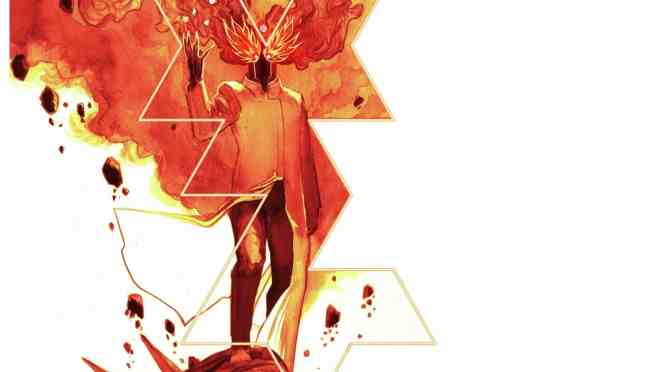
Playing the same scenario over again is a tough proposition. As good as the first time went, finding something else to discover, some other way to engage with the scenario, or simply just another perspective is not easy. Admittedly, the core scenario of DIE, Reunited, isn’t any old module. This past month my group played it again, and doing things over again was a core component of the twist I introduced.
You’re likely familiar with the first time my group played Reunited, it’s the basis for Seamus’s review of DIE, and it was an incredible experience sinking our teeth into the game over one long day. There was interest in revisiting DIE this year, and my thought was there was going to be one of the scenarios for the game; last year I ran Distant Fans from the core rulebook and it went well, though not quite with the same gutpunch as Reunited. When the stars aligned and our gaming weekend was going to step down to six people on its final day, I decided to lean in to returning to the gutpunch. Arguably, I leaned too far.
Continue reading Adventure Log: If you could DIE all over again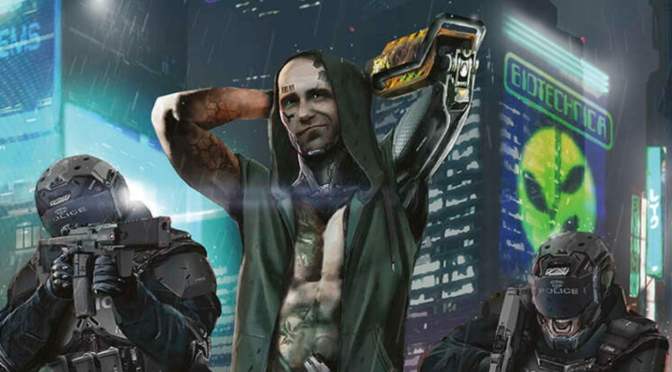
It shouldn’t have been called Single Player Mode
Cyberpunk Red has been going strong for around five years now. The game came out around the same time as the tie-in video game Cyberpunk 2077, and represented a return to form after 2005’s Cyberpunk v3 (and 2020 being over 30 years old). Now, R. Talsorian Games has kept the party going with continual Cyberpunk support both free (in the form of Monthly DLC) and for pay (in the form of the Interface Red collections as well as standalone supplements like Black Chrome). Single-Player Mode is the most recent standalone supplement, and your take on it will depend entirely on what you think a solo RPG is (or should be).
If you’re older than a certain age, when you think solo RPG you think something like Mythic GM Emulator, a set of rules that can act as a GM and let you play through modules or combats on your own. If you’re younger than a certain age (let’s say younger than me at least), your first thought of a solo RPG is probably more like a journaling game, or a hybrid narrative game like The Wretched. It’s important to state this because despite its 2025 release date Cyberpunk Red Single Player Mode is firmly the first of those two. There are no campaign framing tools, no narrative generation, and no character supplements. Cyberpunk Red Single Player Mode is built firmly on using an ‘oracle’ to answer questions which allow you to progress forward through your imagined narrative, and also provides tools to let you play out investigations, social interactions, combats, and netruns all on your lonesome. What it’s truly best at, though, is having a library of random tables which enable you to set up all sorts of premises, missions, and random encounters to make your Cyberpunk solo game more interesting. You may realize as I say this that random tables aren’t just for solo gaming. Not only is that true, it means that while I think Single Player Mode makes for an excellent GM aid and has some good rules additions…it just doesn’t work as an effective solo game.
Continue reading It shouldn’t have been called Single Player Mode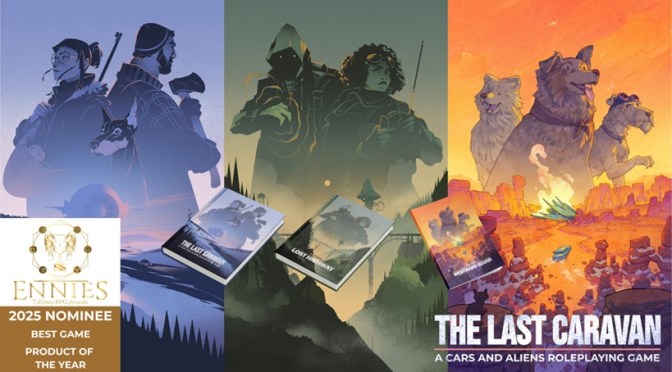
The Last Caravan – Con-Apocalyptic Road Trip
They came less than a year ago. The war was swift – and brutal.
Humans and aliens bombed each other to smithereens, and now both sides are licking their wounds. Mysterious new factions rise to join the struggle of the fallen titans. In this landscape of shifting allegiances, we may have to choose sides. Debris from the explosion of the aliens’ mothership has clouded the atmosphere, lowering the temperature and creating the coldest winter in a thousand years.
We find ourselves in a melancholy, wintry landscape — quiet, until it’s not. Egg-shaped alien structures thirty stories tall now squat, humming, over the cities they crushed. Xenofauna and lost invaders stalk the woods and highways. A war is brewing in the aching silence.
We are navigating the waking remnants of human and alien empires — and all we’ve got is a car, our fellow travelers, and the road.
It’s time to head west with The Last Caravan.
Continue reading The Last Caravan – Con-Apocalyptic Road Trip

Cultures of Play, Quanta of Play
The assumptions, intentions, and design of tabletop roleplaying games are infamously broad; seeing eye to eye on how to play is as primary a challenge as finding a time on the calendar for four to six people. Back in April of 2021, the blog The Retired Adventurer published a post called Six Cultures of Play which still sees reference as a succinct overview of distinct play traditions which have evolved over the last fifty-ish years of structured tabletop roleplaying. Between solid analysis and the author’s own admonitions not to see bright lines between the cultures where there aren’t any, I see the article as a useful model to start thinking about how people game and what they want.
Of course, the gaming world hasn’t stayed still, and from the publication of the original post to the renaming of Twitter to “X” in 2023, fragmentation was the word of the day. Since then, we’ve seen continuing fragmentation joined with an upswell in interest in fairly specific playstyle differentiation, driven by migration away from Wizards of the Coast products and strong take-up of “D&D alternative” products including not only Pathfinder but Daggerheart, Tales of the Valiant, and Draw Steel. The core ideas in the Cultures of Play post still hold true, but the consistent signpost in my mind is in the introduction, where the author describes a culture of play as equivalent to a ‘network of practice’. A community of practice is a group which forms around something they collectively do (or practice) which they have a passion for and want to do better; a network of practice is also that but doesn’t assume the same consistent strength of relationships, therefore being a more appropriate term for a larger, more nebulous group. As broad as a network of practice can be, I don’t really think it aligns with a ‘culture of play’ anymore.
Continue reading Cultures of Play, Quanta of Play
My gaming group: A twentieth anniversary review
September of 2025 marks the twentieth anniversary of my current gaming group. Yes, you read that correctly. While I’m not sure of the exact day, twenty years ago either this week or last week I met with five other nerds in the study room of Carnegie Mellon’s newest freshman dorm, New House (which has since been renamed). The organizer, my friend Dan, had swiped the mailing list from an event run by the university’s chapter of White Wolf’s Camarilla Society; he decided that while he wanted nothing to do with a Vampire LARP, he met some cool people at their D&D one-shot event and would want to play D&D with them. We all decided that yes, we’d like to play D&D, and from there we were off. Three more people joined over the next couple of semesters, a lot of games were played, and we were a close-knit group until graduation in May of 2009.
Continue reading My gaming group: A twentieth anniversary review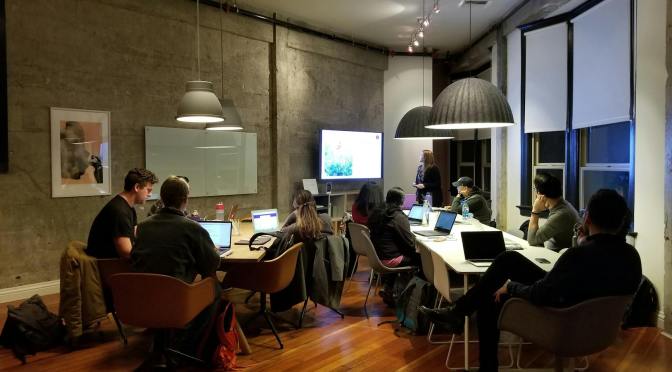
Big groups, small games
For the most part, the ideal size for a gaming group is five, four players and a GM. This is driven by group dynamics; researchers wrote in the Harvard Business Review back in 2018 that the ideal group size for meetings is between five and eight, at least if the point of that meeting is to have a productive discussion and get things done. Roleplaying games skew to the lower end of this mostly just due to the fact that in addition to the actual ‘meeting’ of a game, there is also the need to manage that many characters, their contributions, and their stories.
Ideal doesn’t mean only, and an experienced GM can run games anywhere in that 5-8 range without too many problems, at least as long as they’re realistic about how long things will take. More and more, though, games are being written towards a specific group size, usually a smaller one. In some cases it’s obvious, like Fiasco: the number of turns in the game, and therefore the amount of time the game will take, is directly proportional to the number of people playing, and even playing with five people, the maximum number recommended by the rules, the game begins to sprawl and the story begins to sag. In other cases, the restriction comes from a clear place, but the question hangs in the air about how to subvert it. A good example of this is DIE: There are six roles, six dice. That’s how many there were in the comic, therefore that’s how many there are in the game.
Continue reading Big groups, small games Cannibal Halfling Gaming