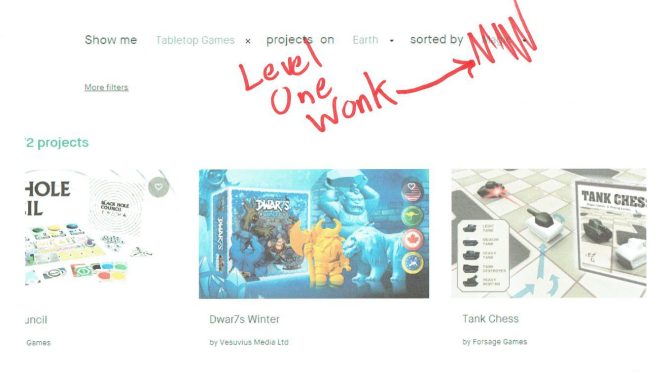
Welcome to Crowdfunding Carnival for December! Con season is well and truly over, with PAX Unplugged wrapping before Thanksgiving. That, combined with the upcoming holidays, has caused Kickstarter to slow…turns out game designers need a vacation too! We don’t have ten campaigns to look at this month, but there are still a number of interesting games on the horizon which are worth examination.
Continue reading Crowdfunding Carnival: December, 2025Tag Archives: TTRPG

Last Kiss Backerkit Review
Ever feel like the world is out to get you? It is. Five radical teens with attitude should not be responsible for saving the world. You’re a bunch of god-damned teenagers. You might act like you have it all figured out, but you don’t. How could you when there is a literal evil force making your lives harder? So go ahead, seek out some normal high school goals like dominating on the sports field, kissing the mean girl, or becoming class president. While you play pretend, the darkness will seep in. The darkness colors the world so nothing is quite right. This is a world where disputes can be resolved via duels, where the next town over seems a world away, and where monsters live in secret. Normal doesn’t have a chance. What will you do before it all ends?
Perhaps there’s enough time for one Last Kiss…

System Hack: Colony Sim Cortex Base Building
If any one topic is ‘the core’ of this System Hack, this would be it. Base building is the underlying gameplay loop of RimWorld and it is also a topic du jour in RPG circles, with the (admittedly poorly detailed) stronghold building from the D&D days of yore coming back into focus as more gamers want broader storyline opportunities. For our purposes, of course, if we’re making a colony sim we need to make a colony. But what exactly is the best way to do that?
Base building from my perspective is sandwiched between two examples which effectively bracket the space we have to work in. On the heavy end is RimWorld itself, a computer-assisted colony manager where everything is measured out in five foot squares and the player has complete power to place elements as they want them, as long as everything fits. On the light end is the new generation of stronghold building rules, most effectively typified by Free League’s games, notably Forbidden Lands and Twilight:2000. These games add a strong layer atop their roleplay frameworks, but the actual mechanical existence of a Forbidden Lands stronghold is merely a list of buildings with requirements and effects. We know the first item is too much, but we know the second is not enough. So what will base building in our System Hack actually look like?
Continue reading System Hack: Colony Sim Cortex Base Building
The design decision which won narrative gaming
Last week, Apocalypse World came back to crowdfunding, with the Bakers seeking funding for a Third Edition of the game. Apocalypse World was first released back in 2010 and it took the indie RPG world by storm; by the time Dungeon World was released in 2012 it was already all but certain that ‘Powered by the Apocalypse’ would be a phenomenon. It’s easy to forget that there was another indie darling riding high in the hobby in the early aughts. Fate was arguably the other big indie game, and it even made its way into the ICv2 bestseller list after the success of its 2013 Kickstarter, an honor typically reserved for D&D, Pathfinder, and a few other corporate games. The ICv2 data point is particularly interesting. Fate outsold Apocalypse World; not only did the game peek into commercial sales charts as late as 2020, Fate even holds the statistically dubious honor of being one of only three games to ever outsell D&D in the ICv2 rankings (the other two being Pathfinder and FFG Star Wars). Commercially, Fate was an indie juggernaut.
Fate has clearly not maintained the degree of impact and influence it once had. Hell, the last three Kickstarter campaigns run by Evil Hat Productions, publishers of Fate, were all Powered by the Apocalypse games. The literal keepers of Fate have, thanks in no small part to John Harper and Blades in the Dark, seemingly seen the writing on the wall in terms of salability and influence of PbtA over Fate. Why is that? To start, there’s an obvious disparity to the degree in which unaffiliated designers took the respective systems and ran with them. That said, it’s fairly clear to me that this is a symptom, not a cause. While it’s hard to beat the Bakers’ approach of ‘sure, just don’t literally plagiarize us’ for licensing, Fate was licensed under the OGL and later Creative Commons, which were both used by tons of creators in other contexts. No, the difference in third party support and expansion has to do with the design of the respective games, not their shepherding by their respective creators. And I think I know specifically which design elements made the difference.
Continue reading The design decision which won narrative gaming
Weekend Update: 11/8/2025
Welcome to the Cannibal Halfling Weekend Update! Start your weekend with a chunk of RPG news from the past week. We have the week’s top sellers, industry news stories, something from the archives, and discussions from elsewhere online.
Continue reading Weekend Update: 11/8/2025Crowdfunding Carnival: November, 2025
Welcome to Crowdfunding Carnival for November! There are a ton of campaigns out there this month; my initial pass easily got to 20 even after I realized that there were a lot and started filtering more aggressively. We’ve definitely got more designers putting in the juice, but there are some other interesting developments going on.
First, Gamefound has come roaring onto the scene again. While the provider got some recognition during the Kickstarter blockchain kerfluffle, their network was pretty weak until recently. First, over the summer Gamefound acquired Indiegogo (not the other way around). Second, Gamefound is currently in the midst of RPG Party, an event that started in mid-October to help promote and drive engagement with RPG campaigns specifically. Chaosium and Magpie got on board with RPG Party, so between their involvement and the recent access to the Indiegogo mailing list, Gamefound has jumped from also-ran to contender seemingly overnight.
But let’s move onto the games. This month features campaigns from all three major crowdfunding providers, meaning the space is starting to heat up a bit. Competition is a good thing, and supporting competitors to Kickstarter is a great idea when Kickstarter United is still on strike.
Continue reading Crowdfunding Carnival: November, 2025Weekend Update: 11/1/2025
Welcome to the Cannibal Halfling Weekend Update! Start your weekend with a chunk of RPG news from the past week. We have the week’s top sellers, industry news stories, something from the archives, and discussions from elsewhere online.
Continue reading Weekend Update: 11/1/2025
Cultures of Play, Quanta of Play
The assumptions, intentions, and design of tabletop roleplaying games are infamously broad; seeing eye to eye on how to play is as primary a challenge as finding a time on the calendar for four to six people. Back in April of 2021, the blog The Retired Adventurer published a post called Six Cultures of Play which still sees reference as a succinct overview of distinct play traditions which have evolved over the last fifty-ish years of structured tabletop roleplaying. Between solid analysis and the author’s own admonitions not to see bright lines between the cultures where there aren’t any, I see the article as a useful model to start thinking about how people game and what they want.
Of course, the gaming world hasn’t stayed still, and from the publication of the original post to the renaming of Twitter to “X” in 2023, fragmentation was the word of the day. Since then, we’ve seen continuing fragmentation joined with an upswell in interest in fairly specific playstyle differentiation, driven by migration away from Wizards of the Coast products and strong take-up of “D&D alternative” products including not only Pathfinder but Daggerheart, Tales of the Valiant, and Draw Steel. The core ideas in the Cultures of Play post still hold true, but the consistent signpost in my mind is in the introduction, where the author describes a culture of play as equivalent to a ‘network of practice’. A community of practice is a group which forms around something they collectively do (or practice) which they have a passion for and want to do better; a network of practice is also that but doesn’t assume the same consistent strength of relationships, therefore being a more appropriate term for a larger, more nebulous group. As broad as a network of practice can be, I don’t really think it aligns with a ‘culture of play’ anymore.
Continue reading Cultures of Play, Quanta of PlayWeekend Update: 9/27/2025
Welcome to the Cannibal Halfling Weekend Update! Start your weekend with a chunk of RPG news from the past week. We have the week’s top sellers, industry news stories, something from the archives, and discussions from elsewhere online.
Weekend Update: 6/28/2025
Welcome to the Cannibal Halfling Weekend Update! Start your weekend with a chunk of RPG news from the past week. We have the week’s top sellers, industry news stories, something from the archives, and discussions from elsewhere online.
Continue reading Weekend Update: 6/28/2025
