
I’ve made plenty of hay over my opinions about D&D. D&D is not a bad game, but it’s such a limited expression of what a role-playing game can look like. The most common counter-argument I get to saying that a gamer should play games other than D&D is somewhere along the lines of “if that’s what they like, that’s what they should play”. This is usually followed by pointing out several more obscure games, which usually look absolutely nothing like D&D, and harping on about how that’s not the play experience they want. And this straw man argument is one of many reasons I’ve decided to sing the praises of the giant middle ground of the hobby, the traditional RPGs.
Category Archives: Level One Wonk
noun
: a person preoccupied with arcane details or procedures in a specialized field
broadly : NERD
: a TTRPG wonk
: a game design wonk

Torchbearer In-Depth
In RPG discussion circles in places like Reddit and Twitter, there has been a fair amount of hay made over the relative absence of ‘critique’ in the RPG realm. As someone who reviews RPGs fairly regularly, this is something which is difficult to parse but ultimately fair. A review aims to go over the traits and writing quality of a game in order to answer whether it is worth buying and worth trying to play. In RPGs (though honestly in all media) reviews skew positive because negative reviews get more negative attention, and because honestly writing 1500 words about something you don’t like simply isn’t fun.
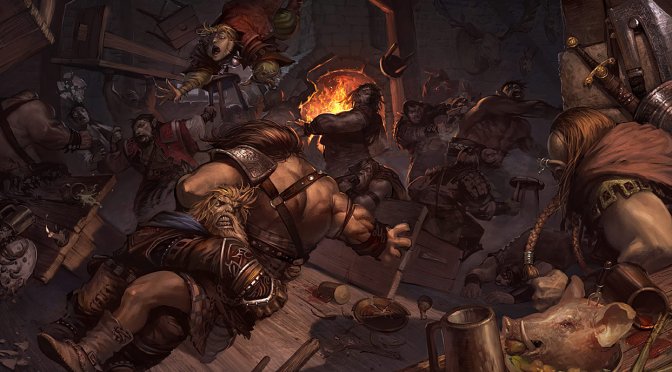
Maybe…Don’t Play D&D?
Earlier this year Dungeons and Dragons, and, as a result, the role-playing game as a formal, published form, turned 45. It is one of the youngest mediums in entertainment; as a point of comparison the first video game patent was issued in 1948, making that medium over 70. And like video games did with arcades and Atari, role-playing games are beginning to enjoy mainstream recognition, several decades after their genesis. There’s another similarity between video games, consoles specifically, and role-playing games: the first mainstream video game console outsold every competitor it had more than ten to one, just like the first mainstream role-playing game. In video games that was the Atari 2600, and in role-playing games that’s Dungeons and Dragons.

Level One Wonk: Narrative
That’s right, the Wonk is back in the building! Today we’re getting super wonky. While my last foray into RPG theory was an examination of an old universal theory, GNS, today I’m going to be looking at a narrower component of games, and a particular dichotomy which, after some examination, I realized shapes the core of how I want to play and run games, as well as what game systems I enjoy. I’m talking about narrative, but I’m not talking about whether a game is “narrative” or not. Rather, I’m going to talk about the two types of narrative which are generated in the course of playing an RPG: Prescriptive and Emergent narrative.
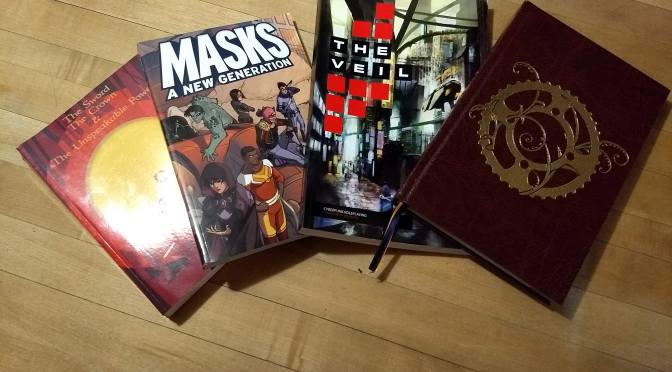
Level One Wonk: Powered by the Apocalypse 201
Way back when, at the genesis of this site, I wrote a “Novice’s Guide to Powered by the Apocalypse”, a Powered by the Apocalypse (PbtA) 101, if you will. This article covered the basic mechanics and underlying assumptions of games written with the PbtA framework, and covered a few of the more popular games that were out at the time. Now, nearly two years later, PbtA is still growing, and has attracted many players to its fiction-forward, high-stakes style of gameplay. I’ve also run and played more PbtA games myself, and have noticed some really interesting elements that people have trouble engaging, take for granted, or even fight against. This 201 course to PbtA games should provide advice and information about getting the most out of the full range of PbtA games and campaigns.
Continue reading Level One Wonk: Powered by the Apocalypse 201
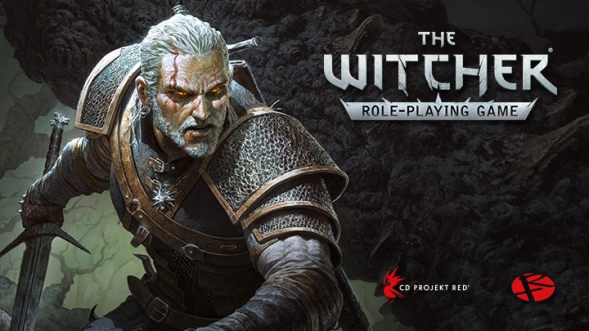
The Witcher RPG Review
Andrzej Sapkowski’s The Witcher series was thrust into the spotlight through the work of CD Projekt Red, a Polish game development studio now best known for its games based on the fantasy series. The Witcher RPG, new this year, was the result of an intriguing IP flowchart that connects it to some of the biggest hype in both the video gaming and tabletop gaming space. R. Talsorian Games, publisher of The Witcher RPG, is the company founded by Mike Pondsmith, designer of Cyberpunk 2020. When CD Projekt Red optioned Cyberpunk 2020 for a video game (Cyberpunk 2077), another Talsorian developer, Mike’s son Cody, built out a proposal for a tabletop version of The Witcher and presented it to CD Projekt Red leadership. They accepted, and the resulting game is the one I read and review for you here. Continue reading The Witcher RPG Review

ENnies Wonk: Best Free Game 2018
Surprise, it’s not the normal Level One Wonk this time, though I am gladly ripping off his format. At the start of the month, nominations for the ENnie awards were released. The nominations present a wonderful resource for GMs and gamers, and similarly for game reviewers. It had turned out that a number of nominations were games that we had written about in the past, but there were plenty more for us to study as well. In particular, there was one category that interested me: Best Free Game. Occasionally, players and GMs run on tight finances but still require their gaming fix. SRDs are plenty helpful, but sometimes you want to try something a bit different. A number of these games are more demos or skins for games that stop early than full, completely ready out of the box systems, but it is enough to get started, and to see if you enjoy the product enough to buy the full version . . . or creative players and GMs might be able to push it beyond expectations. These are only cursory reviews, and if something interests you, I fully recommend checking them out. They are, after all, free.

Time Travel: Paradoxes as Improv Practice
Time Travel is a daunting mechanic for any GM to attempt to incorporate in their game. While using time travel as a platform for historical settings and conflicts can be fun, eventually your players are going to ask “wait, what happens if we show Beethoven a recording of his Fifth Symphony before he writes it?” or, even more problematic, “can I go kill my grandfather?” These are questions which, for the sake of the integrity of the concept, can’t be left completely unanswered (though you can probably tell the player trying to kill his own grandfather to drop it before something bad happens). The good thing is that time travel as a game concept leans heavily on improv, and does so in a way that can be very helpful with developing your improv muscles in a fun, non-game breaking way. That’s because with time travel, you can come up with whatever consequences you want…the players already have the mechanism to fix it.

Level One Wonk: Fantasy
It’s the genre that started it all, and it has set the baseline for what people think of when they hear the term “role-playing game”. It’s a literary genre of astonishing breadth, that still seems to get people thinking about elves and wizards. So why is fantasy role-playing such a different animal than fantasy in general? And what sort of games are hiding in the wings around the 500 pound Gygaxian elephant in the room? Today, the Level One Wonk is going to look around what fantasy role-playing is, how it’s related to fantasy literature, and what that all means when it comes time to sit down and roll dice.

How To Be A GURPS GM Review
Ah, GURPS. One of the most comprehensive toolkits on the RPG market, GURPS and its plethora of supplements offer the ability to play in almost any genre at almost any complexity level. The tradeoff here is that when you open the GURPS Basic Set for the first time, you are dazzled and overwhelmed by a vast range of options to select, dials to adjust, and levers to pull. Coming from a game like D&D, a GM starting with GURPS isn’t going to know where to, ahem, start. Steve Jackson Games realized that, and recruited two GURPS veterans to write How To Be A GURPS GM. While this slim volume is thin on generalizable GMing advice (with admittedly good reason), it does exactly what it says on the tin, and provides some guidance on how to actually make GURPS do what you want it to do.

