
Welcome to the Cannibal Halfling Weekend Update! Start your weekend with a chunk of RPG news from the past week. We have the week’s top sellers, industry news stories, something from the archives, and discussions from elsewhere online.
Crowdfunding Carnival: February, 2024
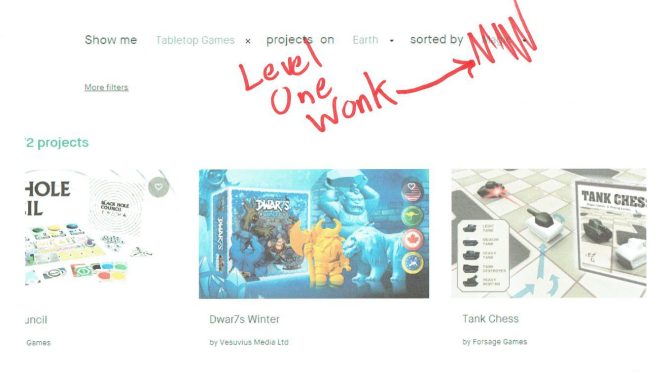
Welcome to Crowdfunding Carnival for February! Uh oh…it’s February already? You know what that means…ZineQuest! This month I (mostly) put the big games aside and look at all the different zine campaigns that are coming up thanks to Kickstarter’s ZineQuest event. ZineQuest is now in its fifth year, and after some hiccups over the last two pertaining to both blockchains and scheduling, everything appears to be full speed ahead. Of course, this is a Kickstarter-specific event, and there is also a companion event, Zine Month. We’ll have coverage of some of those campaigns later on, but as these campaigns are all on Kickstarter, they’re all ZineQuest campaigns.
And as far as the great Zine agglomeration goes, Kickstarter is the place to be. Last I checked there over over 150 campaigns with the Zine Quest tag applied, and I’ve been able to pull out just about half of those as interesting little nuggets worth your attention. As that number is almost certainly going to increase, we’re going to have a second go-around of Crowdfunding Carnival in a couple weeks (that’s also where the five-year retrospective is going to go, in a slightly different form because it’ll be talking about ZineQuest from five years ago). For now though, check out a whole bunch of zines, as well as a couple more traditional big campaigns that happen to be running in February.
Continue reading Crowdfunding Carnival: February, 2024Weekend Update: 2/3/2024
Welcome to the Cannibal Halfling Weekend Update! Start your weekend with a chunk of RPG news from the past week. We have the week’s top sellers, industry news stories, and discussions from elsewhere online.
Continue reading Weekend Update: 2/3/2024
System Split: Not Shadowrun
Shadowrun hit a home run back in 1989 with its fusion of cyberpunk and fantasy, adding classic D&D races and magic to a near future corporate dystopia. Since then it’s gathered a significant fan base and seen multiple video game adaptations dating all the way back to the Sega Genesis. One thing that was never a clean hit, though, was the rules. While the first two editions of Shadowrun had quirks that were on par with most 80s RPGs, the game got truly overwrought in its third edition and spent fourth and fifth trying to clean things up (without really succeeding). The sixth and current edition, Sixth World, attempted to peel back the rules bloat but did so while both alienating most existing Shadowrun fans and still failing to fix the editing.
Now, I like Shadowrun. I have a soft spot for cyberpunk as many readers already know, and have had some good fun in the campaigns I ran across its fourth and fifth editions. That said, from a mechanical perspective, Shadowrun isn’t a shining star. The attempts to layer multiple magic systems alongside perennial headaches like hacking and vehicle rules make the game tricky for the players and utter masochism for the GM, and as much as the sixth edition did introduce some needed streamlining it still ultimately suffers from the same problems.
Continue reading System Split: Not ShadowrunWeekend Update: 1/27/2024
Welcome to the Cannibal Halfling Weekend Update! Start your weekend with a chunk of RPG news from the past week. We have the week’s top sellers, industry news stories, something from the archives, and discussions from elsewhere online.
Dragonbane Review
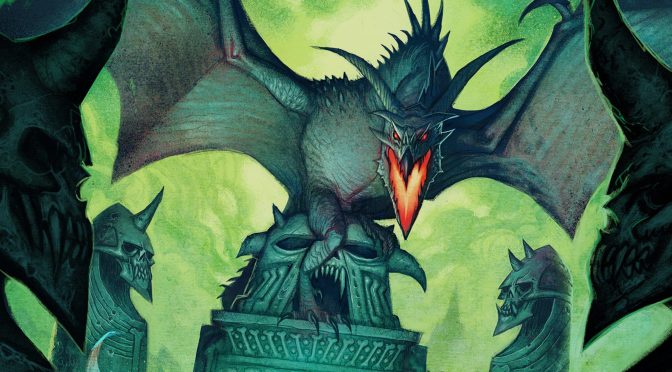
Fantasy is the most popular genre of role-playing game. Even if you don’t count the sheer volume of Dungeons and Dragons players, there are more titles that slot into the fantasy genre than any other. When reading and playing games, one could be excused for beginning to think that many of these fantasy titles are little different from each other; thanks to the early days of Dungeons and Dragons, many of the genre’s tropes are filtered through RPGs in frankly wild ways and that does mean we see a lot of the same basic structures in our fantasy games. Doesn’t seem to bother anyone at Free League Publishing, though. Apparently to them, the ideal number of fantasy games a single company should put out is a half dozen.
Needless to say, Free League’s reasoning for each fantasy game they release is different, and they also reap the benefit of a more stratified European gaming audience where the appetite for different, specific experiences is greater. In many cases, it’s also not hard to see that the genre has a lot of room for variety. Mork Borg and Forbidden Lands have very little to do with each other. That does make it a little interesting, though, when Free League acquires the IP for the grand-daddy of Swedish RPGs. As of 2021 they did make such an acquisition, and the result is out now in the form of Dragonbane.
Continue reading Dragonbane ReviewWeekend Update: 1/20/2024
Welcome to the Cannibal Halfling Weekend Update! Start your weekend with a chunk of RPG news from the past week. We have the week’s top sellers, industry news stories, and discussions from elsewhere online.
Continue reading Weekend Update: 1/20/2024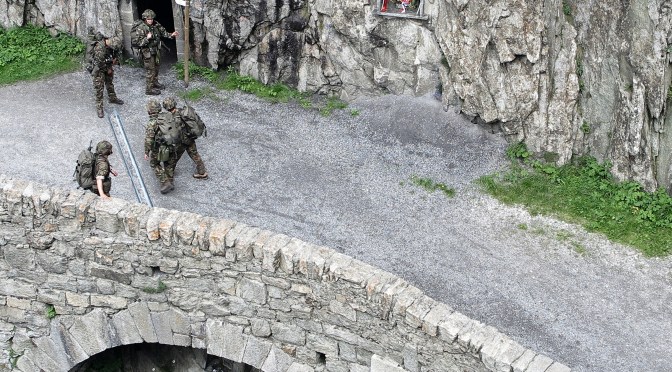
Meet the Campaign: Forbidden Stairs
I love mashups. Whether in music, film, or elsewhere, a good mashup takes the best parts of its two (or more) constituent works and makes them even better by putting them in a different context. Mashups work just as well in RPGs. Shadowrun, a mashup of fantasy and cyberpunk, has been drawing players in for 35 years. Rifts, arguably an attempt to mash up everything the designer could think of, has created many more fond memories than its ruleset would suggest. For today, though, I’m going to dig into a more literal mashup, a setting where two worlds collide: an RPGnet thought experiment and proto-setting called The Long Stair.
As recorded in a long thread started over fifteen years ago, The Long Stair was intended to be a combination of ‘spec ops dungeon crawls’, Cold War shenanigans, and a little sprinkling of cosmic horror as D&D creatures made it ‘up the stair’ into the real world. While it’s certainly not the only way to do it, this setting illustrates a very well realized example of worldbuilding from a thought experiment, in this case the idea of sending modern-day operatives into a D&D dungeon.
Continue reading Meet the Campaign: Forbidden StairsWeekend Update: 1/13/24
Welcome to the Cannibal Halfling Weekend Update! Start your weekend with a chunk of RPG news from the past week. We have the week’s top sellers, industry news stories, something from the archives, and discussions from elsewhere online.

What can we say about RPGs?
This is my eighth year of writing for Cannibal Halfling Gaming. On one hand, everything I’ve done here has blown up beyond my wildest expectations; the quantity, quality, and audience of my writing are all better than I could have imagined back in 2016 when I asked Seamus to join his project. At the same time, though, the journey often comes with the feeling that we still aren’t doing anything of the scale or ambition to be worthwhile. Some of this is just imposter syndrome, to be clear. Some of it, though, is borne from frustrations that come with being a content creator for a niche hobby and insisting on using the written word to do it.
As Seamus spoke about recently in The Trouble With Reviewing RPGs, there are limits to what we can do on our budget of approximately nothing; we both have full-time jobs and writing for a site like this must be fun and/or fulfilling even before it is useful if we’re to continue doing it. At the same time, there are things we have to say, and having no budget also means we aren’t beholden to anyone. Things are changing, though; we’re changing. When I wrote that very first article about PbtA I was 29 years old; I’m 36 now. That is a huge step away from the core audience of tabletop RPGs, and as our entire millennial generation now sits above the first standard deviation of age for a gamer we need to think long and hard about our continued relevance (or inevitable descent into grognardism).
Continue reading What can we say about RPGs?
