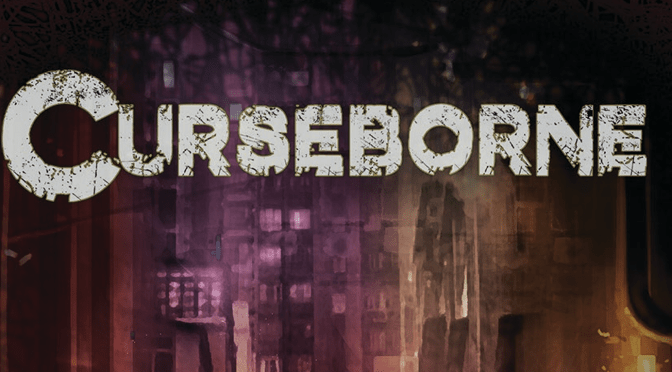
Instead of coming up with some TTRPG pablum for an introduction, I’m going to cut right to the chase: At first I thought it was really weird that Onyx Path Publishing released Curseborne. If you don’t look too closely, the game appears to ape World of Darkness, an entire fork of which Onyx Path is the licensee. The five lineages are clearly aligned to Vampire (Hungry), Werewolf (Primal), Mage (Sorcerer), Demon (Outcasts), and Wraith (Dead). And even if the game is in fact different, why did Onyx Path decide to make their own supernatural horror game now?
Continue reading Curseborne: Onyx Path’s next dark worldTag Archives: TTRPG
Crowdfunding Carnival: January, 2026
Happy new year, and welcome to the first Crowdfunding Carnival of 2026! Creators are warming up their engines after the holiday season, and we’ve got a range of things to look at.
Let’s talk 2025 first. The year had a fair share of challenges for creators, not the least of which were tariffs and other economic challenges. At least one project, Magpie’s hotly anticipated trio of card-based RPGs, fell victim to this uncertainty; while the impact is certainly greater for board games and others which have physical components, it makes planning a project harder even if the physical release is secondary to getting the game into the world.
Continue reading Crowdfunding Carnival: January, 2026
Level One Wonk Holiday Special: 2025
Come one, come all, to the strangest time of the year! Join me here in the dead zone before Christmas and New Year’s, and let’s talk about how 2025 went. 2025 was a rough year, to be honest, mostly having to do with a lot of not-RPG things. Some of that did bleed over into the RPG world as well. Tariffs have made physical games more expensive to produce and buy, and generative AI continues to drag down the quality of games being produced. While the RPG hobby can be an escape, more and more it seems that engaging with it (and any hobby for that matter) is necessarily intertwined with the news of the day.
Perhaps that’s one of the reasons I looked inward this year. Eight of my fifty articles this year were ostensibly reviews, including three fantasy games (Legend in the Mist, Miseries and Misfortunes, Grimwild), two horror games (Lovecraftesque, Triangle Agency), two sci-fi games (Coriolis: The Great Dark, Cyberpunk Red Single Player Mode) and one generic game (QuestWorlds). I definitely wrote my share on the hobby at large, but spent a bit more time zeroing in on game concepts, be that a new System Hack, examining hit points in Cyberpunk games, or reflecting on the “Onion Model” for the OSR. Even among the reviews you can see that things were a bit less forward-looking; the review written closest to release for the game with the most novel execution was Triangle Agency, and that happened in the beginning of the year. Everything else was either a bit vintage, a supplement, or a new edition of an old game.
Was there a big slowdown this year? If anything, there was a big shift in attention this year. Last year was the year of revised Dungeons and Dragons, but this year was the year for the response to Dungeons and Dragons, and that response came through in spades. Daggerheart was released in May and Draw Steel in July, and both games have created a gravity well pulling attention back to mainline fantasy trad. At the same time, a few older titles like Shadowdark engineered some very successful coattail-riding, building on existing success to take advantage of the changing headlines and the renewed focus on “not D&D”.
When you take the economic uncertainty outside the hobby and the retrenchment within it, what you get is conservatism from all sides. Most of the top-selling titles on DriveThruRPG have been new editions, remakes, and sequels; while there’s something to be said about the continued popularity of the Warhammer settings and of Onyx Path’s stewardship of Storyteller/Storypath, the incrementalism of these games don’t exactly make them rich veins of material for critics and reviewers. The games that really surprised and delighted me this year were ones I was late to the party on, like Legend in the Mist.
Was my gaming year similar to my writing year? In a way, yes. I ran Apocalypse World: Burned Over all year, eventually triggering a “gamechanger” which sent the characters to DIE. Yes, I played it safe even as I enthusiastically tried out new mechanics and new rules hacks. Even though I played it safe, it had been about a decade since this group last played Apocalypse World, and I keep seeing new ways that GMing PbtA pushes me and the way I run my games. Now that phase two of the campaign is continuing in DIE, I’m trying to prep for it in a very different way. I’m curious to see how long I can keep things going; on one hand I think this campaign has a longer runway than I’m used to writing for, but on the other hand I’m writing in a definitive ending that the players can trigger at their pleasure. My players will find out about that ending in our next session; for right now it’s the only part of session prep that hasn’t been scrambled and rewritten multiple times as I keep getting new ideas.
New ideas are my continuing blessing/curse as I try to shift my new campaign ideas over to the side. I have several campaigns I want to run in the future, including a horrendously ambitious post-apocalyptic science-fantasy game using at least three different OSR games stuck in a blender. Beyond that are some slightly less intense ideas mostly focused around systems; my group played Wildsea for the first time and there’s interest in going back, so that may be an upcoming campaign (run either by me or possibly someone else). I also clued myself into the upcoming release of Blades ‘68; I played Deathloop and Atomfall this year, and got a nice reminder of how much I enjoy the ‘60s retrotech aesthetic. Given that setting realignment, it’s very likely that Blades ‘68 will be what inspires me to finally get Blades in the Dark to the table.
This was also a year I got back into the RPG discussion space a bit, becoming a more active user on a couple Discords where some great discussion has gone on. I also finally started an account on BlueSky, but that was mostly due to a tangential development this year: I started another site where I’m posting fiction and some personal reflections on storytelling. It’s going to be a smaller, more intimate project than Cannibal Halfling Gaming, but overall I think that doing more writing and being encouraged to engage more (albeit in a relatively contained fashion) has been a good thing this year, both for my sense of belonging in this hobby as well as a way to create dialogue. I’m very pleased with the three posts I wrote in conversation with other commentators this year, and I think my efforts to consider my writing as dialogue, as conversation made the result not only better written but also healthier than trying to write ‘a response’.
So where did all that writing get us? Well, we’re inevitably cramming in more posts at the end of the year, but as of this writing we’re beating the 2024 viewcount by about 6000, with about 15 fewer posts. This is a solid turnaround from the decline from 2023 to 2024, but it also has shown that, once you take outliers out of the picture, we’re trending similarly to the RPG hobby as a whole. 2023 likely shouldn’t have been as big as it was, but we got at least two huge articles posting five-figure reader counts within a week of their release. As we’ve moved away from promoting on Twitter and Reddit, those immediate viewcounts are seldom if ever going to happen, unless we stumble upon a game right before the hype cycle begins (and we don’t have enough free time to ever do that reliably). We’re putting out content that’s generating very healthy viewcounts over time, and continuing to do that is what’s going to enable us to continue growing steadily into the future.
We published 52 posts this year as part of our recurring content cadence: Weekend Updates, plus one Cannibal Halfling Radio episode. I wrote, as I mentioned, 50 posts this year. Seamus wrote 17, and then Aki and Sloane contributed another 3. This got us to our total of 122, which as I mentioned is about 15 less than last year, but with better viewcounts. As we look at this, there’s always the consideration of sustainability. In 2019 we published nearly 150 pieces, but that’s even wilder than you think, because Weekend Update didn’t become part of our posting schedule until 2021. That means that we published more than twice as much content in 2019 as we did this year. Can we return to that? No, not really; at the very least we’d need four regular writers again, and currently we only have two. Our current pace is definitely workable, though I’d prefer to see roughly ten posts a month (four weekend updates, six actual posts) spread out evenly through the year. We do seem to have this habit of cramming a bunch of things in between Thanksgiving and New Year’s…anyway.
And how has this year been for me? Well, a lot. I mentioned it briefly in my Endies 2025 post, but I moved this year. Even that is burying the lede; I moved in with my longtime partner, which was more logistically involved than most. We are lucky to not be renters, but that means that moving required the sale of two condos and purchase of one, as well as two different moves, first consolidating into one (too-small) condo and then moving everything into the new one. The entire process went from May to the middle of August, and dominated my year. As I look to 2026, one significant difference from 2025 will be that no one in my life is moving. The biking is of course continuing as always; our new home has more cycling infrastructure and options around us, though the move itself cut into my ability to ride and train. I felt that hard when we did D2R2 this past year; I simply wasn’t as fit as I wanted to be and suffered through a lot of the hill climbing as a result. Next year should be better, as long as I make time to ride.
I’m not sure where the hobby is going next year, but I still have a drive to play games, run games, and make games. Thanks to my new project I even have a space to talk stories, characters, and worldbuilding while focusing my writing here on new games, the state of the hobby, and nerding out about playing RPGs just like I always have. While I think that predicting things will ‘calm down’ next year is perhaps a bit optimistic, my personal life should be slightly less hectic, which may even mean more time to play games. As with everything else, we shall see. No matter what is coming, I hope to keep writing, keep playing, and keep engaging with all of you who also love this hobby and who I’ve enjoyed speaking to in the past year. Thank you to everyone who reads, comments, and drops by our Discord, I hope to keep seeing you in the year ahead. Of course thanks to Aki, Sloane, and Seamus, who have all made up part of the Cannibal Halfling family this year. As always, keep playing, keep dreaming, and I’ll see you in 2026.
Like what Cannibal Halfling Gaming is doing and want to help us bring games and gamers together? First, you can follow me @levelonewonk.bsky.social for RPG commentary, relevant retweets, and maybe some rambling. You can also find our Discord channel and drop in to chat with our authors and get every new post as it comes out. You can travel to DriveThruRPG through one of our fine and elegantly-crafted links, which generates credit that lets us get more games to work with! Finally, you can support us directly on Patreon, which lets us cover costs, pay our contributors, and save up for projects. Thanks for reading!
Organizing an itch.io Bundle
I’ve organized five itch.io bundles. Four of them have already happened, and one of them is still live for a few more hours. Here are links to all of them1:
Continue reading Organizing an itch.io Bundle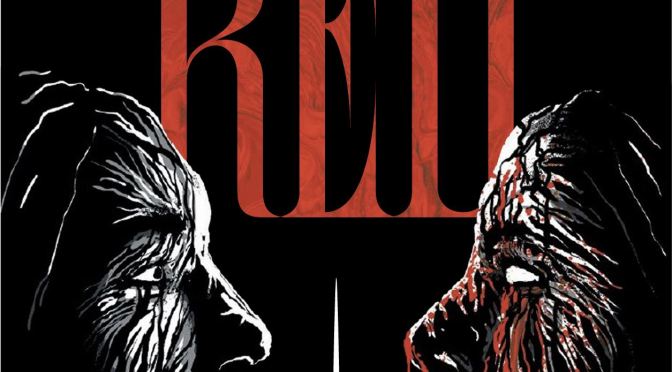
The Independents: Paint the Town Red
“Something very bad happened to you a very long time ago: you died and it hurt.
You’re cursed. You’re still here and you couldn’t just stay dead. You’re definitely not in heaven, but there’s a pretty good chance this could be hell.
Your heart has basically stopped. You don’t need to eat. Your skin is clammy. Your touch is cold as ice. You have to remember to breathe, to blink, to smile. Those are things people do? Right? It’ll be alright. Everything will be okay. You can get it together. You just have to find the right place and the right people and it will all work out. There are other dead people just like you. They’re suffering in just the same way you are.
The quickest way to forget is blood: someone else’s blood. Your touch won’t be as cold as ice after you drink another person dry. You’ll feel a little more human. Your heart will beat like it’s meant to.
Take a sip. Cut loose. It’ll be alright.
When you’re in the moment, you can almost remember what it meant to feel alive.”
– The introduction to Paint The Town Red
Continue reading The Independents: Paint the Town Red
System Hack: Colony Sim Cortex Overworld
While the focus in RimWorld is on the stretch of land that you’ve claimed for your base, the entire planet is available to you to explore. You can see the spread of different biomes and factions when you select your landing site at the beginning of the game, but really exploring and interacting with the broader world is dependent on either sending out risky caravans or developing later-game technologies like drop pods and (now with Odyssey) gravships. For our System Hack, the base site is likely to feel a bit smaller, and venturing out onto the world map is something that happens sooner. Luckily, we have decades of wilderness exploration in TTRPGs to help us out. When looking at our overworld map, we want to make sure that exploration and venturing beyond the base site both provides interesting decisions and helps us populate a world with people and places that our players will want to explore.
The overworld is also where we start considering some of the setting assumptions of RimWorld, and deciding where we converge or diverge. RimWorld’s implied setting is fascinating, but the place where all of the setting ideas fail to emulsify is in the overworld. Beyond the dispersion of settlements being a clear game contrivance, the lack of any population buildup or agglomeration is just not how any planet would look after years of colonization. There is a line to be walked here; a ‘RimWorld’ would likely self-select for individualists who may want space and to be left alone, but there’s simply too many personal and economic benefits for larger settlement to assume there wouldn’t be any.
Continue reading System Hack: Colony Sim Cortex OverworldCrowdfunding Carnival: December, 2025
Welcome to Crowdfunding Carnival for December! Con season is well and truly over, with PAX Unplugged wrapping before Thanksgiving. That, combined with the upcoming holidays, has caused Kickstarter to slow…turns out game designers need a vacation too! We don’t have ten campaigns to look at this month, but there are still a number of interesting games on the horizon which are worth examination.
Continue reading Crowdfunding Carnival: December, 2025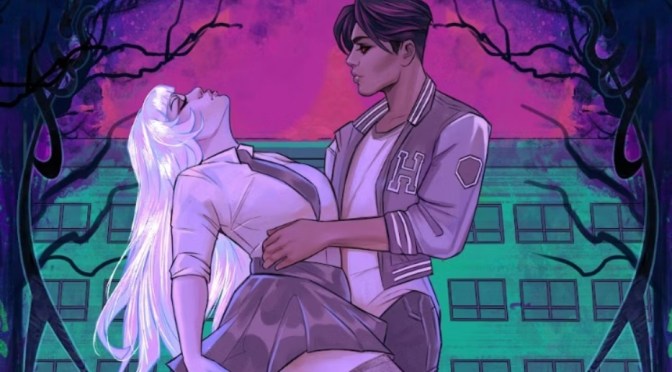
Last Kiss Backerkit Review
Ever feel like the world is out to get you? It is. Five radical teens with attitude should not be responsible for saving the world. You’re a bunch of god-damned teenagers. You might act like you have it all figured out, but you don’t. How could you when there is a literal evil force making your lives harder? So go ahead, seek out some normal high school goals like dominating on the sports field, kissing the mean girl, or becoming class president. While you play pretend, the darkness will seep in. The darkness colors the world so nothing is quite right. This is a world where disputes can be resolved via duels, where the next town over seems a world away, and where monsters live in secret. Normal doesn’t have a chance. What will you do before it all ends?
Perhaps there’s enough time for one Last Kiss…
System Hack: Colony Sim Cortex Base Building
If any one topic is ‘the core’ of this System Hack, this would be it. Base building is the underlying gameplay loop of RimWorld and it is also a topic du jour in RPG circles, with the (admittedly poorly detailed) stronghold building from the D&D days of yore coming back into focus as more gamers want broader storyline opportunities. For our purposes, of course, if we’re making a colony sim we need to make a colony. But what exactly is the best way to do that?
Base building from my perspective is sandwiched between two examples which effectively bracket the space we have to work in. On the heavy end is RimWorld itself, a computer-assisted colony manager where everything is measured out in five foot squares and the player has complete power to place elements as they want them, as long as everything fits. On the light end is the new generation of stronghold building rules, most effectively typified by Free League’s games, notably Forbidden Lands and Twilight:2000. These games add a strong layer atop their roleplay frameworks, but the actual mechanical existence of a Forbidden Lands stronghold is merely a list of buildings with requirements and effects. We know the first item is too much, but we know the second is not enough. So what will base building in our System Hack actually look like?
Continue reading System Hack: Colony Sim Cortex Base Building
The design decision which won narrative gaming
Last week, Apocalypse World came back to crowdfunding, with the Bakers seeking funding for a Third Edition of the game. Apocalypse World was first released back in 2010 and it took the indie RPG world by storm; by the time Dungeon World was released in 2012 it was already all but certain that ‘Powered by the Apocalypse’ would be a phenomenon. It’s easy to forget that there was another indie darling riding high in the hobby in the early aughts. Fate was arguably the other big indie game, and it even made its way into the ICv2 bestseller list after the success of its 2013 Kickstarter, an honor typically reserved for D&D, Pathfinder, and a few other corporate games. The ICv2 data point is particularly interesting. Fate outsold Apocalypse World; not only did the game peek into commercial sales charts as late as 2020, Fate even holds the statistically dubious honor of being one of only three games to ever outsell D&D in the ICv2 rankings (the other two being Pathfinder and FFG Star Wars). Commercially, Fate was an indie juggernaut.
Fate has clearly not maintained the degree of impact and influence it once had. Hell, the last three Kickstarter campaigns run by Evil Hat Productions, publishers of Fate, were all Powered by the Apocalypse games. The literal keepers of Fate have, thanks in no small part to John Harper and Blades in the Dark, seemingly seen the writing on the wall in terms of salability and influence of PbtA over Fate. Why is that? To start, there’s an obvious disparity to the degree in which unaffiliated designers took the respective systems and ran with them. That said, it’s fairly clear to me that this is a symptom, not a cause. While it’s hard to beat the Bakers’ approach of ‘sure, just don’t literally plagiarize us’ for licensing, Fate was licensed under the OGL and later Creative Commons, which were both used by tons of creators in other contexts. No, the difference in third party support and expansion has to do with the design of the respective games, not their shepherding by their respective creators. And I think I know specifically which design elements made the difference.
Continue reading The design decision which won narrative gaming Cannibal Halfling Gaming