
Comedy RPGs are a tough nut to crack. There are broadly two challenges to writing funny role-playing games, and even the best ones have only overcome one of these two. The first challenge is to create humor from situations and premises that remain relevant. Paranoia is one of the most successful games at doing this, and that’s because ultimately the humor is about RPGs themselves and violating in-game expectations. The second challenge is to create a game that remains funny after the first session. While there’s no formula to solving this challenge yet, leaning on structures from other long-running comedy media is certainly a viable strategy. Teenagers From Outer Space is a comedy game from the mind of Mike Pondsmith, best known as the designer of Cyberpunk. Using tropes from comedy anime, he created a game that is light, smart, and self-aware about how it’s going to be played. Unfortunately, this game is 23 years old (33 years old if you count the first edition) and feels that way, which can lead to some awkward reading in a game about teen romance. Teenagers From Outer Space was given away for free as part of R. Talsorian’s response to the current pandemic, so now is as good a time as ever to take a look.
All posts by Aaron Marks
Kickstarter Wonk: May, 2020
Welcome to Kickstarter Wonk! The world is still a deeply weird place this month, and Kickstarter is still being affected. With the economic uncertainty that comes along with a global pandemic, it makes sense that fewer people have the resources to either pull off a Kickstarter campaign or pledge one at this time. Still, there are creators out there putting in work, and producing some good stuff. If you have the means, check this shorter list of campaigns out. Since four campaigns does not an article make, I’ve also gathered up my thoughts about being a third-party D&D creator, community content programs, and why you should be careful pursuing either.
Eclipse Phase In-Depth: Mid-Game Critique
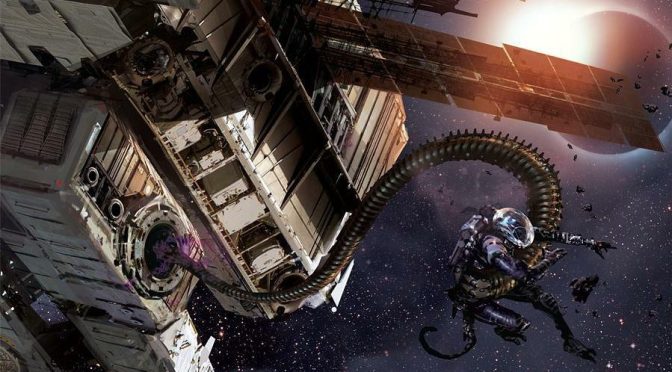
Reading a game and playing a game are two different experiences, which both teach you different things about the game text, how the rules work, and indeed whether the game is something you enjoy. When it comes to traditionally-styled RPGs, the big hardcovers with lots of art and glossy pages, the reading experience is placed often on equal footing with the play experience. Sometimes the reading experience ends up being better. Eclipse Phase is not quite like that. While Eclipse Phase is a game that draws readers in with a great setting, evocative art, and a fair dose of in-line fiction, the mechanics definitely hold their own, though the game has benefited greatly from revision.
System Hack: Cyberpunk Chimera Cities
Cyberpunk lives and dies in the city. The vision and aesthetic that we take for granted as Cyberpunk, especially when considering Cyberpunk in the context of games, is urban, replete with neon, skyscrapers, and bustling crowds of people. Cyberpunk RPGs have leaned into the assumption of an urban setting for some time now, with Night City from Cyberpunk 2020 arguably being one of the best examples in terms of character and development. When approaching the need for a city for the Cyberpunk Chimera, I opted to take a somewhat different path forward. By writing rules for the creation of a city sandbox, my hope is that any group can find a city that sets the tone for their campaign while also making prep easier for the GM.

Mörk Borg Review
What is an RPG? There’s a question that could send you down a rabbit-hole. At least one person per possible answer is already out there, ready to spew hate at you from Twitter. What’s an RPG book? That one, in theory, should be a little easier. An RPG book, whether we mean a physical book or a PDF, is the document that enables you to play an RPG. These can be core rulebooks, they can be setting books, or they can be supplements for either the setting or the rules, but they are, broadly speaking, the documents in which an RPG is contained. So what does that look like? You may be imagining text, some tables and charts, and probably some pictures. As much as these books vary, you probably think you know what the next RPG manual you crack open is going to look like. That’s why you need to crack open Mörk Borg.

Changing It Up Through System Jumping
A good RPG campaign usually takes on a life of its own. The longer you play, the more the characters, the places, and the events of a game overshadow the rules which you use for the game. Ironically, it’s this shift in importance away from mechanics which can sometimes reveal that the mechanics you’ve been using aren’t going to work for an important part of your ongoing game. In another situation, your campaign has taken a dramatic, albeit temporary, turn. Your grizzled heroes find themselves masquerading as schoolteachers, or your starship crew finds a rip in the space-time continuum, or your cyberpunks have to chase a villain into a virtual reality game. Whether it’s a mid-story diversion or a permanent change, sometimes you’re going to want to jump systems.

Bargain Bin Gaming: April, 2020
Welcome to Kickstarter Wonk! This month we’ll take a look at ten Kickstarter campaigns that definitely exist, that people can definitely pledge money to!
April Fools! Now, fooling aside, there’s a very good reason that there’s no Kickstarter Wonk this month, namely that there are no Kickstarters (not *no* Kickstarters, but you know my spiel). This is not because of any peculiarity in the RPG world, but rather a peculiarity in the real world. In less euphemistic terms, a global pandemic. On one hand, creators have had to refocus their time into activities that keep food on the table. On the other, many people who would typically have a budget for things like Kickstarter projects are finding their money diverted as large chunks of the economy shut down, and jobs along with them. Because of this, many creators have determined that there’s way less money to go around for Kickstarter campaigns, greatly increasing the likelihood that any given campaign will fail. Therefore, we’re going to pivot this month, and look at different ways that the cash-strapped and/or stir crazy can get a gaming fix for not many dollars.

Around the OSR in Five Games
Few segments of the RPG fandom are as misunderstood as the OSR. At least, that’s what they keep saying on Twitter. The OSR, or “Old-School Renaissance”, are gamers who appreciate both the mechanics and implied playstyle of older editions of D&D, any of the TSR versions but usually Basic D&D and usually the versions of it (B/X, BECMI, or Rules Cyclopedia) that existed roughly from 1981 to 1991. The real problem with the OSR is a marketing problem; in the past it has been hard to distinguish those genuinely interested in the play philosophies of older D&D from those who were merely retreating to older games. Every time I’ve tried to look into the OSR and OSR games, I’ve come away asking the same question: “why are there so many hacks of Basic D&D and why exactly should I care?”
System Hack: Cyberpunk Chimera Organizations
We are here yet again with System Hack! Cyberpunk Chimera is a construction project that’s really gotten off the ground; all the important parts that turn a series of articles into a game have at least been sketched out or brainstormed. There are some key elements, though, that shift the focus of the game in the direction that I’m most interested in. There are two parts of the Cyberpunk genre which are often overlooked in RPG mechanics, either because they’re considered “setting elements” or because they aren’t part of what makes the genre science fiction. These are the cities and the corporations, and their centrality is just as true in games as it is in literature and film.
Continue reading System Hack: Cyberpunk Chimera Organizations

The Trouble With Worldbuilding
In theory we all know what worldbuilding is. The process of creating a fictional world isn’t technically related to role-playing games, but it has become inextricably intertwined with the hobby, given the preponderance of science fiction and fantasy settings in the most popular games. In considering and examining worldbuilding, I’m not going to spend a lot of word count talking about what it is, or even how to do it well. Instead, I’m going to talk about how worldbuilding affects RPGs specifically, which boils down to a lot of mistakes, missed opportunities, and general poor form.
 Cannibal Halfling Gaming