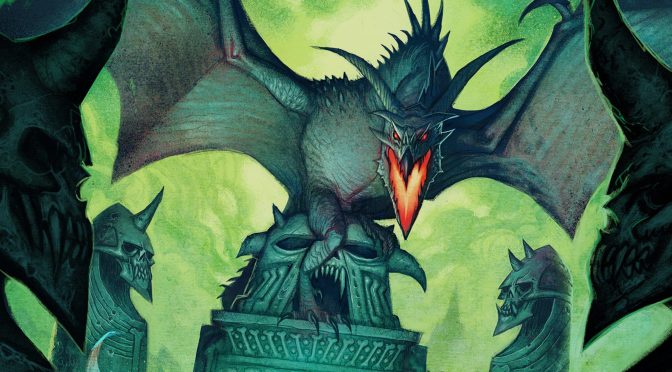
Shadowrun hit a home run back in 1989 with its fusion of cyberpunk and fantasy, adding classic D&D races and magic to a near future corporate dystopia. Since then it’s gathered a significant fan base and seen multiple video game adaptations dating all the way back to the Sega Genesis. One thing that was never a clean hit, though, was the rules. While the first two editions of Shadowrun had quirks that were on par with most 80s RPGs, the game got truly overwrought in its third edition and spent fourth and fifth trying to clean things up (without really succeeding). The sixth and current edition, Sixth World, attempted to peel back the rules bloat but did so while both alienating most existing Shadowrun fans and still failing to fix the editing.
Now, I like Shadowrun. I have a soft spot for cyberpunk as many readers already know, and have had some good fun in the campaigns I ran across its fourth and fifth editions. That said, from a mechanical perspective, Shadowrun isn’t a shining star. The attempts to layer multiple magic systems alongside perennial headaches like hacking and vehicle rules make the game tricky for the players and utter masochism for the GM, and as much as the sixth edition did introduce some needed streamlining it still ultimately suffers from the same problems.
Fantasy is the most popular genre of role-playing game. Even if you don’t count the sheer volume of Dungeons and Dragons players, there are more titles that slot into the fantasy genre than any other. When reading and playing games, one could be excused for beginning to think that many of these fantasy titles are little different from each other; thanks to the early days of Dungeons and Dragons, many of the genre’s tropes are filtered through RPGs in frankly wild ways and that does mean we see a lot of the same basic structures in our fantasy games. Doesn’t seem to bother anyone at Free League Publishing, though. Apparently to them, the ideal number of fantasy games a single company should put out is a half dozen.
Needless to say, Free League’s reasoning for each fantasy game they release is different, and they also reap the benefit of a more stratified European gaming audience where the appetite for different, specific experiences is greater. In many cases, it’s also not hard to see that the genre has a lot of room for variety. Mork Borg and Forbidden Lands have very little to do with each other. That does make it a little interesting, though, when Free League acquires the IP for the grand-daddy of Swedish RPGs. As of 2021 they did make such an acquisition, and the result is out now in the form of Dragonbane.
I love mashups. Whether in music, film, or elsewhere, a good mashup takes the best parts of its two (or more) constituent works and makes them even better by putting them in a different context. Mashups work just as well in RPGs. Shadowrun, a mashup of fantasy and cyberpunk, has been drawing players in for 35 years. Rifts, arguably an attempt to mash up everything the designer could think of, has created many more fond memories than its ruleset would suggest. For today, though, I’m going to dig into a more literal mashup, a setting where two worlds collide: an RPGnet thought experiment and proto-setting called The Long Stair.
As recorded in a long thread started over fifteen years ago, The Long Stair was intended to be a combination of ‘spec ops dungeon crawls’, Cold War shenanigans, and a little sprinkling of cosmic horror as D&D creatures made it ‘up the stair’ into the real world. While it’s certainly not the only way to do it, this setting illustrates a very well realized example of worldbuilding from a thought experiment, in this case the idea of sending modern-day operatives into a D&D dungeon.
This is my eighth year of writing for Cannibal Halfling Gaming. On one hand, everything I’ve done here has blown up beyond my wildest expectations; the quantity, quality, and audience of my writing are all better than I could have imagined back in 2016 when I asked Seamus to join his project. At the same time, though, the journey often comes with the feeling that we still aren’t doing anything of the scale or ambition to be worthwhile. Some of this is just imposter syndrome, to be clear. Some of it, though, is borne from frustrations that come with being a content creator for a niche hobby and insisting on using the written word to do it.
As Seamus spoke about recently in The Trouble With Reviewing RPGs, there are limits to what we can do on our budget of approximately nothing; we both have full-time jobs and writing for a site like this must be fun and/or fulfilling even before it is useful if we’re to continue doing it. At the same time, there are things we have to say, and having no budget also means we aren’t beholden to anyone. Things are changing, though; we’re changing. When I wrote that very first article about PbtA I was 29 years old; I’m 36 now. That is a huge step away from the core audience of tabletop RPGs, and as our entire millennial generation now sits above the first standard deviation of age for a gamer we need to think long and hard about our continued relevance (or inevitable descent into grognardism).
Welcome to the first Crowdfunding Carnival of 2024! We’re just out of the weird, liminal part of December, so excuse me if I’m still a little longwinded and full of cheese. Nonetheless, we have a number of campaigns to talk about, including one very large one.
It is a new year, and Shannon Appelcline released his annual Year in Review over at the Designers and Dragons website (a move from the article’s usual home on RPGnet). While the article covers much of the past year’s news very concisely, I want to call your attention to the top Kickstarters segment about ¾ of the way through the article. The top three campaigns of 2023 were all third party supplements for 5e. Since Crowdfunding Carnival/Kickstarter Wonk began six years ago, there were only two years where the majority of the top 5 best funded campaigns weren’t 5e supplements, 2018 and 2022. Even more damning, the only supplements in these lists which I still hear people discuss in social media in any fashion were all authored by the company which is currently running the largest campaign in this article. At least this new one isn’t (technically) D&D.
Happy holidays! 2023 is ending, and what a year it’s been. In a lot of ways, 2023 has been a bit quieter here than previous years; while COVID refuses to go away we’ve all lurched back towards normalization, and most of the upheaval in games came from picking up the pieces of events that happened in 2022. Twitter is dead, essentially; anyone who’s attempted to use the site knows that any attempt to see through the haze of algorithmic mud only results in, at best, the absence of continued conversation. Of course, RPG discussion continues, you just need to look a little harder to find it.
Casting a longer shadow over RPG news of the year was Wizards of the Coast. Starting with the OGL debacle and ending with a swathe of layoffs, things were rough this year for everyone’s favorite RPG monopolist. It does mean, though, that my prediction made last year about major players and rent-seeking were correct; MCDM, Kobold Press, Darrington Press and others are all fielding fantasy RPGs intended to be an alternative to D&D. This does mean that whatever happens with the revised D&D rulebooks coming out in 2024 is anyone’s guess; even the home run of Baldur’s Gate 3 has effectively been squandered on the tabletop side.
Recently Wizards of the Coast has been in the news as Hasbro laid off 1,100 people, including numerous Wizards employees. In addition to the typical bad rap a company gets from firing that many people right before Christmas the Hasbro layoffs, especially those which affected Wizards, have made a lot of people ask questions. Wizards is a bright spot on Hasbro’s balance sheet, especially in light of the recent sale of the eOne film and TV business which highlighted the weakness of the company’s entertainment division. Despite their performance, Hasbro opted to lay off people responsible for some of their greatest successes, including most of the team responsible for working with Larian on the hit video game Baldur’s Gate 3.
Although I can’t comment on the wisdom of Hasbro’s particular headcount decisions, I can say that when RPGs meet money, good things don’t usually happen. Indeed, Hasbro’s reported tabletop gaming revenue in one quarter of 2023 was $290 million, or 50% larger than the entire tabletop RPG industry for the whole year of 2022. By that math, Magic: the Gathering alone is roughly six times larger than every TTRPG combined on a revenue basis. Ouch.
Welcome to the Cannibal Halfling Weekend Update! Start your weekend with a chunk of RPG news from the past week. We have the week’s top sellers, industry news stories, discussions from elsewhere online, and something From The Archives!
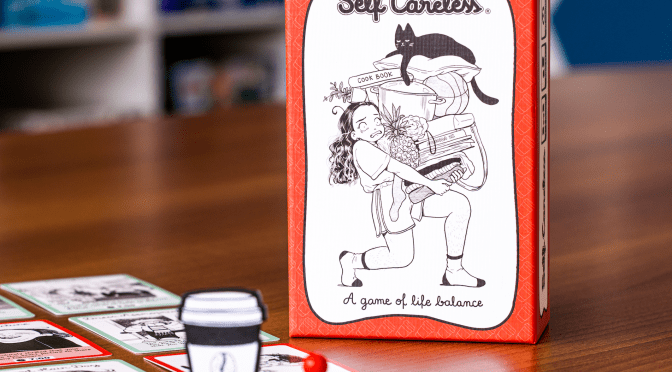
It’s your day off! Obviously you should be spending some time on Care for yourself, but then there are all these Chores to do that you won’t otherwise be able to take care of until who knows when. There are only so many hours of the day, so you’re going to have to plan things out – don’t do too many Chores so you actually get some rest, don’t spend so much time on self Care so that the Chores just pile up. Coffee will help! Now if only that darn cat would stop knocking over all the cups. This is Self Careless, the life balance game for 1-2 players from Jason Anarchy Games and Cassandra Calin!
I was prepared for a far greater in-depth dive into PAX Unplugged 2023. I had cleared as much of my schedule as I could, broken down priority events I wanted to join, built in backups and made my plans for getting in and out.