Tag Archives: Opinion

A (snarky) review of every RPG mechanic

When I reviewed QuestWorlds last week, I came away from the game concluding that everything was centered around one basic mechanic: A character must roll under their ability rating while the GM tries to roll under the ‘Resistance’ rating of the challenge at hand. It is the character versus the challenge, and everything is defined in that way. And sitting with that, it kind of made me realize that a lot of TTRPGs define everything or almost everything in terms of making a check, only broadening the mechanical palette in specific circumstances.

Does this matter? Well, it depends. If you’re the sort of person who sees RPGs in terms of what exists and what people are already playing, then it’s natural to see the baseline mechanics of the TTRPG as something that’s been refined since the original release of D&D and is therefore fit for purpose. If you’re thinking about role-playing game design broadly, though, you may note that this sort of quasi-simulation of using probabilities to determine when a character overcomes certain challenges is a very limited sphere of the design space, barely larger than the sphere created by making quasi-simulations of using probabilities to determine when characters kill each other. You know, wargames.

For now, though, I’m going to stay in this design space taken up by the traditional roleplaying game (coming up with something starkly different will likely be the topic of a future editorial). There are many things which RPGs try to do, some they’ve arguably been trying to do for decades. For all of these tasks, do the mechanics help or hinder? And, because this is certainly the primary discourse around this topic, do mechanics make the task better?

Continue reading A (snarky) review of every RPG mechanic

QuestWorlds: Who wants a generic game?

Generic RPGs are designed to accomplish a goal that many say they want. The ability to write anything, make any genre fit together, and theoretically never have to learn another system again all sound great. The reality usually ends up being something different, though. The entire reasoning behind generic RPGs even being possible has forever been couched in very narrow assumptions about what an RPG actually is. Once you expand those assumptions a little bit, a generic game starts to look impossible.

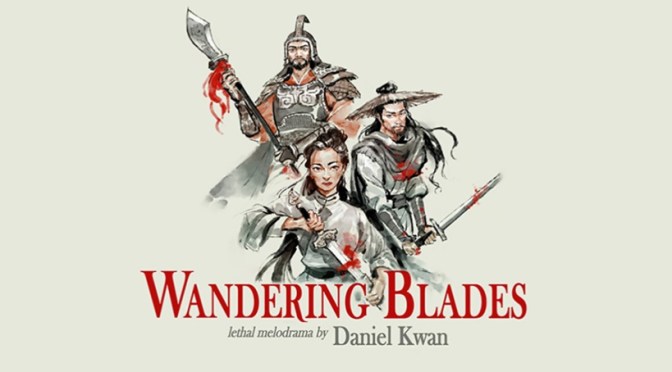
QuestWorlds, originally called Hero Wars (and HeroQuest in between those two), is a game that came out of a post-TSR, pre-Forge era of the early 2000s much like the first edition of Fate. Both of these games have the same essential objective: build out a set of mechanics that can take any character on one side, any challenge on the other, and adjudicate that character standing up to that challenge regardless of the specifics. Add in some balancing rules for character creation and advancement, and you’ve got a game that’s ready for anything. Kind of. Both QuestWorlds and Fate make very similar disclaimers about only working with genres with capable and proactive heroes prevailing over larger-than-life challenges. The disempowerment of horror doesn’t really work, nor do the continuous drags of hunger, thirst, or wound management found in survival games. These generic games, and many generic games, quickly reveal themselves to be “roughly the way we think people play RPGs” games.

Continue reading QuestWorlds: Who wants a generic game?

A PAX East 2025 Tabletop Round-Up

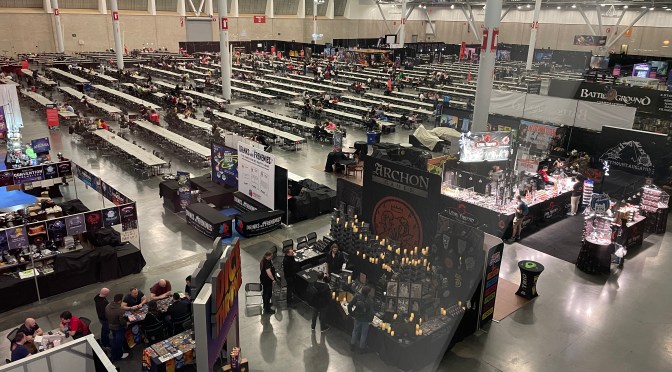
Just because PAX East isn’t a 100% tabletop-dedicated convention doesn’t mean I’m going to stop treating it like one. Well, mostly. I did check out some “video” games while at the con, but that will be more of a CHG aperitif. Let’s get to the main course first so that I can share the games that caught my eye this past weekend with you: dead gods, burning forests, nighttime escapes and knives in the back, things upon things, and glittering glass!

Continue reading A PAX East 2025 Tabletop Round-Up

Crowdfunding Carnival: May, 2025

Welcome to the Crowdfunding Carnival for May! It’s spring, and the buds on the trees have burst open into green leaves. Similarly, the post-ZineQuest hangover is over and RPG campaigns are bursting forth all over Kickstarter and BackerKit. Want a game about fishing, or making jam? How about a three-book space opera extravaganza? There’s lot’s to check out this month, so let’s get to it.

Continue reading Crowdfunding Carnival: May, 2025

Confessions of a “realistic” GM

I feel there is a certain arc that you see among tabletop gamers, especially those who get their start with D&D. D&D is, like anyone’s first RPG, the gateway to a new world, a new mode of expression and imagination. While lots of people enjoy games, some end up enraptured, vibrating at the thought of what they can do and create. So they become a DM and start writing, start doing as much as they can with the game. And they start hitting walls. Some of the walls are from the game; the sort of ‘game logic’ of D&D only tells a limited palette of stories no matter how much the marketing says otherwise. So they try another game. And another game. In most cases, game logic still prevails. Some of the walls, though, are from the other players. Even if the DM wanted to try another game, the players wouldn’t necessarily go along with it. And from the perspective of the person who was most excited by the game, it certainly looks like the other players aren’t taking it seriously enough. The stakes that our aspiring writer sees in their worlds, the other players…don’t. So how do they fix this? How do they make everything feel serious to everyone at the table? How do they make the players feel the way they feel?

This story is a familiar one, and I know that because it’s my story. I was the one who was vibrating out of my chair with excitement at the idea of creating worlds in D&D, and my disenchantment with how D&D actualized those stories led me to Cyberpunk. And when it seemed like the intrigue of the stories wasn’t resonating with my players, I tried to make the game more serious, more internally consistent, more “realistic”. And years later, when I found a literal generation of heartbreakers and retroclones dedicated to making D&D more lethal, making wizards less powerful, and generally making the game more difficult, I finally realized two things. One, there is a nearly universal desire for grounding and meaning among those who tell stories, whether they do so with TTRPGs or something else. And two, for those of us working in the TTRPG medium, making the game ‘grittier’ is usually the answer to a different question than the one actually being asked.

Continue reading Confessions of a “realistic” GM

The funnel and beyond: Pre-play character creation

In RPGs, character creation methods abound. You can create characters mechanically with point and option spends, build them alongside a backstory with a lifepath, or just roll some dice and see what comes out the other end. When it comes to actually aligning the characters with the game you’re about to play, so much so that you need to bring the GM along for the ride, I think I’ve found one of the best options. Now, one reason you’ve likely never done this before is that it’s time-intensive and it can be a lot of extra work for the GM if not all of the players. Another reason, though, is that to really play through character creation, you need mechanics to do so. Precious few games have these mechanics, but after giving one such system a spin I’m pretty comfortable saying it should be more of a thing for campaign play.

Continue reading The funnel and beyond: Pre-play character creation

Rules, retcons, and rightsholders: The tough road for superhero RPGs

Back in November of last year while talking about network effects and how they make you play D&D, I dropped a little bomb. I stated that there has never been a good mass market RPG in the superhero genre. At the time, no one took the bait, but I can imagine some easy dissent there. What about Champions? What about Marvel Super Heroes? How can you possibly hate FASERIP? But yet, I do maintain my position. While there have arguably been good superhero games, none of them have reached mass market popularity and, by the way things are going, none of them ever will. It’s not the fault of any particular game or its design, at least not directly. Instead, the instinctive way that a game designer wants to approach comic book superheroes is one that’s fundamentally at odds with ever seeing broader popularity.

Of course, as one would naturally surmise, that means there’s a different way to write a superhero game that could see broader appeal and generally be more easily used to tell superhero stories. We were even close to having a game that fit in this template actually see some measure of success; what killed it was of course nothing to do with the game but rather the other reason that superhero games can never really succeed, licensing. So let’s look at the flavors of superhero games we get, the flavor of superhero game we want, and why the two aren’t likely to match.

Continue reading Rules, retcons, and rightsholders: The tough road for superhero RPGs

Pocketopia 2025 – A Brief Closing Glimpse

This month’s Crowdfunding Carnival has itself an interesting sideshow, hosted by Backerkit itself! Pocketopia 2025 isn’t exactly Backerkit’s answer to Kickstarter’s ZineQuest, since zines aren’t the focus, but it’s definitely in the same genre. The stated goal is to be “a celebration of portable easy-to-learn tabletop games”. So, as it comes to an end less than a day from now, how has it gone?

Continue reading Pocketopia 2025 – A Brief Closing Glimpse