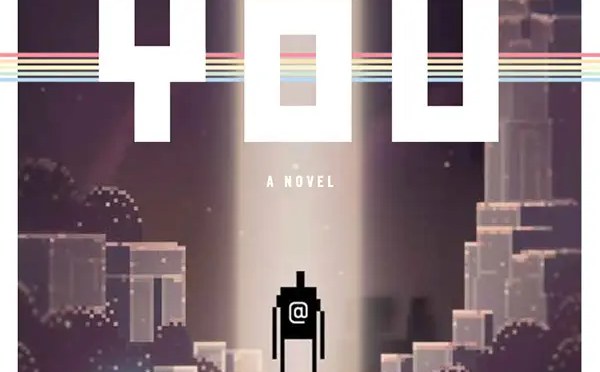
Game design stories are often told in a way that portrays the designer as a visionary, seeing something that nobody else does as they quest for their ultimate game. This often loses the reality of the medium, that design takes a lot more work than ideas and that work can often get very messy. The novel You by Austin Grossman is technically about video game design, and one of its strengths is portraying the video game industry (specifically the PC gaming industry) at a time when it was about to transform and transform the world along with it. You takes place in 1997 or thereabouts right outside of Boston, in a part of Cambridge that’s really only known to locals (incidentally, I interviewed for a job in the building that I’m 95% sure is the office in the book). The story is about Black Arts Games, a fictional publishing company whose next game will either make or break them. What the story is really about, though, is a single-minded and overzealous designer and worldbuilder who created the holy grail of role-playing games, digital or otherwise.
Continue reading A Glimpse Into the Vault: You, by Austin GrossmanTag Archives: Review
Pocketopia 2025 – A Brief Closing Glimpse
This month’s Crowdfunding Carnival has itself an interesting sideshow, hosted by Backerkit itself! Pocketopia 2025 isn’t exactly Backerkit’s answer to Kickstarter’s ZineQuest, since zines aren’t the focus, but it’s definitely in the same genre. The stated goal is to be “a celebration of portable easy-to-learn tabletop games”. So, as it comes to an end less than a day from now, how has it gone?

Do games need a reason to exist?
Last week I puzzled over my “review” of Lovecraftesque. The game is certainly well done, and it is an improvement over earlier games like Fiasco in terms of how it is structured and how it uses board game elements like a game board and cards and tokens. It’s also a Mythos game that uses themes and structure from Lovecraft’s work instead of literal elements of the Mythos, and so I was fairly critical in how it didn’t go deeper to some of the underlying themes below the surface-level stories of horrors from beyond comprehension. But the question in the back of my head while I was writing was “So what? The designers don’t owe me a deeper game.” This is true. And I’ve been thinking about it.
Continue reading Do games need a reason to exist?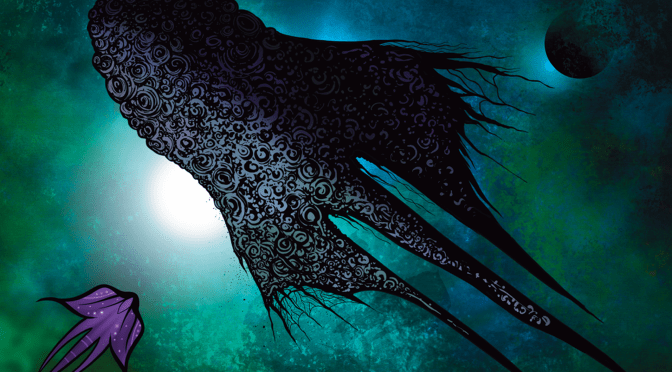
Lovecraftesque: Shadows Over Story Games
As I’ve been consuming more cosmic horror, I find that my relationship with games set in Lovecraft’s Cthulhu Mythos mirrors my relationship with licensed games. I think there is so much room for them to be great, and then I’m inevitably disappointed nearly every time I read one. In the case of licensed games, this is often because they’re pretty bad; the relationship between licensed games and money is inextricable, and the best licensed games borne out of love and fandom are often from a time in the hobby’s history that’s long gone. In the case of H.P. Lovecraft, it’s a bit more complicated. Lovecraft is a divisive figure, both having essentially invented cosmic horror and changed science fiction forever while also being a known racist, even beyond the conventions of his time. The biggest problem I have with the Cthulhu Mythos in pop culture is twofold: First, the xenophobic roots of Lovecraft’s works are rarely examined or critiqued in games, an omission made even more galling by designers’ desires to hew to a 1920s setting for their games without asking more serious questions about it. Second, the continued sanitization of Lovecraft creations in pop culture (the ‘Cthulhu plushie’ phenomenon) makes it that much more difficult to have conversations about xenophobia, cosmicism, and even New England folklore and dissect how these factors all influenced Lovecraft and his work.
Continue reading Lovecraftesque: Shadows Over Story Games
Hero Forge Custom Dice Kickstarter Review
Hero Forge did its first Kickstarter more than ten years ago to launch a custom miniature printing business, and launched a second one to bring color to their minis. In between and after the fact the platform has continued to add more and more options to their catalog: new items, species, materials, and so on. Now Hero Forge has a third crowdfunding effort, and it’s focused on what you use to determine your miniature’s fate: the dice.
Is Grimwild the next Dungeon World?
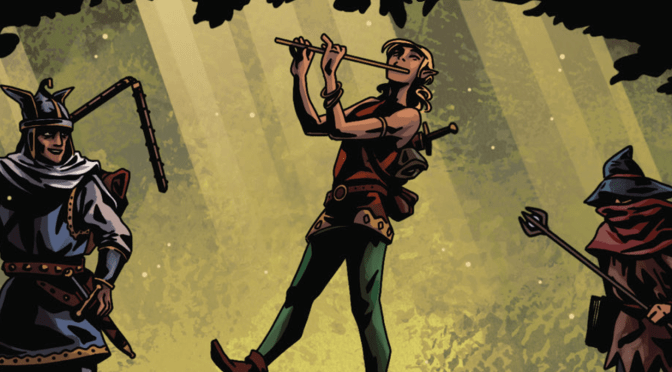
When Dungeon World was released in 2012, it slammed the door to Powered by the Apocalypse open so hard it broke the hinges. By taking the recipe crafted in the Baker House and mating it to the memetic power of Dungeons and Dragons, suddenly everyone could see what was so powerful about PbtA. Of course, Dungeon World was hardly a perfect recipe. Using the architecture of ‘moves’ established in PbtA but keeping both the stats and classes of D&D made for an incomplete match, and some of the mechanical choices made to get the two to pair up have received more significant criticism now that the design community has had a good decade and a half to really figure out what PbtA is. Still, the combination of a solid foundation and a lot of good ideas made Dungeon World into a rare specimen: The commercially successful fantasy heartbreaker.
Continue reading Is Grimwild the next Dungeon World?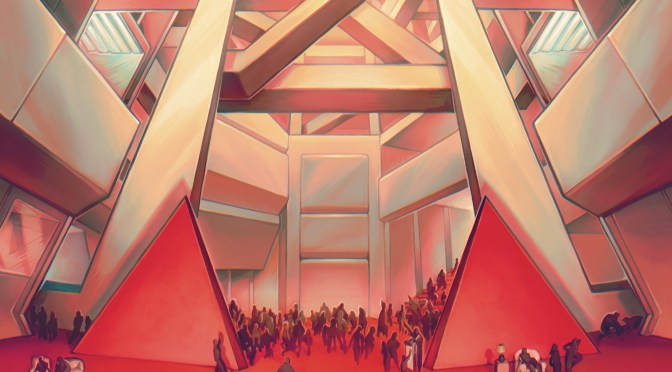
The three layers of Triangle Agency
Depending on how you look at it I either chose the best or the worst time to read Triangle Agency. Over winter break I finally beat Control, and found I absolutely loved its setting and vibe. The whole reason I picked it back up again (after getting stuck with it many months ago) was that I had also finished reading all four books in Jason Pargin’s John Dies At The End series, and in doing so discovered that I actually love cosmic horror so long as that schmuck named Lovecraft isn’t involved. When Triangle Agency, a game I thought looked kind of interesting when it was funding on Kickstarter, started picking up some end-of-year momentum, it seemed like a perfect complement to all the other horror/conspiracy media I had been consuming.
In fact, Triangle Agency followed so closely in the footsteps of Control that by the time I finished the player section, I was unclear on how it was going to differentiate itself. Cute-but-horrific is the artstyle of the book, and I wasn’t loving it compared to Control’s “dead serious but yet so absurd you’ll still laugh”. However, as I finished reading the GM’s section, my opinion of the book had picked up dramatically. This is, in part, because Triangle Agency is not Control, but in part because the most interesting ideas in the setting are back there in the GM’s section, telling you how to turn a light and kind of goofy monster-of-the-week game into the conspiracy horror game Triangle Agency actually wants to be.
Continue reading The three layers of Triangle Agency
The intent of RPG reviews
It’s another new year, and I am once again asking, in one form or another, the same question I’ve asked myself in January for several years now: Why am I here? Why do I want to be here, writing about roleplaying games? Now, I’m not asking this question because the spark is gone or it feels futile (it does some of the time, but hell if that’s going to stop me). Instead, I’m checking in on myself. What am I trying to do? Am I succeeding in that?
This year, I’m also asking: Why are you here? I don’t necessarily mean at this site specifically, but why are you reading about RPGs online? More specifically, why are you reading RPG reviews? I know for a fact that the reason many go to read reviews is not exactly aligned with the reason I write them, and that’s likely why I felt the need to discuss the intent of RPG reviews.
Continue reading The intent of RPG reviews
Role-Playing Games in Psychotherapy: A Non-Therapist’s Review
While roleplaying games can certainly allow players to explore certain things and work through some stuff, an important axiom to remember is that your GM is not your therapist. Therapy is a serious business, and you shouldn’t be unloading your psychiatric needs on someone who is not trained to handle it (or try taking on those needs yourself, if you’re the GM), for their good and your own. Unless, one supposes, they were your therapist first, and are now running a game for you as part of your usual appointment. Such is the purpose behind Role-Playing Games in Psychotherapy: A Practitioner’s Guide by Daniel Hand.
Continue reading Role-Playing Games in Psychotherapy: A Non-Therapist’s Review
Tales of the RED: Hope Reborn – Cyberpunk RED Campaign Review
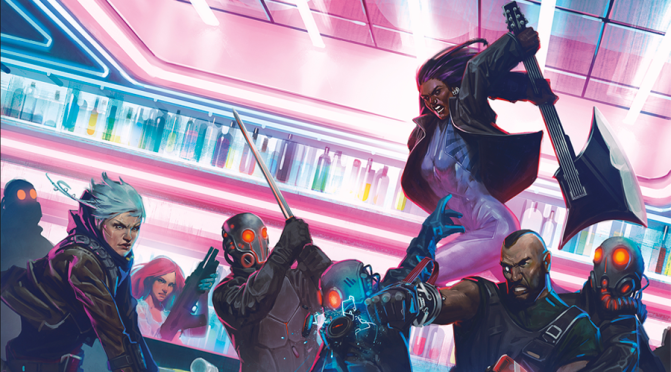
For decades of R. Talsorian Games’ Cyberpunk line (both in realspace since 1992 and in-universe since 2011), The Forlorn Hope’s been a bar where those Night City denizens who refuse to play by the Corporate rulebook go to unwind, connect, and reaffirm their humanity. But today (2024/2045), in the Time of the Red, The Forlorn Hope’s in trouble! Will this classic Night City institution die a whimpering death or survive and thrive, helping the next generation of cyberpunks navigate life on The Edge? Well in game that’s a question only you and your Crew can answer… but in the real, we’re going to be seeing how Tales from the RED: Hope Reborn can answer the same question!
Continue reading Tales of the RED: Hope Reborn – Cyberpunk RED Campaign Review
 Cannibal Halfling Gaming