The Battle of Ettenmark was supposed to be the end of it. A great host of armies from the Eastern Kingdoms marching west, led by the divinely-blessed Chosen, to strike down the Cinder King and his undead host once and for all. Instead, it was a slaughter. Some of the Chosen were Broken in the previous conflcits, and no one was prepared for the horrors they’ve created for their new liege. Now the Legion is a mercenary band all on its own – except for a single Chosen who helped to pull it out of the fire. Command has decided that the company’s only hope is to march back east, making for Skydagger Keep. If it can be reached, the Legion might just be able to hold the undead back long enough for the Eastern Kingdoms to find some way to save humanity. But the Broken are in pursuit, and winter is closing in . . . it’s going to be a hard campaign for this Band of Blades from Off Guard Games and Evil Hat Productions!
RPG Market Data is a Mess
There’s a lot of reasons people say that the RPG hobby is in a golden age right now. Increased legitimacy of the hobby in general, new audiences reaching games through streaming and podcasts, and an exploding variety of types and titles of games make for a more diverse and dynamic hobby than we’ve ever had before. But what do we actually know about the hobby and how it’s growing? What do we know about the competitive dynamics of the industry, from Wizards of the Coast down to the one-man shops? The simple answer to “what do we know” is “not much”. Finding real data about this hobby of ours is a struggle—and that’s when it isn’t downright impossible.
Freeform Dramatic Roleplay
LARPs are all about getting dressed up, either with groups of people who got in heavily costumed and shouting spells while others wailed away on each with foam swords or actively plotting about the plots against their domains or the biggest threat to the Freehold with earnest index cards and play rock papers scissors, right? Well, just as there are innumerable styles of play, and people willing to experiment with design of more traditional tabletop formats, there are people who like to play around with how to run different styles of LARP, and I wound up stumbling into a freeform style that prioritizes how people get and stay in character, and what they do to make a story interesting entirely over mechanics.
Warhammer Fantasy: Rough Nights and Hard Days Review
The year was 1987, and mad science was brewing in the offices of White Dwarf magazine. Warhammer Fantasy Roleplay developer Graeme Davis held, in one hand, a steaming vial containing the concentrated essence of hundreds of schemes, plot twists, and capers. In the other, he held the core rulebook for WFRP 1st Edition. With a cackle and a grin, he poured the vial over the rulebook, pulled an ominous lever on the wall and a bolt of lightning crashed through a skylight to give birth to his new creation.
…Or something like that. The details may have been different, but the end result was the adventure A Rough Night at the Three Feathers. Up to this point, roleplaying modules focused on a single plot thread – an evil wizard kidnaps a princess, the king sets the heroes a quest, a dragon terrorizes a town, etc. Graeme wanted to see if multiple plots in a single story could work as well as they did on film when translated to roleplaying games. Judging by audience reactions, he was on to something, as A Rough Night at the Three Feathers continues to be one of the best remembered rpg modules of all time.
With the release of WFRP 4th edition, Graeme and the rest of the development team decided to update the original Rough Night alongside two sequel stories he’d written in the decades since, and add two more adventures in the same vein for good measure. The end product is Rough Nights and Hard Days, the subject of today’s review. Does the original hold up to modern rpg standards? And can this concept survive more than one game session? Let’s dive in and find out!
Continue reading Warhammer Fantasy: Rough Nights and Hard Days Review
Cyberpunk Chimera Non-Combat Mechanics
Tabletop RPGs evolved from wargames, which has somewhat stunted their growth with regards to most conflicts which don’t involve killing things. As board games show us, though, we can easily develop satisfying mechanics for a whole range of things other than combat. For the Cyberpunk Chimera, we’re envisioning a world that, while potentially violent and dystopic, doesn’t center around monsters or a national enemy or anything else that assumes that the majority of problems can be solved by killing.
Cannibal Halfling Radio Episode 1 – Episode Zero
ENnie-Nominated Cannibal Halfling Gaming breaks out of the written word and invades the airwaves with Cannibal Halfling Radio!
That sound pretty fancy. Really, we just want to find our podcasting legs and talk about some games. Aaron, Jason, and Seamus talk about some CHG goings-ons, what they’ve been playing, and shine a spotlight on a malevolent haberdashery in Episode 1: Episode Zero.
Continue reading Cannibal Halfling Radio Episode 1 – Episode Zero
System Hack: Genesys Mecha: Custom Mecha
Sure, you could enlist and get issued a giant robot by your space military. Or you could be a traditionalist and just steal fall into the cockpit of the nearest mecha to start your adventure. Why trust some other engineer’s design, though? You’ll be making your own story, why not your own mecha to tell it with? Well if that’s what you want to do then you’re in luck, because that’s what we’re doing for one last G.E.N.E.S.Y.S. Mecha System Hack using the Genesys system from Fantasy Flight Games!
Why Tabletop RPG Kickstarters Fail
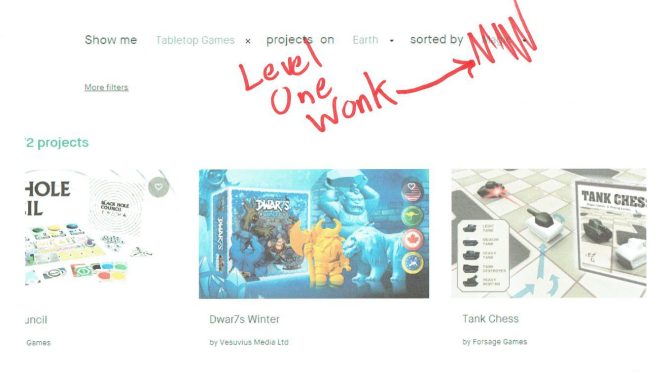
Kickstarter Wonk is an opportunity for me to, every month, show off some neat Kickstarter campaigns that deserve to get a little extra attention. To write these articles, I read pretty much every Kickstarter campaign that could be termed as an original RPG, and then pull from there to make my list. Some months, getting to ten is difficult because there are twenty or more games, sixteen or more that are worth covering, and narrowing down the list gets really hard. That’s when I apply some really arbitrary metrics like “the campaign ends less than two days before the article will be published” and “I will weigh my choice towards the game with original mechanics as opposed to the one which is using Fate”. On the other hand, sometimes there’s fewer than ten games I want to cover, and the last one or two which are all right will have a bit of sarcasm in the descriptions. What has not happened until now was a month where I couldn’t even muster up half a dozen games I was excited about.
Improv for Gamers Review
“How do I play a roleplaying game?” One might answer that question with a bunch of talk about the rules, and the dice, and the character creation, but that doesn’t quite cover all the aspects of the question. What about the actual roleplaying part? I’ve mused among friends and while teaching newcomers that it’s a ‘learned skill’, but don’t worry about, let’s just get into it and you’ll get the hang of it. I don’t think I’m wrong to say that . . . but surely there’s a way to learn the skill, and better yet practice it, besides just fumbling your way through the first few sessions? As it turns out, there is, and it comes in the shape of a book: Improv for Gamers from Evil Hat Productions!
Fate Accessibility Toolkit Review
It’s time again to look at one of Evil Hat’s purple books for Fate. The Fate Toolkits, or the purple books, are the cornerstone of Fate rules hacking and, in my humble opinion, some of the best resources for a Fate GM out there. Today’s purple book takes a very different approach than the others, but still provides a comprehensive resource. The Fate Accessibility Toolkit is the book in Evil Hat’s lineup which deals bluntly with how to approach disability in your games, both in terms of characters and players.