How the Wonk GMs: Intro and Campaign Prep

If there’s one thing I’ve been asked to write about over the years, it’s what my home games actually look like. Not an imagined campaign, not a system hack, just how I run when it’s my friends, my ideas, and my time. Needless to say that’s not something that can be condensed to 2000 words, so instead I’m welcoming you, albeit temporarily, to ‘How the Wonk GMs’.

I’ve recently come off of a literally five year stint of GMing for my primary gaming group, and I have run a lot of different games in that time. Spending all this time in the GM’s chair has reminded me that I’m extremely lucky to have as engaged and curious a gaming group as I do…as well as the fact that breaks are good. While taking this break, though, I’m going to be trying to distill down my methods and madness into something approximating fit for public consumption.

Continue reading How the Wonk GMs: Intro and Campaign Prep

Crowdfunding Carnival: February, 2023

Welcome back to the Crowdfunding Carnival! Now, it’s Thursday, which is a little unusual. I did this, though, for you, dear readers. You see, yesterday was the first day of ZineQuest, and a veritable torrent of zines hit my inbox around the time this article would have otherwise gone to post. That just won’t do, so I held off to pick through the wreckage for you. So now we have over 40 zines, and it’s been just one day! There are some other games too, and of course our second installment of the Crowdfunding Carnival/Kickstarter Wonk fifth anniversary retrospective. Onward!

Continue reading Crowdfunding Carnival: February, 2023

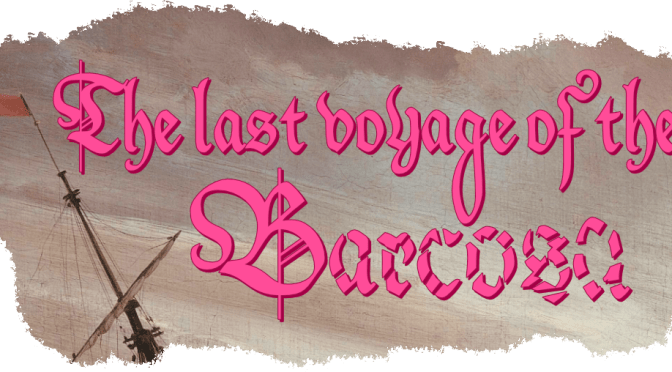
Solitaire Storytelling: The last voyage of the Barcosa

The year is 1802. The Barcosa, a merchant ship equipped with cannons, sets sail from Amsterdam under Captain Claas de Ruyter to buy goods in Java. The ship’s hold is filled with bricks and weapons. Chief merchant Henk Kuipers manages gold and silver coins which are to be used to buy spices, textiles, and fine fabrics.

What follows is the journal of Gerrit van der Zee, a sailor aboard the ship. How we came into possession of it is something we cannot divulge, but it is enough to say that the journal covers about three weeks, and that van der Zee had no idea upon leaving Amsterdam that this would be The Last Voyage of the Barcosa.

Continue reading Solitaire Storytelling: The last voyage of the Barcosa

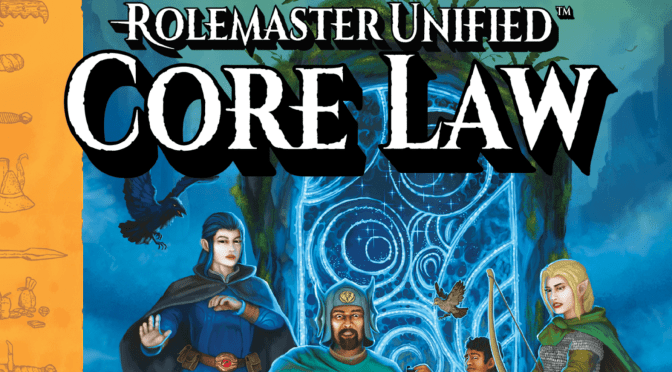
Rolemaster Unified Review

The OSR is a movement of nostalgia. Rather than seeking to actually emulate the way RPGs were played in the 1970s and 80s, the OSR is seeking to bottle the lightning of the first time you found a Player’s Handbook or Basic Set and just played, actual rules be damned. While the OSR as a movement is certainly informed by the cultural phenomenon of having the D&D red box show up in toy stores and in the hands of many kids and teens in the 1980s, the roleplaying hobby itself was already significantly more diverse than any one movement could capture. As an example, around the time that the OSR casts its rose-tinted glasses toward, there was a successful and long-lived game called Rolemaster.

Continue reading Rolemaster Unified Review

Most Games Don’t Matter

After graduating into one of the worst recessions the global economy had yet seen, I cut short a fruitless job search to go to grad school. I ended up with a Master’s Degree in Innovation Management, a field which sounds like it was made up by the Business School industry but yet taught me a lot. While invention is the act of creating something new, innovation is the act of deriving value from new things, from inventions. According to the World Economic Forum 1.7 million patents were granted in 2021, which is a huge number. But even setting aside things like filing the same patent in multiple countries, a small fraction of those patents represent anything like tangible value to society at large. While invention can happen with a bit of creativity and some work, innovation is significantly more dependent on exogenous factors, on what happens to the invention after it comes into being. RPG designers are like inventors in that way; many many people are designing, are inventing, but the vast majority of games will never make an impact on the market at large.

While there are certainly forces contributing to a greater stagnation of the RPG hobby (D&D comes to mind), the low ‘hit rate’ for new RPGs when it comes to moving the needle in the greater marketplace is largely structural, and unlikely to change in the long run. On the creator side, making an RPG is relatively easy, requiring significantly less money and specific skill than making video, digital games, or visual art, and often less time than writing long-form fiction. This means that the number of entrants into the market will be relatively high. On the consumer side, RPGs have higher switching costs than virtually any other form of media; a consumer needs to find a minimum of 2-4 friends to play with them, with a play time of two hours on the low side. Beyond that, when the presumed norm of the medium involves campaigns of literally dozens of four-plus hour sessions and understanding at least one densely-written rulebook, the perceived switching costs are significantly worse than the already high actual switching costs. These things combined to make the number of consumers in the market relatively low, and the number of games they will consume lower still.

Continue reading Most Games Don’t Matter

Cannibal Halfling Radio Episode 19: In-game Incentives

How do you encourage players to engage with the game? How do you bribe, er, guide them into certain habits? How can the players do the same for the GM? Where do designers fit in all of this? Aki, Aaron, and Seamus are plenty incentivized to figure it out!

Continue reading Cannibal Halfling Radio Episode 19: In-game Incentives

Bringing Games and Gamers Together!