Tag Archives: Dungeons and Dragons

Cannibal Halfling Radio Ep. 25 – Finely Aged Business

Well, we didn’t want to call it ‘stale’… because it’s not, not really! This chat episode was recorded last year, so a lot has happened since, but there’s still some good stuff here about licenses, bundles, system reference documents, digital storefronts, and other aspects of the tabletop world as viewed through the lens of a business.

Featuring: Editor Sloane TVBand, Aaron, and Seamus

You can also drop by the Tavern of our Discord to chat with us.

If you like what we’re doing with CHR, give us a hand and leave us a rating and review on Apple Podcasts and Spotify! You can also support us on Patreon.

Music is Sneaky Adventure by Kevin MacLeod
[License], art by Khairul Hisham! Thanks for listening!

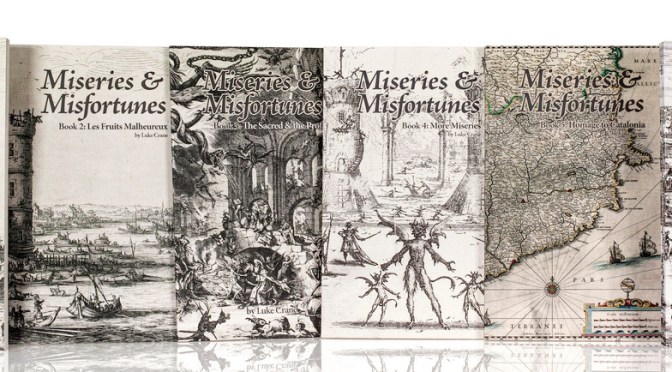
Miseries and Misfortunes: When D&D stands for Dauphins and Defamation

Luke Crane is best known as the designer of The Burning Wheel, an intensely detailed medieval fantasy/Tolkien RPG which aims for a very different fantasy experience than what you find in Dungeons and Dragons and its contemporaries. The Burning Wheel has more and more complex rules than D&D, but it’s also a game with a strong sense of time and place; Crane’s inspiration for the fantasy side of the game was Tolkien outright (which is not the case with D&D), and the rest of the setting was inspired by history nonfiction by the likes of Barbara Tuchman, Desmond Seward, and others. The result is a game heavily steeped in 12th-13th century medievalism, but with the historicity sanded off with some genericization and, oh right, wizards and elves and giant talking rats.

The next biggest non-licensed game from BWHQ (both Mouse Guard and Burning Empires are licensed) is Torchbearer, which is more than anything a direct shot at D&D. While it uses somewhat similar mechanics to Burning Wheel, it is much more focused on dungeon crawling, taking some of the more structured procedures of 0e and Basic D&D and extending them to everything, including not only the dungeons and wilderness exploration but also town visits and social interactions. Torchbearer is a distinct game from Burning Wheel, and while Burning Wheel is known for its complexity Torchbearer is known for being fiendishly difficult due to its constant Grind and aggressive resource management.

Luke Crane designed another game, more similar to Burning Wheel than the others in BWHQ’s portfolio. What’s truly strange about this game, though, is that it is a hack of Basic D&D. That in itself isn’t that weird, plenty of designers hack D&D for many purposes good and ill. What is weird, though, is that this hack of Basic D&D looks at the trajectory that Torchbearer plots from Burning Wheel and runs straight and fast in the opposite direction, aiming for more intrigue, more historical accuracy, and not a single dungeon to bother with. This game is called Miseries and Misfortunes.

Continue reading Miseries and Misfortunes: When D&D stands for Dauphins and Defamation

Adventures in Rokugan Review

This review is delayed, far from the “hot off the press” take that I had intended back some time ago. Instead this has been an article I have stewed on for some time. In 2020 there came an announcement that Edge Studios would be taking over RPG properties that had been held by Fantasy Flight, which includes two that I have written about extensively in the past: Star Wars and Legend of the Five Rings. Since the acquisition, the publishing has mainly been constrained to reprints of books in use and published already developed supplements that had been in the pipeline before the acquisition. It was a bit of a surprise to me that the first new material from this new studio was to take the setting of Rokugan and put it into the mechanics of 5th Edition Dungeons and Dragons.

My reaction to reading it at first was, to put it politely, visceral.

Continue reading Adventures in Rokugan Review

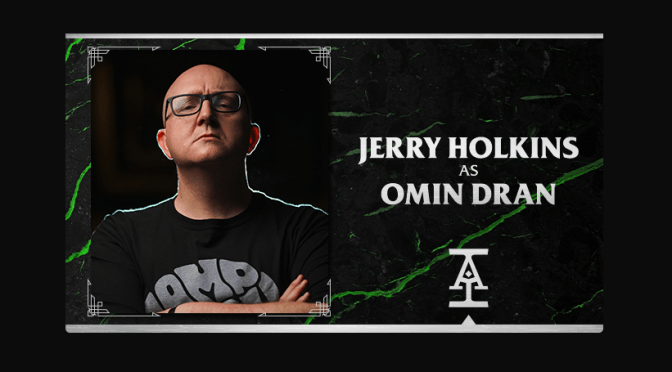
A Chat With Jerry Holkins At PAX East ’23

I sit down with Jerry Holkins of Penny Arcade, aka CEO Omin Dran of Acquisitions Incorporated, to talk about the primordial actual play experience , its history and changes, its official D&D book, and the ongoing Kickstarter for its second video series!

Thanks to Jerry for taking the time to talk with me! Musical notes yoinked from Sneaky Adventure by Kevin MacLeod
[License].

Intellectual Property for Gamers

The biggest piece of news in the RPG world so far in 2023 has been OGL 1.1. Wizards of the Coast announced a revision to the Open Gaming License for Dungeons and Dragons back in December, and then earlier this month a copy of the new license, OGL 1.1, was leaked to the gaming press. As of last week, the full text of the leaked license is available for anyone to read. While the terms of OGL 1.1 are simply worse for third party creators than OGL 1.0a, the previous version of the agreement, the worst part of the whole thing is the attempt to ‘de-authorize’ OGL 1.0a, a move which, if deemed legal, could threaten the futures and possibly even the back catalogs of dozens of creators. With the stakes that high, there has been an outcry on social media directed towards Wizards of the Coast and its parent company Hasbro. Among that outcry, though, is a lot of armchair legal work which is only confusing matters.

There are really only two things that need to be understood about what’s going on with the new version of the OGL. First, OGL 1.1 is a problem for game designers because it gives Wizards of the Coast a lot of control over licensees’ work, and takes away licensing rights which many designers assumed would be there in perpetuity because of the earlier version of the agreement. Second, intellectual property law and contract law, which cover what goes on both in and around the OGL and games affected by it, are both arcane enough that nothing about the new agreement’s legality, applicability, or enforceability is truly known unless a case goes to court. With that said, let’s take a look at intellectual property law and why it’s particularly weird for games.

Continue reading Intellectual Property for Gamers

Editions and Edition Wars

Last week, the first in what’s assumedly a fairly long series of playtest documents came out for One D&D, the revised version of Dungeons and Dragons Fifth Edition that is scheduled to be released in 2024. Fifth Edition’s product lifecycle is quite long for modern D&D: 10 years is the second longest any edition of D&D has gone with no major revision, still not quite beating out the first edition of Advanced D&D which went without a revision for 12 years. The main difference between AD&D 1e and D&D 5e, though, is that Fifth Edition is the best selling version of D&D ever and AD&D 1e is one of the worst; Basic D&D sold better at the same time and saw three iterations over those 12 years, clearly getting more of TSR’s attention. This contrast gets us to the broader point that running an RPG business is a complicated game, especially when it comes to figuring out how to maintain your product lines.

New editions of games have been part and parcel of the RPG industry since Gygax attempted to close the Pandora’s Box of D&D hacking by releasing AD&D. Even that first public revision of a game, a wholesale rewrite as opposed to small revisions gained over time, laid bare the various and sundry motivations designers could have for revising their game. It may be an attempt to regain editorial control, or appeal to a new audience. It may, cynically, be a way to sell more books after the product line has flagged. And maybe, in some limited circumstances, it could actually be to improve the game.

Continue reading Editions and Edition Wars