
So far, System Hack has highlighted Seamus working through the process of writing a hack for an existing role-playing game, specifically a mecha hack for Genesys. In my first System Hack outing, I’m going broad, super broad! We’re not talking about a specific hack, or even a specific game. Instead, I’m going to talk about a design choice that is so prevalent, so widely assumed, so transparent, that it’s not a given that everyone will give it much thought. What’s that, you may ask? Well, it’s dice. Good old dice.
Tag Archives: Opinion
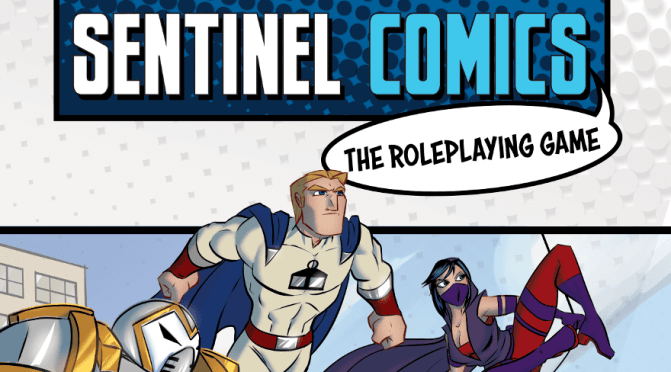
The Independents: Sentinel Comics: The Roleplaying Game Starter Kit
A hush falls over Megapolis City. Citizen Dawn stands from atop his platform, looking over the destruction that her minions have wrought. “I am burdened with a great purpose.” Her voice, though not raised, seems to echo in the dead silence of the normally bustling street. “The bright lure of freedom has led you away from the joy of service. Service to people like me. I am here to correct that mistake.”
Splash Page: “Not if we have anything to say about it!” *The Freedom Five burst into frame* “Let’s go team!”
Based on the popular fixed-deck card game Sentinels of the Multiverse by Greater Than Games, Sentinel Comics: The Roleplaying Game takes you inside the capes of its heroes, pitting them against various dangers and threats which plague the city. Players take up the mantles of very familiar sounding superheroes, combining the backstory from the card games with fresh RPG mechanics and greater narrative freedom. The Starter Kit provides a copy of the rule book, six characters to choose from, and a number of missions, enough to get a campaign of your adventures in Megapolis City going.
Continue reading The Independents: Sentinel Comics: The Roleplaying Game Starter Kit
Kickstarter Wonk: June, 2018
Welcome to Kickstarter Wonk! The month of June was an embarrassment of riches for RPG Kickstarters, but I’ve taken on the sobering duty of narrowing the month down to my top ten projects. Here you see some inventive games, some games by rising stars in game design, and some games that just need to be seen. Check it out!
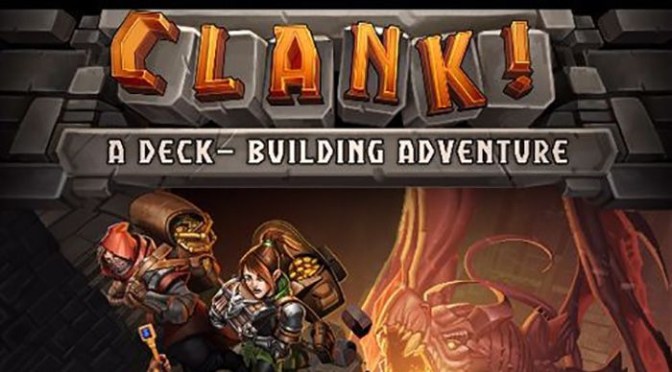
A Glimpse Into the Vault: Clank!
Raid the dungeon. Take the treasure. Don’t get killed by the dragon. Backstab your buddies? This might sound like a standard Dungeons and Dragon campaign (maybe not the backstab your buddy part), but it is one way to summarize Clank!: A Deck Building Adventure by Renegade Game Studios. Rather than picking up a character sheet and some dice, Clank! instead operates as a combination of a deck building game (such as Ascension or the DC Comics card game) and a more standard board game.
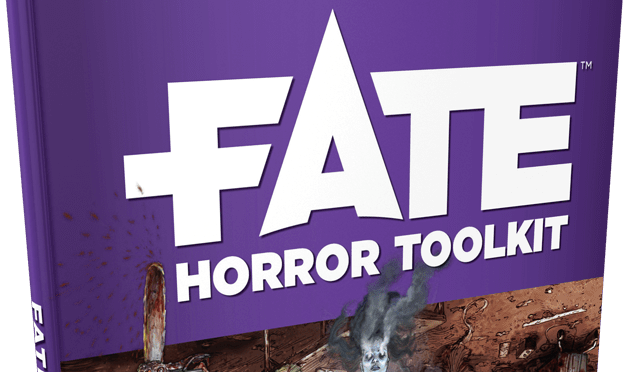
Fate Horror Toolkit Review
Horror gaming has a long and storied history, starting as far back as 1981 with Call of Cthulhu. When Vampire: The Masquerade came out a decade later, new fans were drawn into RPGs by the appeal of a game that combined horror, violence, and romance. Both of these properties are still going strong, alongside other games that emphasize the supernatural (like Urban Shadows) or the Mythos (like Delta Green). When you combine the popularity of these games with the multitude of genres that use horror elements (Ravenloft or Warhammer in fantasy, Eclipse Phase in science fiction), it’s easy to see that horror is a big draw at the gaming table, even if it can be difficult to do right. Here to help, for one of the unlikeliest systems possible, is Evil Hat, with the Fate Horror Toolkit.

Mordenkainen’s Tome of Foes Review
Transcribed by Bigby, stolen by Shemeshka, dictated by Mordenkainen, and drawing from the many worlds of the multiverse, the Tome of Foes has arrived! Mordenkainen’s Tome of Foes is, of course, the latest supplement for Dungeons and Dragons 5th Edition, following in the footsteps of Volo’s Guide to Monsters and Xanathar’s Guide to Everything. It has lore, character options, and foes aplenty for us to check out, so let’s get started! I’ll be taking us through chapter by chapter, seeing what Mordenkainen has left for us to read, and comparing the final product to the various bits of Unearthed Arcana that got it started!
Adventure Log: Dungeons and Dragons, Part 4
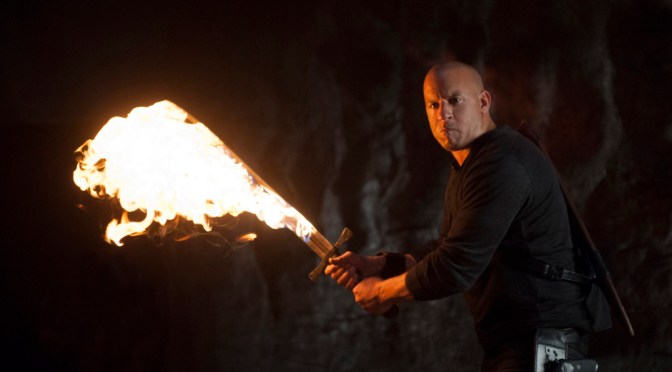
The adventurers rested, either leaning against the altar with weapons in hand, or scrambling around the spare furnishings of the temple. The Shadows moved faster than Folk did, and they didn’t have much time until the ten of them that were released found the way up and out of the crypt. Ander and Jethro found glass bottles in the Undertaker’s apartment and filled them with water for their skins, setting the bottles and some of the silver they gathered from the Keep in front of Hugh, who performed a ceremony to bless the water. Holy water seemed to be a potent ally in the fight against what was to come. Clouds gathered over the temple, and the adventurers prepared for a fight. As the sky darkened, the adventurers scrambled to the squares of sunlight made by the overhead windows; shadows didn’t usually exist in daylight, and the adventurers needed all the help they could get. The Shadows ascended the crypt stairs in groups of two and three, met by eldritch blasts, sacred weapons, and holy water. Now, with time to prepare and adequate supplies, the adventurers drove back the Shadows with only a few wounds and a little strength sapped. Not yet ready to return to the crypt, Hrive went outside the walls to retrieve his mule, and the group foraged old abandoned gardens for food. Sleep came easier in the keep without gnolls to harry them, but the adventurers were still wary.
Continue reading Adventure Log: Dungeons and Dragons, Part 4

Level One Wonk Does RPG Theory: GNS
Theories are tools for understanding and explaining any number of different subjects. As role-playing games began to increase in subject matter breadth, there immediately followed an attempt to explain what different games do, and what games do best. Unsurprisingly, attempts to “explain” the range of games on the market were typically incomplete and sometimes dreadfully inaccurate. Despite this, some theories stuck around, usually because they were punchy and easy to remember, and were “close enough” to work as a shorthand. Today, the Level One Wonk is going to look a bit at game design theory, and use one of the most popular theories as a springboard to discussion about RPG Theory as a whole and what it’s trying to accomplish. As George Box once said, “All models are wrong, but some are useful.” That is the best way to understand many RPG Theories, including the GNS Model.

Masks: Secrets of A.E.G.I.S. Review
Marvel has S.H.I.E.L.D., DC has A.R.G.U.S., and Masks: A New Generation has A.E.G.I.S., the Advanced Expert Group for Intervention and Security. In Halcyon City and beyond, while superheroes are wearing flashy colors and punching their enemies through buildings it’s the agents of A.E.G.I.S. who fill in the gaps, clean up the messes, nip nascent threats in the bud, and keep an eye on everything in the name of protecting everyone. A.E.G.I.S. has always been a factor for the New Generation to consider, but we can now learn the Secrets of A.E.G.I.S. in the second Masks supplement from Magpie Games!
The Independents: Archives of the Sky
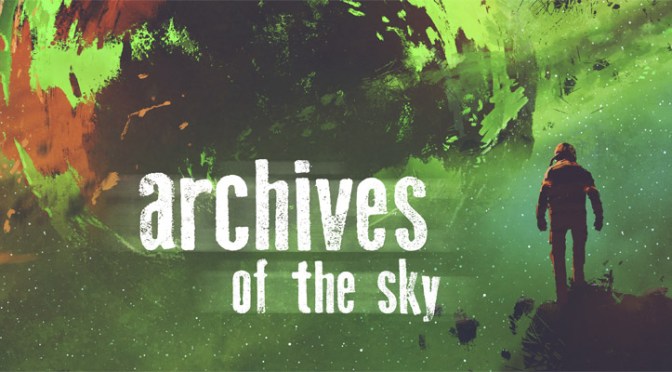
There are stories that require a different approach than the traditional party-based RPG. Epic stories, with scales vastly larger than just the four to six people in an adventuring party, have proven difficult in this format, though many have tried. A story-game approach can give the flexibility for telling big stories; that was one of the thoughts behind Ben Robbins’s games Kingdom and Microscope. Now, there is a new designer entering the space: Aaron Reed has created a story-game of epic science fiction stories, Archives of the Sky.
 Cannibal Halfling Gaming